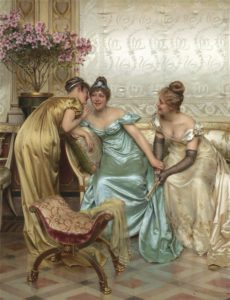
 “But Maud, all men have their bit of muslin on the side. My sister told me she knows from experience.”
The woman attempted to sound worldly, but in Harold Wagner’s opinion, her breathless tone sounded more naively thrilled. He leaned one shoulder against the wall behind the potted fern, tilted his head toward the conversation, and pulled out a notebook. Sam Clemens paid well for tittle-tattle and this might yield some sellable gems. The fourth son of a miserly earl needed funds in any way he could get them. If it shocked one over-ripe daughter of the haut-ton, it would probably sell.
“Oh, who cares what a captain gets up to in his bedroom in some heathenish country, Eunice,” the other woman retorted.
 Harold Wagner might, if what the man got up to was exotic enough. Unfortunately, this Maud creature hadn’t much imagination.
“What I heard is worse,” the one named Maud continued.
Worse? Now he found it interesting. He poised a pencil over his notebook.
“There were children!”
Harold’s pencil dropped. Good grief! Of course, there were children.
“Isn’t that always the way? My sister explained—”
“I can guess what sort of nonsense your sister Hortensia told you, Eunice, but listen to me. The mistress was—” She dropped her voice for dramatic effect. “—black.”
Eunice must have looked puzzled because Maud sounded disgusted when she didn’t get the reaction she expected. “You know. Native. Bengali.”
“I don’t see—”
“Think about it, Eunice. The children…”
It took several moments, but Eunice caught Maud’s meaning. “Oh! You mean they are native, or half.”
Another one back from India, leaving his cast-offs behind, Harold thought. He shrugged and recorded it. Sam still might buy it if he had a name to go with it.
“The worst of it is, I heard he flaunts them,” Maud went on, warming to the story. “He sailed to Suez on The Pharaoh before taking the Overland Route. My friend Miriam said Captain Wheatly gave them the run of the ship. She called them cunning and encroaching little girls. The older one had her nose in everything.”
Wheatly rung a bell. Harold searched his memory for the family.
“What about the mistress, Maud?” Eunice asked. She managed to make “mistress” sound like something disgusting found on the bottom of her dancing slipper.
“You mean the native one? Miriam says he left her or she died. Must have died because he only brought the girls. No, Fred Wheatly traveled with some other woman, as white as you and I. Miriam says the way she fawned over the girls, he must pay her well.”
Harold scribbled it down, “traveled with a woman…”
Maud barely stopped for breath. “He established them in his cousin’s house, as bold as you please. I don’t care if his cousin is a duke, if he tries to bring them near decent people in London, I for one will give him the cut direct.”
Duke? That was it, of course. Wheatly is the family name of the Duke of Murnane. Harold placed him now. Fred Wheatly was always in trouble. He vaguely remembered him running off to India after some scrape. Related to the Earl of Chadbourn too, if Harold remembered right. Sam Clemens would pay for this little on-dit.
“Me too, Maud. Cut direct. I’ll lift my skirt if I see them on the street,” Eunice responded. “You don’t think he’d be seen in the city with his mistress do you?” she asked. “Wouldn’t that be delicious?”
One thought troubled Harold. Sam never published gossip about children. It was one of the bast—, er, the rogue’s few scruples. He brushed the concern aside. Oh yes. Sam would like this one, at least the mistress part. It won’t even take much embellishing.
~An excerpt from The Reluctant Wife~
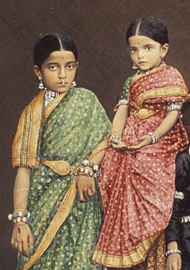
Fred hated the fear in her eyes. My little warrior should never feel fear. He smoothed a hand over her head. “You managed quite well—too well to suit me—in Calcutta. The village is tiny, and Emma and Mary will be with you.”
“Everyone is different here. I don’t look like them. What if they stare at me?”
Ah. One thing he couldn’t prevent. She managed the horrid headmistress in Calcutta, didn’t she? Fred swallowed hard. He wanted to scream, “Chase them away. Shout at them,” but he kept that to himself. He could think of nothing constructive to tell her.
Mary answered when he failed to. “Easy. We know how to outstare anyone, don’t we, Emma?”
Meghal, intrigued, turned toward her cousin, and Mary babbled on. “First we pretend we don’t see them. Then we raise our chin, thus.” She demonstrated a perfect aristocratic pose, causing Meghal to giggle.
“Then—and this is the good part—we stare at them as if we can see right through them and they aren’t even there. Emma taught me. They don’t exist until we want them to, right, Emma?”
Emma’s lips twitched. “That is precisely how it is done. However, you must remember that this weapon is powerful. It must only be used when someone is very, very rude, but never—well perhaps rarely, I can think of exceptions—on a married lady or an older person.”
Fred watched the girls with growing amusement. His nieces would turn his daughters into formidable young women. They don’t need me.
About the Book
 When all else fails, love succeeds…
Captain Fred Wheatly’s comfortable life on the fringes of Bengal comes crashing down around him when his mistress dies, leaving him with two children he never expected to have to raise. When he chooses justice over army regulations, he’s forced to resign his position, leaving him with no way to support his unexpected family. He’s already had enough failures in his life. The last thing he needs is an attractive, interfering woman bedeviling his steps, reminding him of his duties.
All widowed Clare Armbruster needs is her brother’s signature on a legal document to be free of her past. After a failed marriage, and still mourning the loss of a child, she’s had it up to her ears with the assumptions she doesn’t know how to take care of herself, that what she needs is a husband, and with a great lout of a captain who can’t figure out what to do with his daughters. If only the frightened little girls didn’t need her help so badly.
Clare has made mistakes in the past. Can she trust Fred now? Can she trust herself? Captain Wheatly isn’t ashamed of his aristocratic heritage, but he doesn’t need his family and they’ve certainly never needed him. But with no more military career and two half-caste daughters to support, Fred must turn once more—as a failure—to the family he let down so often in the past. Can two hearts rise above past failures to forge a future together?
It is available in Kindle format free with Kindle Unlimited or for purchase as ebook or in print:
Amazon
Barnes and Noble
BooksAMillion
The Reluctant Wife is Book 2 in Caroline Warfield’s Children of Empire Series.
 8
8
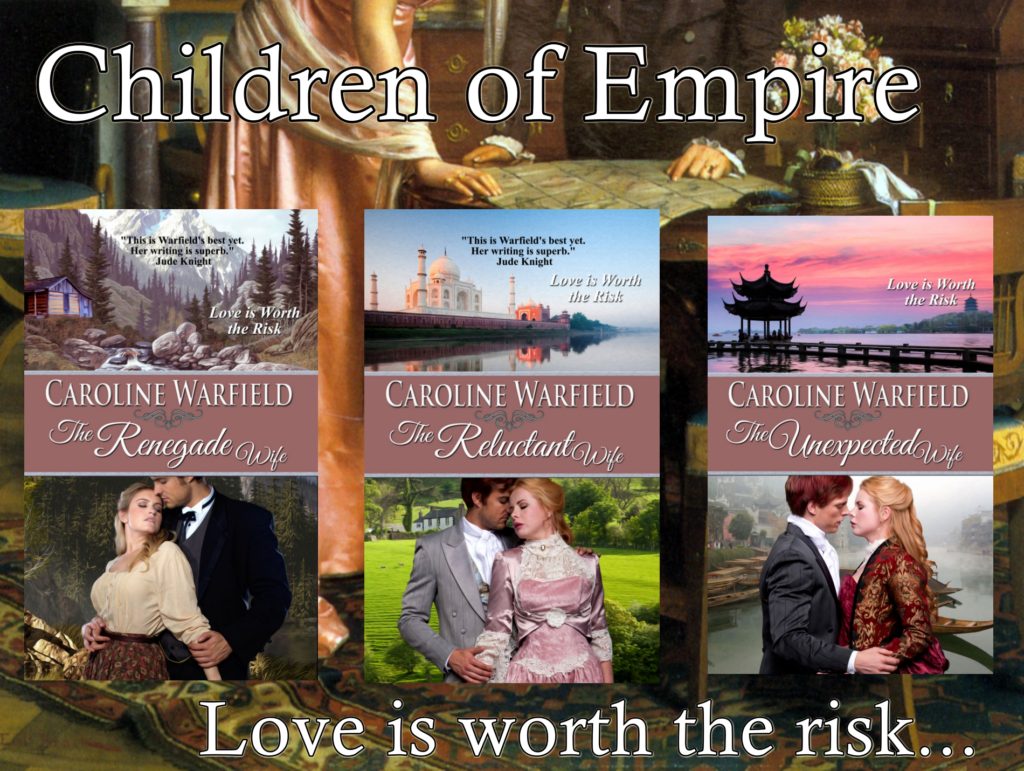
Three cousins, who grew up together in the English countryside, have been driven apart by deceit and lies. (You may guess a woman was involved!) Though they all escape to the outposts of The British Empire, they all make their way home to England, facing their demons and finding love and the support of women of character and backbone. They are
- Randolph Baldwin Wheatly who has become a recluse, and lives in isolation in frontier Canada intent on becoming a timber baron, until a desperate woman invades his peace. (The Renegade Wife)
- Captain Frederick Arthur Wheatly, an officer in the Bengal army, who enjoys his comfortable life on the fringes until his mistress dies, and he’s forced to choose between honor and the army. (The Reluctant Wife)
- Charles, Duke of Murnane, tied to a miserable marriage, throws himself into government work to escape bad memories. He accepts a commission from the Queen that takes him to Canton and Macau, only to face his past there. (The Unexpected Wife)
Who are their ladies?
- Meggy Campeau, the daughter of a French trapper and Ojibwe mother who has made mistakes, but is fierce in protecting her children. (The Renegade Wife)
- Clare Armbruster, fiercely independent woman of means, who is determined to make her own way in life, but can’t resist helping a foolish captain sort out his responsibilities. (The Reluctant Wife)
- Zambak Hayden, the eldest child of the Duke of Sudbury, knows she’d make a better heir than her feckless younger brother, but can’t help but try to protect the boy to the point of following him to China. She may just try to sort out the Empire’s entangled tea trade–and its ugly underpinning, opium, while she’s there. (The Unexpected Wife)
Book 3, The Unexpected Wife, will be released on July 25.
Here’s a short video about it:
https://www.facebook.com/carolinewarfield7/videos/924791187669849/
For more about the series and all of Caroline’s books, look here:
https://www.carolinewarfield.com/bookshelf/

About the Author
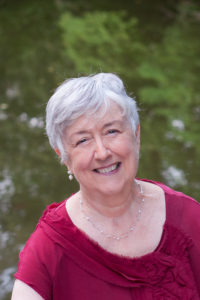
Caroline Warfield grew up in a peripatetic army family and had a varied career (largely around libraries and technology) before retiring to the urban wilds of Eastern Pennsylvania, where divides her time between writing Regency and Victorian Romance, and seeking adventures with her grandson and the prince among men she married.
 Your reporter fears that Lady Samantha Winston gazed over the Duke of Ravensmere’s shoulder and caught sight of said reporter leaning against a tree scribbling on my small pad of parchment. She was heard to whisper to a friend, “Who was he and was he a friend or enemy? If a foe, what evil intent did he have? And who was the victim?” Forced to move away, I gave up. What indeed happened at the so-called charitable auction? And what will be the outcome?
 Raven rose from the chair, handed the appropriate bank voucher to the Reverend, and stepped lively to Samantha and her picnic basket. “Shall we?” He extended his arm. Samantha clung to his left arm, and he became cognizant of her quaking. He took her expensive picnic basket in his right hand. “Stay calm. I’m here and you are under my protection. No harm will befall you.” Raven escorted her to a secluded table, which he had prearranged, and his name appeared on a place marker. It adhered to propriety while offering privacy.
 When a spirited woman disrupts the world of a duke who follows the rules, sparks fly, passions ignite and planets collide.
 About the Author, SANDRA MASTERS
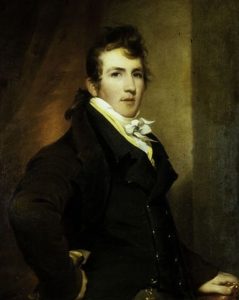 Edmond Worthington, 9th Duke of Hartford, set down the morning paper with a scowl. He had read the same paragraph more than a half dozen times. Unfortunately, the print did not change. He had sent for his sister Gwendolyn to join him. How like her to keep him waiting. They had not been on friendly terms since he had told her he must honor their father’s dictate that she wed.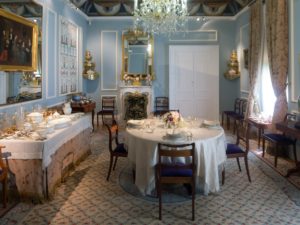


 Private Pratt,
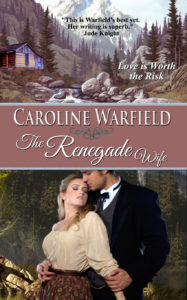 About the Book, The Renegade Wife: Book 1, Children of Empire
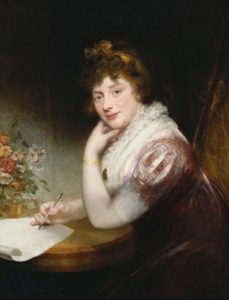 Extract from the diary of Lady Caroline Chantry, sister to Giles, Marquess of Huntercombe. November 1803
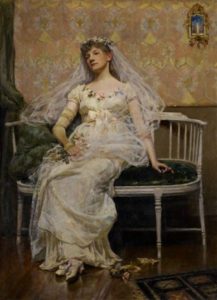 My poor, dear sister, Letty, and I attended the wedding at Huntercombe House only this morning. How I shall ever hold up my head again, I cannot say. But Giles has informed us that if we do not wish for a public breach we must recognise his bride and really, what choice do we have? But such a wedding! The bride’s father and mother were there, but did the poor Earl of Dersingham give his daughter away? He did not! Instead the bride’s children did so, if you please! I wonder the marriage can be considered legal with such a flagrant disregard for all decency. And all Giles would say when I mentioned it, and very tactfully! was that since Dersingham had apparently not shown up for Emma’s first wedding they had thought it wiser not to rely on him this time!
 About the Book: His Convenient Marchioness
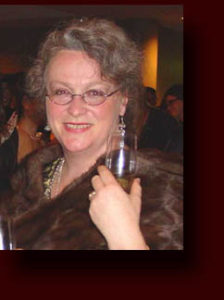 About the Author