
Because history is fun and love is worth working for

Category: Jude Knight Page 1 of 16

Dramatic Announcement in Burlington Arcade has London in a Tizzy

The whole of fashionable London is talking tonight about what happened at Burlington Arcade yesterday afternoon. Whispers that a particularly juicy piece of gossip would be revealed that afternoon had been circulating since the evening before, though no-one admitted to knowing what was to transpire.

Certainly, no one expected the drama to involve eight of the ten sons of the M. of T., who is well known for controlling every breath that his sons take, and every bite they eat. To see even one of the brothers out in public was surprise enough. But what happened next was almost beyond belief.

The arcade was full when the first act of the drama started, in the person of one of the brother, Lord C., whose wife was understood to be long dead. Some said suicide. Some said (but not where he could hear) murdered by her Papa-in-law. But there she was, on Lord C.’s arm, holding the hand of a little boy who looked so much like Lord C. that he had to be the man’s son.

Then three more of Lord C.’s brothers, all with ladies on their arms, arrived and Lord C. called “Well met, brothers and sisters.” And when the newcomers stopped to join Lord C.’s group, word quickly spread that what we saw was three newly-wed couples, and to brides that Lord T. had certainly never approved.

Then came Act two, with three more brothers, each escorting a lady. Two of them were known to be betrothed, and not to the ladies on their arms. The crowd held its collective breath as the ladies to whom they were betrothed stepped out of the glovers, only to be introduced by Lord B. and Lord E. to the ladies in question–their new wives.

Both brothers repudiated the betrothal as being forced, and Lord E. made a gracious apology to Miss F-S.

The third mother spied the Earl of K., the eldest brother, and demanded to know if he, too, was married, but replied that he was being forced into marriage by threats against his youngest brother, who was now on his way overseas. Since the threat was removed, he repudiated the betrothal.

The final act involved a speech from Lord K., who stood on a box to explain the situation to anyone who had not been close enough to hear.

The sons of the M. of T. have broken free of the parent’s tyrranous yoke, though it seems that seven of the ten have instead willing donned the yoke of matrimony in its stead.

What will Lord T. do? He is unlikely to acquiesce quietly to such a rebellion, but they are adult men, and this is a country under the rule of law. What can he do? This is, indeed, the question, gentle reader, and we shall watch with interest to find out!

The Night Dancers

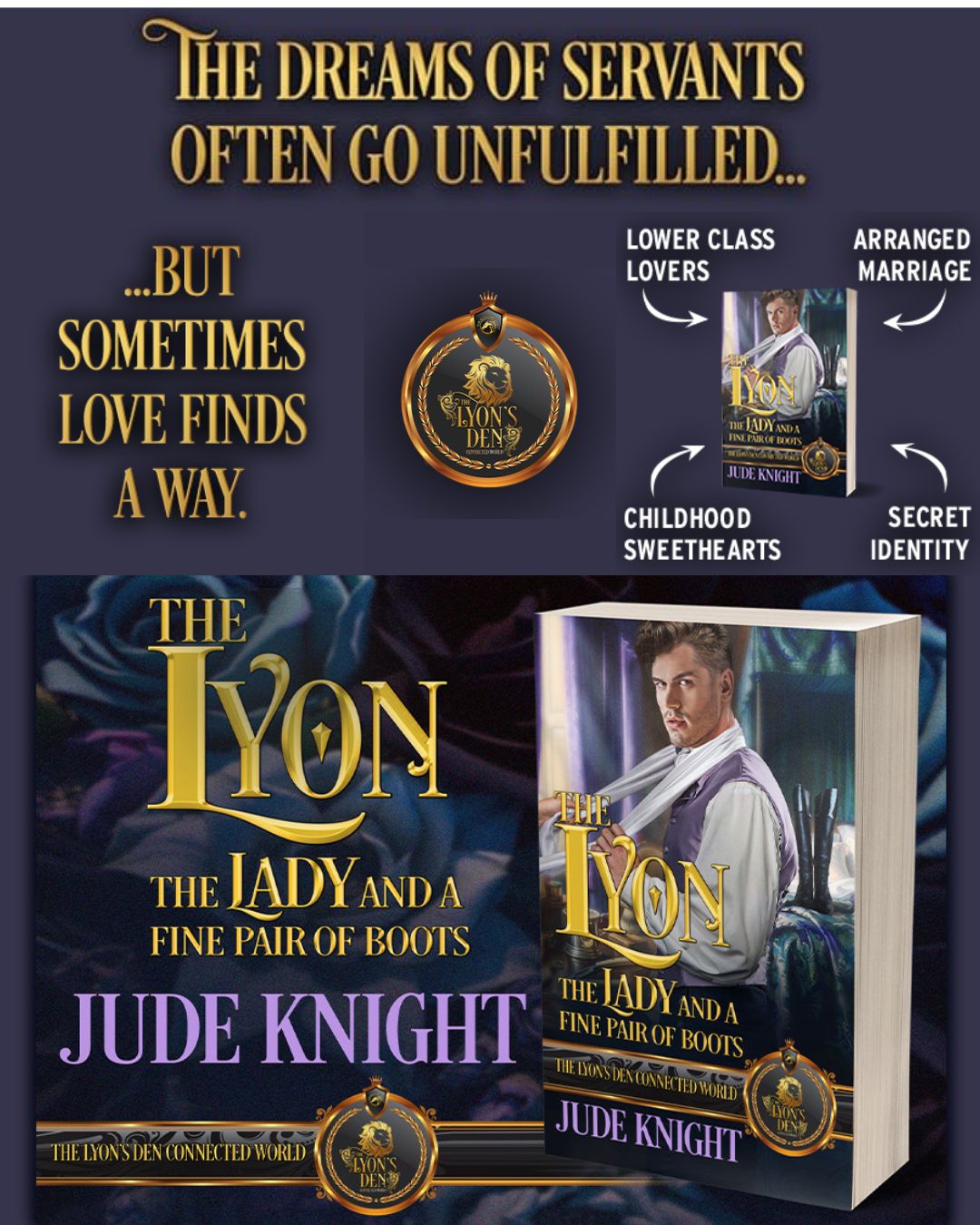
Certain that the Marquess of Teign is behind her cousin’s disappearance, investigator Melody Blackmore enters his mansion disguised as a man. Tasked with discovering how Teign’s sons are leaving their tower prison or having food and other items brought in, she soon realizes that the sons are also the marquess’s victims. As her interest in the eldest of the brothers grows, she joins them all in a campaign to bring Teign down.

Allan Sheppard, the Earl of Kemble, is the eldest of Teign’s ten sons. He is weighed down by his frequent failures to protect his brothers from Teign’s beatings and abuse, but determined to keep them as safe as he can until his youngest brother is no longer under Teign’s guardianship.

All they must to do is fool the most recent investigator sent to find out their secrets. But Mel Black is not like the others, and Allan finds that an alliance with her gives the brothers the chance to not only survive, but to thrive.

However, Teign will stop at nothing to punish his sons for escaping him. Only Allan’s and Melody’s growing commitment to one another keeps them steadfast as they uncover evidence of evil beyond imagining.

Buy on Amazon or read in KU.

An excerpt from The Night Dancers

The third mother had been looking around, and had caught sight of Kemble. “Lord Kemble,” she trumpeted, and surged toward him, drawing her daughter in her wake. “Lord Kemble, I suppose you are going to tell me that you, too, have married.”

She looked Mel up and down with eyes that spat contempt. Had she the power, Mel felt, she would have burnt Mel to ashes where she stood.

“Mrs. Blackmore has not yet done me the honor of accepting a proposal from me, Lady Spurfold. That, however, is not the reason I am refusing to wed your daughter. I was being forced into marriage by threats to my youngest brother. He is now on his way overseas, and will no longer be under our father’s malignant guardianship by the time he returns to England.”

He inclined in a shallow bow. “Be grateful. Coercion is grounds for annulment, which would have been far more embarrassing for your daughter than having me repudiate the agreement you made with Teign.”

“Come along, Felicia,” said Lady Farringford-Smyth. “We shall see about this. Lord Baldwin, we and our husbands shall be calling on Lord Teign.”

The six of them, mothers and daughters, hurried off along the arcade, brushing off questions and comments from the bystanders.

“A flock of silly geese,” said Kemble, with no sympathy at all. “They thought Teign would be their golden egg, but they should not have treated us as if we were of no account. Time for Act Three of our little drama.”

The rest of the brothers and their wives approached. A beadle hurried up with a wooden box that Kemble had organized earlier. He stepped out from the bookshop doorway, and climbed up on the box.

The brothers gathered around him, their wives on their arms. The audience stilled, waiting to find out what was about to happen.

“Ladies and gentlemen,” Kemble said loudly. “The Sheppard brothers are no longer subject to Teign’s tyranny, and he will no longer be deciding our social calendar, nor threatening our younger brothers to gain our compliance. Should you care to send invitations to any of us—my brothers, myself, our ladies—my sisters-in-law Lady Baldwin and Lady Donald have agreed to receive our mail. Thank you all for your attention.”

He stepped down, and offered his arm to Mel. “Finis,” he said.

It was not, in fact, quite the end. Continuing Kemble’s play analogy, Mel supposed she could compare the walk to a series of encores, as people claimed an acquaintance with one of the brothers, or one of their wives, and presumed on it to ask questions or offer an invitation to call.

They kept walking however, claiming another pressing engagement, which was true enough, for they all wanted to be somewhere else by the time Teign learned what had happened here this afternoon.

The people that Clara had hired—bodyguards from a firm called Moriarty Protection—closed around them as they left the arcade, and saw them to their carriages. The agency had assigned a team to each couple. One team followed Mel and Kemble when Winifred’s carriage dropped them at the mouth of the alley that contained the gate to the tunnel.

“We shall be safe from here,” Mel told them. “But I should like to reassign you, with Lord Kemble’s permission, to guard my daughter, sister, and nephew.”

“We could put another team on them, Mrs. Blackmore,” said the senior of the two bodyguards.

“I need a team on my daughter and brother-in-law,” said Kemble. “If Teign finds them, he will use them against me. But I agree that Mrs. Blackmore’s family are also at risk. Talk to your employer and arranged for both addresses to be covered. As for Mrs. Blackmore and me, we are heading for our beds. We won’t need guards until at least noon tomorrow, and can meet them here. I’ll cover any extra costs.”

The bodyguard peered at him with narrowed eyes and then nodded. “If I can have those addresses then, my lord, ma’am.”

Mel felt in her reticule for a notebook and pencil. “I shall write a note for my sister, and put the address on it,” she said.

“A good idea,” Kemble approved. “If you would be so good as to spare me a sheet of your paper, I shall do likewise.”

It took only a couple of minutes. Soon, the bodyguards had gone and Mel and Kemble were locked inside the gate and on their way down the tunnel and up the stairs.


Three New Grand Sponsors for The Teatime Tattler

“Mr Clemens, Mr Clemens,” gasped Joseph Spratt, the newest and keenest of the newshounds who worked for The Teatime Tattler. “Breaking news, sir! The Bluestocking Belles have three new members.”

Sam smiled benignly. The boy was good. But nowhere near as good as Sam. Without a word, he waved towards the galley proofs spread across the large table. Joe read the headline. “Three New Grand Sponsors The Teatime Tattler”. “Oh!” said Joe. “You knew, sir.”

“I did indeed,” said Sam, who had written the article in question. The Bluestocking Belles had founded The Teatime Tattler, and had been supporting it for ten years. Of course Sam, the editor and proprietor, heard about changes in their membership before the news was released to the public.

Sam was sorry to farewell Lady Elizabeth Ellen Carter, whose stories about spies and corsairs had provided some wonderful copy. But he looked forward to hearing more about the new ladies.

Ten Bluestocking Belles sending him gossip, scandal, and intrigue to publish every Saturday! Sam rubbed his hands together in glee.

***
The Proprietor and Employees of The Teatime Tattler are proud to welcome the following ladies to the ranks of The Bluestocking Belles. The newspaper’s special relationship with those grand ladies is well known to most of our readers, and we are certain that Lady Aileen Fish, Lady Barbara Monajem, and Lady Elizabeth Donne will do great credit to their new roles and further enhance the reputation of our magnificent sponsors.

More information about each lady can be found below.

Meet Aileen Fish and view Aileen’s books

Meet Barbara Monajem and view Barbara’s books

Meet Elizabeth Donne and view Elizabeth’s books

Or follow the links on the drop down menus at the top of this post.

Soldier’s wife a credit to English womanhood

If it sometimes seems that The Teatime Tattler has nothing but scandal and bad news, then do not blame us, dear reader. Such stories are sadly plentiful. But every now and then a story comes across our desk that touches even our calloused hearts, and that reassures us that courage, perseverance and loyalty still exist in this war-weary world.

Such is the story of Maggie Parker and her children. Picture, if you will, the daughter of one of our brave soldiers, a sergeant, who died in the service of God and his country. Maggie, a good and modest girl for all that she had been raised by her father in the army’s train, was told to choose a husband. And quite right, too, dear reader. The army is no place for a virtuous single girl with neither father nor husband.

Dear reader, Maggie was fortunate. There was a corporal she liked, a William Parker, and he like her, and so they were married, and for a time they were blissfully happy, even in the midst of war. Their son was born, and named for his father, and little Billy grew and prospered. Never was a little family so content.

But war is a dreadful thing, and when the French were driven from Spain and Will’s regiment were given their orders to march after them and end the long war, Billy had one of those childhood illnesses that are short duration but terrifying to parents. Maggie, who was also ill as her second confinement approached, remained behind.

And that, dear reader, was the last this gallant lady heard of her dear husband.

By the time she, her son, and her new daughter were well enough to follow him to France, the peace had been signed, his regiment had been sent elsewhere, and nobody could – or, perhaps, would – tell her whether Corporal William Parker was still in the land of the living.

Maggie returned to Spain, and worked to save money to travel to England, where she hoped to find Will’s mother. A determined woman can conquer mountains, and Maggie made it to England, but on the way she found a difficulty. Parker is a common name, and the only thing she knew about Mrs. Parker’s address was the name of the village. Ashton. How many villages are there in England with the name Ashton? Twenty or more, spread across the land.

But that did not deter Maggie Parker. She arrived in Portsmouth, purchased a wheelbarrow, set her baggage and her son in it, strapped her daughter to her back, and set off to find her mother-in-law.

Spare a thought for this gallant woman, the flower of English womanhood, marching the roads of England with all the determination of a conquering army.

Dear reader, I am certain you join with all of us at The Teatime Tattler in wishing her God Speed, and a Happy Ending.

***

Maggie’s Wheelbarrow in Merry Belles


A year ago, Maggie’s husband marched out of Spain with his regiment to invade France. She hasn’t heard from him since, and when she followed him, the battles were over and his regiment was gone. Letters to the army, him, and his family have brought no answers, so she and her children are off to find him, even if they have to walk the length and breadth of England.

(Merry Belles is a Bluestocking Belles collection.)

Wicked Doings in Rural Paradise

The village of Marplestead has an unusual, some would say scandalous, tradition. On Christmas Day, any woman who finds a silver coin in her slice of the Christmas pudding is appointed Lady of Misrule for the duration of the Christmastide Feast.

In itself, that is harmless enough, provided the winner is a woman of character. But New Year’s Eve in Marplestead is known as the Festival of the Lady of Misrule. On that day, and particularly on that evening, the women defy the dictates of their nature, and rule the town. Woe betide any man who is abroad on that fateful day, for he is likely to find himself the butt of many a sly joke and merry jape.

Still worse fares any man who has offended a woman during the previous year, for by Marplestead tradition, women are free to take their revenge on that one day, as the old year passes into the new, provided that the Lady of Misrule approves. No magistrate of Marplestead will say them nay, or take any action against them.

Are you scandalized yet? If not, read on, for the most dire of circumstances occured in Marplestead on the New Year’s Eve that has just been, and it brought about circumstances that its perpetrators and its victim could never have forseen.

A Gift to the Heart

(A Twist Upon a Regency Tale Book 11)

by Jude Knight 

When the Queen of Misrule takes over the town, sins are laid bare, and brothers lose their hearts.

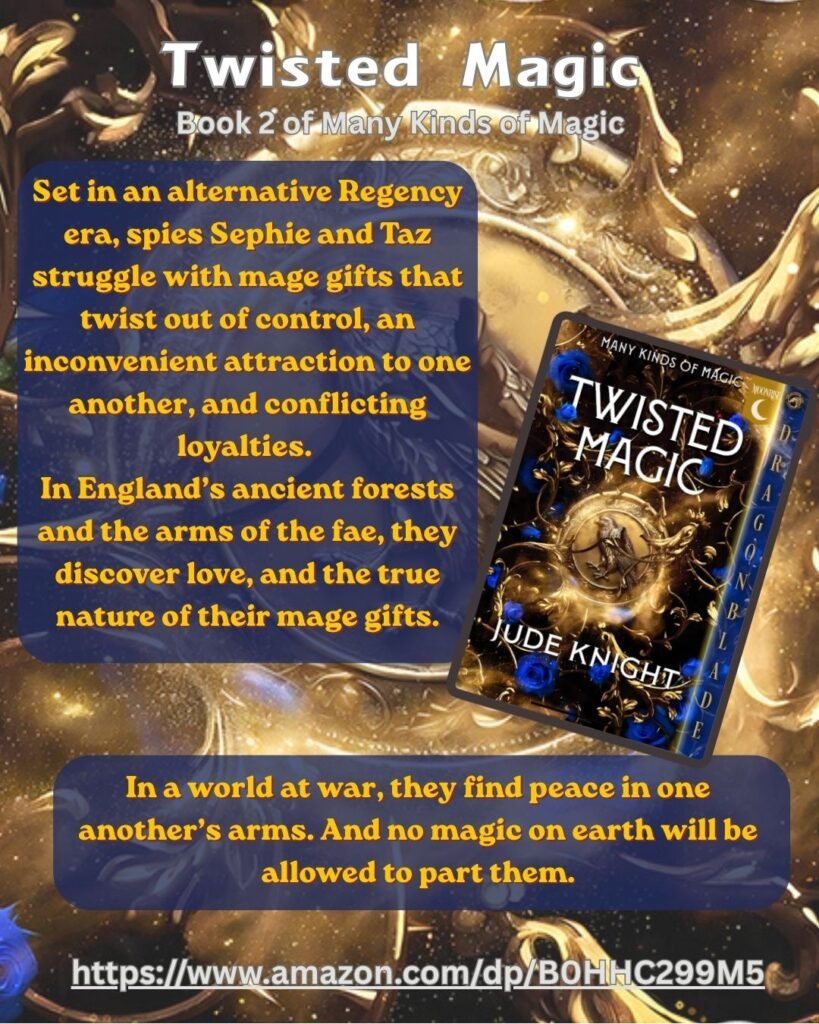
When Cilla Wintergreen supports her sister’s plans to punish the man who ruined their friend, she helps in a miscarriage of justice, for they catch the wrong man. But no harm is done, except to her imagination. She cannot forget the sight of their victim, half naked, his torso shining in the candlelight. Just as well she is unlikely to meet him again. Until she does.

When Drake Sanderson is mistaken for his licentious older brother Colin, he readily forgives the women who captured him. After all, they release him when they realize he isn’t Colin. But the event changes his life, for one of those women captures his heart, and he won’t give up until she agrees to be his wife or marries another.

When Livy Wintergreen tries to take revenge on a cruel seducer, and catches the wrong man, she puts in train a series of events she could not have imagined. For she had long thought she was too old, too contentious, and too independent to find a man to love her.

When Bane Sanderson rescues his brother from female revelers out for retribution, he did not expect their queen to consume his heart and mind, until courting her seems the only sensible course of action. If she is not put off by his scars, his irregular birth will disgust her. But he must try.

https://www.amazon.com/dp/B0FTFYXNXB

An excerpt from A Gift to the Heart

A shaming. Bane had never seen one, but he had heard about the last one. The man had been a serial fornicator, seducing one girl after the other with meaningless promises. After being led through the whole village and around the major farms and manors all one Misrule Night, he had left town and had never returned.

The object at the end of the ropes was plodding into view. It was a donkey, stolidly ignoring the ropes, the noise, and the murmuring of the onlookers. That, Bane saw at a glance.

What took his attention was not the steed but the rider. He was male. Since he wore nothing but knee breeches and a head-concealing mask in the form of a goat’s head, his gender was beyond a doubt. The broad shoulders and the muscular torso, arms, and thighs also bore witness.

He sat backward on the ass, bound to the saddle with rope, swaying slightly as if he was drunk.

With a jolt of shock, Bane realized he knew that torso, those arms! He narrowed his eyes as the rider drew level, and was aided by one of the dancers, who lifted her lamp so it shone on the rider’s elbow.

“It is Drake,” Bane said.

“Really?” asked the blacksmith. “What has Drake done to deserve a shaming?”

“Nothing,” Bane said, grimly, and took a step forward, but the blacksmith grabbed his arm.

“If you go out there, you’ll be joining him.”

“I can’t leave him there,” Bane protested, but the blacksmith was right. He’d not get Drake free without using his brain instead of just reacting. “I need my horse,” he said. “And a good knife. I’ll grab him when they take him off the donkey to throw him into the pond.”

“They’ll overpower you,” the blacksmith warned. “There are what? Fifty of them? One of you.”

“I can’t fight them. Not women,” Bane admitted. “But I must try. If I get dunked alongside Drake, so be it.”

The blacksmith pursed his lips. “Cut the goat mask off,” he advised. “Let them see they’ve got the wrong man.”

That might work. Bane left for the barn, where he also stabled his horse.

He wanted to merely bridle the horse and be off after his brother, but his common sense told him that he might need the stability of saddle and stirrups. It took several minutes, even with the blacksmith’s help, but at last he was in the saddle and galloping after the Misrule party.

They had reached the pond and were dragging Drake from the saddle, none too gently. Fortunately for Drake, only a few of the women—ten at most—were involved in the dismounting. The rest were not even watching. Rather, they waited on the edge of the pond for the next event in the night’s entertainment. Bane grinned. He would give them something to watch.

He set the horse at a gallop, straight at the cluster around Drake, pulling up only at the last minute. They had, as he’d hoped, leapt out of the way, and Bane reached down and grabbed the rope that bound Drake’s arms to his body. “Mount behind me,” he shouted, and heaved as Drake jumped and scrambled until he was seated behind Bane.

The horse danced and skittered. Nightshade was skittish at the best of times, and he was taking exception to the torches, the masked ladies, the noise, the load, and the whole situation. That was a help, for the women who might have objected to losing their prisoner were keeping their distance.

“This is my brother Mandrake Sanderson,” Bane shouted. “He has done nothing worthy of a shaming.” He was pretending with his hands to be attempting to control the horse, but in truth, his calves and heels encouraging its jittery behavior.

A woman with the crown and staff of the Lady of Misrule stepped forward—an Amazon with dark curly hair. He could not see much of her face behind her half-mask, but what he could see distracted him for a moment. She was stunning.

“Mandrake?” she asked. “Not Colin?”


Is the Beauty Off The Market?

Further news from Sussex, dear reader, as the Somerville house party continues to provide enough gossip to keep the ton amused over their breakfasts for months to come. Our readers will be familiar with the name of the lovely Lady F., who has delighted this newspaper since she was first presented to the ton and proclaimed a rare beauty – can it truly be six years ago? In that time, this flower on the tree of the venerable B. family has proved ever popular with marriage-minded gentlemen, their mothers and sisters, and matchmakers of both sexes. But, ever elusive, she has escaped whatever entanglements were dropped before her feet, and has instead accompanied her brother, the distinguished Earl of H., assisting him with his political and diplomatic duties by managing his household and planning his entertainments.

Dear reader, word from Sussex is that this most original of all social butterflies might be about to land at last on a respectable suitor.  According to our correspondent, she has caught the eye of a certain Mr. V. G., whose links with a princely family in Italy are well known. He has made his intentions clear and a proposal is certainly in the offing.

But will the lady say yes? We wait, perhaps no less impatiently than Mr. V. G. to hear the lady’s answer!

(The following is a note hastily delivered too late to stop the print, so it will have to go in a later edition.)

Sam, pull the article about Lady F. She is to marry the local schoolteacher and Mr. V. G. has been arrested under mysterious circumstances. We have been able to learn that the lady’s brother was involved in the arrest, but in what way and why? No one is saying. I’ll keep digging around to see what I can find out. Meanwhile, the lady and the schoolteacher are smelling like April and May, and even the sober Earl of H. has been seen to smile! Who would have seen that coming?

A Bend in the Road in Love’s Perilous Road

By Jude Knight

Justin is not worthy of Lady Felicity Belvoir. He hadn’t needed her brother to point it out. Felicity is determined to marry Justin Weatherall, her brother be damned. Now that she has found where he is living, she needs only to convince him.

An Excerpt from A Bend in the Road

Justin dragged himself out of bed to answer a thunderous cascade of knocks on his door. It was Victor Grant, who raised his brow at Justin’s appearance and said, “What does the schoolmaster get when he is late for school? Six of the best? Would you like me to administer them for you?”

“Get lost, Grant,” Justin said. “I have nothing to say to you.” He tried to shut the door, but Grant put his boot in the way.

“I have something to say to you, however,” Grant said. “You have been annoying Lady Felicity Belvoir, and I won’t have it. Stay away from my betrothed.”

As had often happened in battle, Justin suddenly felt very calm, very much in control, all his emotions set to one side to be picked up again on the other side of the conflict. “No, Grant. It is I who say those words to you. Stop annoying Lady Felicity. We are to be married.”

The reward for sins often arrived before the payment, and so it was in this case. Grant’s jaw dropped, and his attempt to speak caught on a stutter. The payment would come when Felicity discovered what he’d said. No matter. Justin would pay whatever penance she demanded, and it would be worth it for the expression in Grant’s eyes.

“Nonsense,” said the man, gathering his usual cloak of supercilious dignity around himself. “Marry you? You are nothing and no one. She is a Belvoir, and one of the great beauties of our age. You are penniless, and she brings a fortune with her. You were a mediocre naval officer and are now a village schoolteacher. She is used to the highest of Society and is welcome in all the courts of Europe. A marriage between you? Ridiculous.”

How odd. These were the same arguments that Justin had been using, but hearing them from Grant he could see how petty they were. If Felicity loved him as he loved her, and if she wanted the life he could give her, then what else mattered?

“It is you who are ridiculous, Grant. Chasing after a woman who has already refused you several times.”

“A woman has a right to be pursued,” Grant said, loftily. “A sensible man does not regard it as discouragement.”

“A wise man assumes a woman like Lady Felicity knows her own mind. She has chosen me, Grant. Now go away.” As he said that, he gave Grant a shove to move him from the doorstep, and slammed the door in the man’s face. He latched it, locked it, and—for good measure—put the bar in place.

After a few minutes, he heard Grant’s horse leaving.

But before he could go back upstairs to his bed, another knock sounded, more gentle but equally insistent. By pressing his face to the window, he could just see a skirt. Not Milly again, please God, no. But the figure stepped back to glance from side to side, and when he realized it was Felicity, he could not get the door open fast enough.

“Was that Grant I saw leaving?” she demanded, as he drew her inside and shut the door to protect her from the eyes of scandalmongers. “What did he want?”

“To tell me I wasn’t good enough for you,” he blurted.

She raised her eyebrows and gave an unamused chuckle. “At least there is something the two of you agree about.”

I hurt her. Justin supposed he must have known it before, but seeing her use humor to deflect possible hurt brought it home to him.

“I told him we are betrothed,” he blurted. “I shouldn’t have. Not when I haven’t even asked you. I love you, Lady Felicity Belvoir. I have loved you since I first met you. For the past two years, even while I kept telling myself that it was hopeless, and that I was an arrogant bumptious fool for ever thinking I was fit to touch the toe of your shoe, I have loved you. Will you forgive this poor fool for running away without talking to you?”

Somewhere in that impassioned speech, he had caught up her two hands. He lifted them to his lips, and then said, “Will you marry me, and join me in a partnership to make our dreams come true? Will you, Felicity?”

Felicity lifted her lovely face and touched her sweet lips to his. “Yes, Justin. Yes, I will.”

Page 1 of 16

Powered by WordPress & Theme by Anders Norén