Because history is fun and love is worth working for

Category: Bluestocking Belles Page 36 of 51

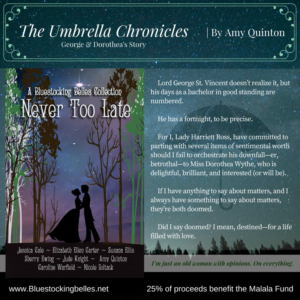
The Motley Meddler Strikes Again!

England 1814

G— St . V— never saw it coming.

And he never stood a chance.

Once again, we’re delighted to announce that the gentleman in question proved no match for the machinations of Lady Harriett Ross and her infamous Umbrella.

The betting books at Whites are on fire.

The gossips at every holiday party are all atwitter.

And if you’ve been following along, you, our dear readers, were the first to know as we’ve regaled you with all the delightful details every step of the way via firsthand accounts through the humorous musings of Lady Harriett Ross…straight from that dear woman’s own pen…as she set the scene for the downfall…aka—betrothal…of G— St . V—, the Future M— of S— and Miss Do—a W—e.

Her machinations have met with unquestionable success…you may have noticed their betrothal announcement in all the major papers this Monday past.

If you want all the details of their whirlwind courtship, you can read about it here.

Now, we have it on good authority that Lady Harriett Ross herself will be writing us again soon, her sights set on a new person of interest: Lord J— Q—, 8th M— of M— and heir to the Duchy of S— W—.

But this time, in an unusual development, the persons of interest just might have initiated certain events with Lady Harriett Ross first!

Stay tuned…

She’s just an old woman with opinions. On everything.


Throughout time, it has never been too late for love…1645

CONTEST CLOSED: SEE THE COMMENTS FOR WINNERS

I hope you enjoyed your stay in Regency England via Nicole Zoltalk’s Blog. You are now in 17th Century England!

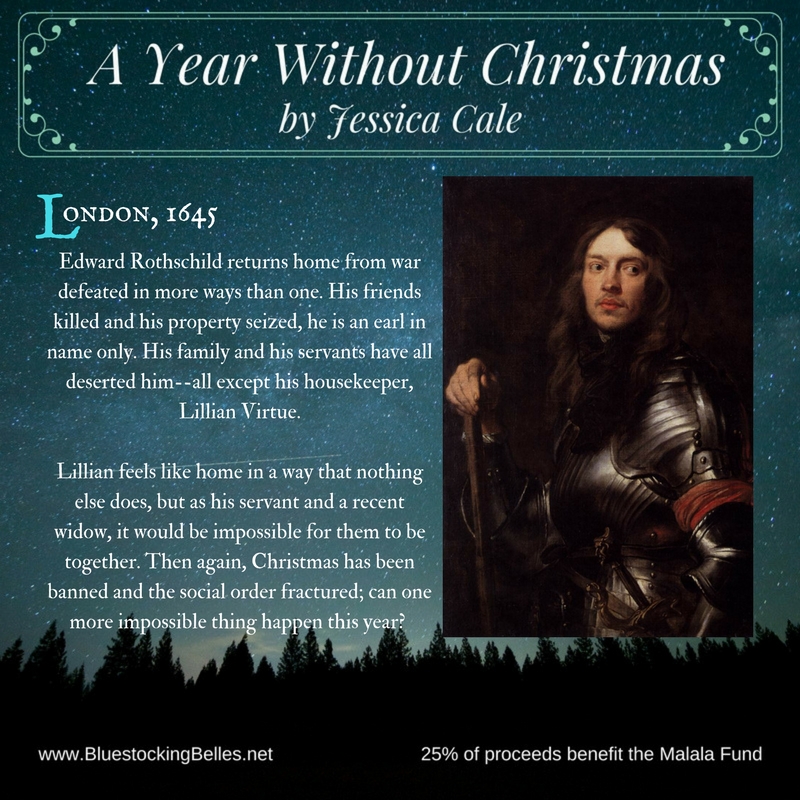
Thanks for stopping by and welcome to London in 1645: a time of intense political and religious upheaval.

Civil War

1645

King Charles I by Anthony van Dyck

In 1645, England was in the midst of a civil war between King Charles I with his Royalist supporters (or Cavaliers) and Parliamentarians (or Roundheads) who wanted a parliamentarian government rather than a royal monarchy.

The English Civil War lasted from 1642 to 1651, and the end saw the trial and execution of Charles I (Beheaded in 1649), the exile of Charles II (in 1651), and the replacement of the English Monarchy with the Commonwealth of England (in 1649-53) followed by The Protectorate under Oliver Cromwell (in 1653-1658) followed by Richard Cromwell (in 1658-59).

The English Monarchy was restored in 1660 when King Charles II returned from exile and retook the English throne. This date also marks the beginning of the Restoration period of England.

The period of time between the beheading of Charles I (in 1649) and the Restoration and return of Charles II (in 1660) is known as an Interregnum.

King Charles I portrait by Anthony van Dyck

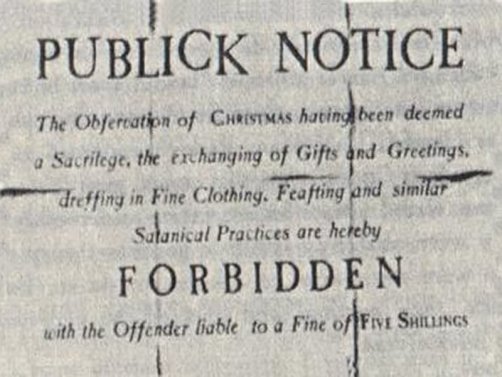
Religious Upheaval, Puritanism, and an Attack on Christmas!

1645By the mid-17th century, Puritans—whose initial goal was to purify the Church of England and abolish any connection with Catholicism due to the idea that the entire organized religion of Catholicism was corrupt—had considerable influence in America and most of Europe. Puritans had power in government and thus the ability to influence laws. In the 1640s, the parliamentary party (working within the elected parliament) began working to suppress saints’ and holy days, including Christmas! This attack on Christmas came about for several reasons: they disliked the extravagance and disorder associated with the celebrations surrounding Christmas, and they saw Christmas as an unwelcome reminder of Catholic traditions (Christ’s mass). Further, they argued there was no biblical justification for celebrating Jesus’s birth.

By 1644, parliament went so far as to stress that December 25th should be a regular day of fasting and humiliation, as it happened to coincide with their weekly holy day. Further, people were directed to consider it a specific time of penance for past carnal delights associated with the holiday.

In January 1645, Parliament fully abolished and made illegal any observation of holy days, apart from Sundays. By 1659, Christmas was even abolished in parts of America, specifically the New England area, which had a strong concentration of Puritans. In fact, though the ban on Christmas in America was repealed in 1681, it wasn’t until the mid-19th century that people widely began celebrating Christmas again in Boston!

A Year Without a Christmas from Never Too Late takes place during this time, when Christmas celebrations were prohibited, and is a theme of the story.

17th Century Fashion

We’ve all seen the extravagant neck ruffs associated with the Elizabethan era. By the 17th century, ruffs began to disappear to be replaced with broad lace or linen collars. Sleeves, which had previously been tight and fitted, became loose and flowing—many had slashed sleeves which revealed the shirt or chemise beneath.

Women’s clothing still consisted of bodices, petticoats, and gowns with wide lace collars and matching kerchiefs. Waistlines raised and lowered throughout the century, favoring a longer, loose silhouette. Men wore shirts, doublets, and hose, and for the first time, shoes began to have heels.

The influence of Puritanism can be felt in fashions of the time, with many apart from the extremely wealthy wearing more somber colors and significantly less lace, which was considered extravagant and wasteful. However, the higher the rank, the more lace was worn as success in Puritan eyes mean that a person was particularly blessed and therefore more Godly.

Women wore the bulk of their hair loose, with the top section pulled back into a bun, and often had bangs or fringe. Married women quit wearing lace caps so characteristic of the previous era. For men, long curls were fashionable. Cocked hats, pinned on one side with a mass of ostrich plumes was characteristic of the 1630s. The ascendance of the wig did not come about until the 1660s.

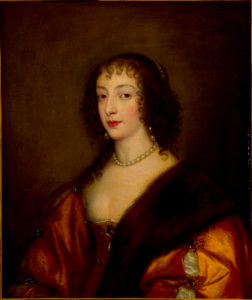
1645

Henrietta Maria of France, Queen of Charles I by Anthony van Dyck

1645

Hester Tradescant, second wife of John Tradescant the younger, attributed to Thomas De Critz, 1645.


1645

Philip IV in Fraga by Diego Velazquez

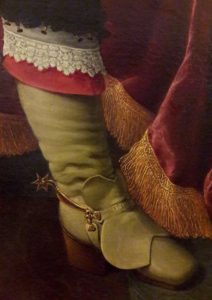
1645

Fashionable heeled boot with butterflies to prevent chafing from spurs.


Giveaway

Comment on all eight blogs in our tour and be entered to win a $25 gift voucher from Amazon and a print copy of Never Too Late!

You can get to all eight blogs via the time machine page on our Bluestocking Belle’s website once all tour stops are published.

Farewell from 1645

Thank you for stopping by. We hope you found your stay informative. Your next stop, takes you back to the beginning of the tour on Jude Knight’s blog, where you’ll visit New Zealand in 1886. Or you can return to the time machine page on our Bluestocking Belle’s website and pick a year.

I wish you safe travels. Good luck. Try not to land in the midst of the Battle of the Somme!

Buy Links

Amazon US  | Barnes & Noble   | iBooks  |  Kobo | Smashwords
Amazon AU  |  Amazon BR  |  Amazon CA  |  Amazon DE  |  Amazon ES  |  Amazon FR  |  Amazon IN  |  Amazon IT  |  Amazon JP  | Amazon MX  |  Amazon NL  |  Amazon UK

A Box of Tittle-Tattle

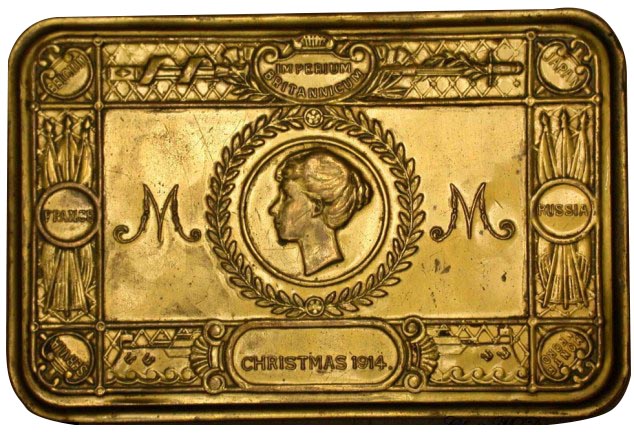
Tin Box1914. The date, printed on a tin box got our attention. One supposes it could be an error of some sort, the date being one-hundred years in the future, but given the odd goings on at Vauxhall last week and at the Marquess of Dansbury’s estate—blue lights and claims of travel to distant times—your Teatime Tattler staff believes the date is correct. Besides, it purports to hold tobacco from “Princess Mary’s Christmas Fund,” and who, pray tell, is Princess Mary?

What was inside, once we pried it open, however, was not tobacco. A folded sheet of paper, oddly yellowed, lay in it. When unfolded (carefully so as not to damage the brittle pages) the text turned out to be in French. Luckily, the Tattler staff was up to the task of translating.

Amiens, Christmas 1916

Dear Aunt Lumina,
The family sends greetings of the holy season along with our hope that those of you in Marseilles, far from the pounding of the guns, fare well and have plenty to eat.

We eke by here in Picardy, with fighting all around. In spite of it all the Christmas market went on in front of the Cathedral as it has in the past. If the booths held fewer goods, the cheer made up for it. The people of the city hold on to hope and (with a few exceptions) good morale.

Tin Box

Rosemarie Legrand

I regret to tell you that one exception is your niece by marriage Sabine Legrand. Even you must know she has ever been a bitter woman and the war has not softened her. I often thought the Good Lord chose to withhold the blessing of motherhood from her lest she inflict her misery on a child. Her jealousy of her poor sister in law Rosemarie—obvious for years—became a river of bile after the birth of little Marcel.

As you know Raoul Legrand died at the hands of the Germans last year, leaving Rosemarie in poverty and at the mercy of his sister. She was forced to move to her father’s cabin in the Floating Islands. Sabine would have us believe that that Rosemarie collaborated with German soldiers, selling her body for food and money. I could almost forgive a mother desperate to feed her son for doing something of that sort, but I find it difficult to believe Sabine. Bernard says Raoul made similar accusations in the taverns during his last leave. He told anyone who would listen that the German boy found dead among the Islands was Rosemarie’s lover. I don’t know what to believe.

Harry Wheatly, her Canadian soldier

Since the Christmas Market Sabine has taken up a different story. We all saw Rosemarie and Marcel walking about with a Canadian soldier who bought sweet cakes for the boy and his mother. Rosemarie certainly couldn’t afford them herself. Sabine tries to make this something dirty and scandalous. I refuse to listen to her.

The British, Canadian, and Australian troops stationed along the Somme have been kind in our dealings with them. One of them gave my Papa the enclosed box still half full of tobacco after commandeering use of his farm wagon to haul supplies. Papa as you know does not use tobacco. He asked me to send it on to Uncle Herbert.

Pray for us in Picardy, particularly for poor mothers such as Rosemarie Legrand struggling to survive long enough to see this war end. I hope she finds joy with her Canadian soldier, if only to spite Sabine. She deserves a crumb of happiness.

My love to the rest of the family,
Josephine

We at the Tattler hope so too.


About Never Too Late

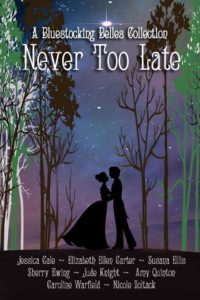
Eight authors and eight different takes on four dramatic elements selected by our readers—an older heroine, a wise man, a Bible, and a compromising situation that isn’t. Set in a variety of locations around the world over eight centuries, welcome to the romance of the Bluestocking Belles’ 2017 Holiday and More Anthology.
It’s Never Too Late to find love!

Click here for a list of retailers and to find out about each story.

Click here to climb into the Bluestocking Belle’s Time Machine and hop through time with the Bluestocking Belles.

Caroline Warfield’s contribution, “Roses in Picardy” takes place in 1916

tin box

About the Author

 Caroline Warfield has been many things. Now retired to the urban wilds of Eastern Pennsylvania, she divides her time between writing and seeking adventures with her grandbuddy and the prince among men she married. Her new series sends the children of the heroes of her earlier books to seek their own happiness in the far-flung corners of the British Empire


Mistletoe never tells tales

It was a good costume; I’ll give her that. Her story was nonsense, of course. But she certainly looked the part she insisted on playing.

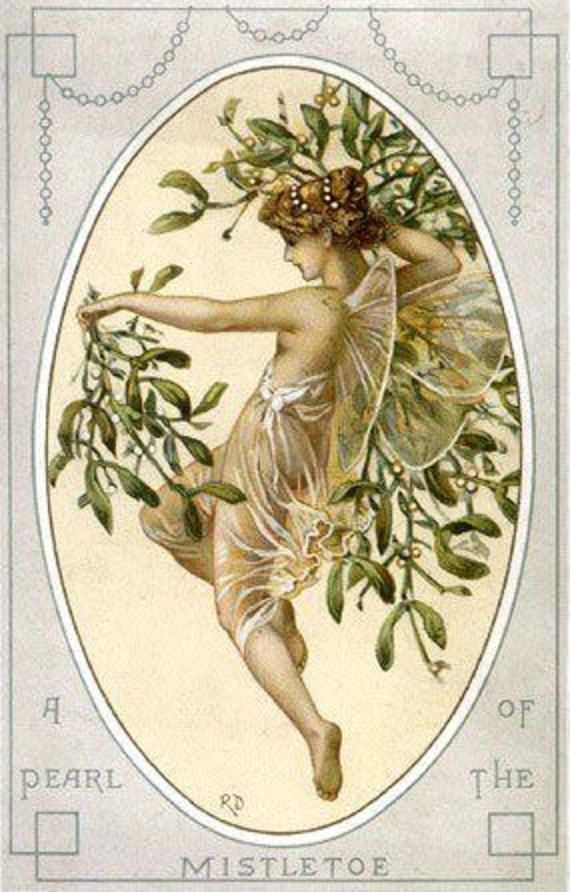
I picked straight away that she was dressed as a tree spirit. And not just any tree, but one eminently suited to the season that had ended the night before. The slenderness was natural, of course. The draperies, a nicely measured compromise between Greek drapery and the current fashion (which called itself Greek but was far fussier), still gave the impression of leaves and a hint of branches in its golden-green overlaid on a golden underskirt. The hair confirmed my instant conclusion; she’d managed to achieve a golden-green colour in her tresses the exact shade of mistletoe leaves, and if that were not clue enough, the beads threaded through her hair were actual mistletoe berries.

A courtesan, I guessed, and one with a generous protector by the jewelry that caressed her slender neck, arms, and ankle, and dangled from her ears. More mistletoe leaves and berries, this time fashioned with gold and opals.

No virtuous woman would be in a coffee house at any time of the day, and certainly not at seven in the morning. Was she heading home, like me? She did look tired, sitting there alone in a booth near the rear of the coffee bar, nursing a cup and staring into space, a small smile on her face as if what she saw in her imagination pleased her.

I had been planning to ask for a pot of coffee to take up to the rooms I kept just down the street. Feast day or no feast day, I had a story to write on the Twelfth Night bacchanal I’d attended at the Duke of Richport’s, and the editor of the Teatime Tattler would expect it on his desk when he returned from taking Epiphany Day gifts to his nieces and nephews.

Even on a good day, when I was neither tired nor busy, I lacked the means to attract such a lovely — and clearly expensive — lady of negotiable virtue.

But something drew me to the tree spirit, and I found myself sitting at the table across from her, waiting for her to notice my presence.

Close up, she was even more beautiful than I thought: an other-worldly beauty enhanced by the colour of her hair, and in no way impaired by the startling eyes she turned towards me, her smile still curling her lips.

They were white, dear reader. I kid you not. Not a pale grey or a blue, as I’ve seen before, but as white as the berries that wreathed her head.

She tipped her head to one side and examined me carefully. “You wish to join me?” She sounded not quite English: the low musical voice pronouncing each word in an exact educated accent, but with a hint of something else. Not French. Not Greek or Latin. Not Gaelic. Something Northern, I thought, and I have not yet studied the Northern languages.

“I do,” I replied, “if you permit. May I buy you another drink?”

She lifted the cup she cradled, and looked into it, a slightly perplexed expression crossing her face as if she wondered when she had emptied it. “It is a lemon-scented tea. It refreshes me.” A single brisk nod, as if she had decided something. “You may if you please, but I am not what you think.”

“You are a tree nymph, of course,” I agreed. “From a mistletoe tree.” I waved to the waiter, and turned back to her once I had her attention.

She nodded again. “Some call us parasites, but others see us as a great blessing.”

“I am Jack Parslow, at your service. I write articles for the Teatime Tattler.”

The lady, for the cultured tones confirmed that she had been born into the same class as myself, raised her brows at that. “Do you think to find a story? Here? With me?”

I told her what Sam Clemens always tell us. “Everyone has a story, miss…”

She extended her hand, palm down. “Gwynneth Santalacaea.” A mischievous smile lit her face when I raised my own brows. Don’t voice it around, because my colleagues at the Tattler would never let me hear the last of it, but as well as a gift for languages and a first in Greek at Oriel, I am a bit of a botanist. The Viscus Albans, the white-berried mistletoe she represented, is classified a member of the Santalacaea family, and Gwynneth is a Welsh name meaning White Lady.

Her smile grew more mocking and recalled me to my manners. I bent and kissed just above the hand, deciding then and there to play along with the identity she had assumed with her costume.

“A busy time of year for you, then, Miss Santalacaea, and I imagine you have many stories to tell.”

“Of those who kiss beneath my branches and take a toll of a berry a kiss?” She lifted to her eyes as if some vision of precious beauty danced just over my right shoulder. “I have seen much magic this holiday season, Mr Parslow. But we mistletoe never tell tales.”

On 15th December, I’m releasing the ecopy of If Mistletoe Could Tell Tales, a collection of six already published holiday stories. To celebrate, I’m giving the book away for the next couple of days,  until midnight GMT on 11 December. Pick up a copy on https://www.instafreebie.com/free/QD1m0, and Merry Christmas or happy whatever holiday you are celebrating.

I hope you enjoy the book, and would be delighted if you chose to leave an honest review to help me with book sales after release.

See my book page for more details about the six stories in the book, and for links to the eretailers where reviews can be left. The print copy is already available on Amazon, and reviews left against that will transfer to the ecopy when the ebook is published.

Oh, and if you have someone who’d love 320 pages of holiday magic for Christmas, consider buying them the print book. Only $12.50 USD, and it is a beautiful object (said proud Mama).
 

Cousin’s Plans Make Nunnery Look Good

nunneryLady Coira Easton stared out the window whilst she waited in her cousin’s solar with trepidation. It had been many a year since their paths had crossed and she had mixed feelings about their reunion. ’Twas not because she was afraid of him or what she had heard about his reputation over the years as the Devil’s Dragon. Nay… such was not the case. She was just uncertain as to where her life would lead her now that he was her only relation.
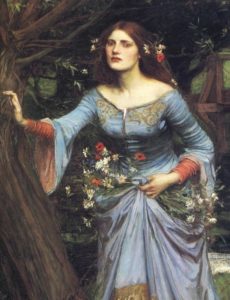

She knew most of what was said about Dristan of Berwyck was a falsehood. Rumor’s had reached her as far as France about her cousin’s ruthlessness upon the battlefield. But she was certain his skill with a sword was how he had become a champion knight for King Henry II. Surely he would find a place within his household for her. She hated the thought of having to join a nunnery.

The solar door swung open and he filled the space with his presence. Coira had forgotten what an impressive sight Dristan was but the welcoming smile upon his face set most of her fears to rest.

“Cousin,” he said opening his arms. “’Tis been far too long since our paths have crossed.”


She went to him and was enfolded into a fierce hug. “My Lord Dristan,” she murmured. “’Tis good to see you. Thank you for receiving me.”

“You can cease with any of that title business, Coira. We are family. As such, we need no formalities between us.”

“How are your mother and father?” she asked, wishing her own parents yet lived. He took her hand and ushered her to a seat by the fire.

“They are well, the last I heard from them.” He went to pour them a goblet of wine and Coira had the distinct feeling he did not wish to have speech about his parents.

“I pray you do not mind that I am here.”

“Mind? Why ever would I mind?”

Coira sipped her goblet whilst she watched her cousin take a seat across from her. “Your poor relation comes to beg lodging from her rich cousin does not bother you? Generally this does not sit well with most people.”

“You are hardly poor and I am not like most people. If you would take a moment to recall, I sent Morgan to find you. Hence you are welcome here.”

“You are too kind, Dristan,” she whispered in relief taking another sip of her wine…

“We will find you a suitable husband.”

… and coughed on the liquid as it began to choke her. “A husband?”

“Aye! I have several noblemen in mind that would be more than adequate to provide a good enough life for you. I will ensure none who press their suit is anything less than a knight,” he said with a satisfied smile.

Adequate? Dristan I–”

“No need to thank me. I shall see to all the details and send runners to those who I think will make a good match.” He drained his wine, stood, and came over to her side. Leaning down, he pressed a kiss upon her cheek. “’Tis good to see you, Coira. Relax whilst we have a room prepared for you and I will see you later at the evening meal.”

Dristan left just as quickly as he arrived whilst Coira sat there stunned. She had a notion a nunnery was looking more appealing than a life spent with some unknown man who would only make an adequate husband.


This is an original piece by Bluestocking Belle Sherry Ewing that gives you a behind the scene look into The Piper’s Lady which can be found in the Belles’ 2017 anthology, Never Too Late.

Blurb:

True love binds them. Deceit divides them. Will they choose love?

Lady Coira Easton spent her youth traveling with her grandfather. Now well past the age men prefer when they choose a wife, she has resigned herself to remain a maiden. But everything changes once she arrives at Berwyck Castle. She cannot resist a dashing knight who runs to her rescue, but would he give her a second look?

Garrick of Clan MacLaren can hold his own with the trained Knights of Berwyck, but as the clan’s piper they would rather he play his instruments to entertain them—or lead them into battle—than to fight with a sword upon the lists. Only when he sees a lady across the training field and his heart sings for the first time does he begin to wish to be something he is not.

Will a simple misunderstanding between them threaten what they have found in one another or will they at last let love into their hearts?

Buy Links:

Amazon US  | Barnes & Noble   | iBooks  |  Kobo | Smashwords

Amazon AU  |  Amazon BR  |  Amazon CA  |  Amazon DE  |  Amazon ES  |  Amazon FR  |  Amazon IN  |  Amazon IT  |  Amazon JP  | Amazon MX  |  Amazon NL  |  Amazon UK

Bio:

Sherry Ewing picked up her first historical romance when she was a teenager and has been hooked ever since. A bestselling author, she writes historical and time travel romances all with a happily ever after ending. An Information Technology Specialist by day, she enjoys writing romance novels to awaken the soul one heart at a time at night. You can learn more about Sherry and her work on the tab above or on these social media outlets:

Website & Books 
Amazon
Bookbub
Facebook
Goodreads
Instagram
Pinterest
Twitter

Page 36 of 51

Powered by WordPress & Theme by Anders Norén