Because history is fun and love is worth working for

Tag: Gossip Page 27 of 40

Mrs. Bingham Tries Again

BinghamHalf-Moon Street, London, 27th August, 1813

My dear Celeste,

I trust your esteemed mama improves in health so that you may soon be free to return to Town, for you are missing the Event of the year. You must know that even we married ladies are all aflutter since the arrival of a certain French gentleman in our midst. Monsieur de Montailhac is the brother-in-law of Sir Richard Hartford, and the son of a French marquis and his wife – a Turkish princess, no less. These details I have from Cecilia Hartford, who is only too ready to boast of her handsome guest.

Indeed, Celeste, I have now been present at two events where the gentleman also figured. I feel such pangs of jealousy against Cecilia, who can feast her eyes on this marvel of masculine beauty every day. He casts even Lord Byron into the shade. His hair is raven black, like his eyes. Oh, such fascinating almond eyes, with a constant roguish twinkle. And his smile makes one forget who and where one is! To the advantages of a trim figure, he adds impeccable style and a delicious French accent that charms us all.

Of course, that odious cousin of Cecilia’s, Mrs Bingham, swoops on the poor man, pushing her poor plain little Lydia at him. [The only man who ever notices Lydia is Jack Barrowman and Mrs B considers him a rustic. She would do well to accept the match for her daughter. It is already Lydia’s third season, is it not?]

And by chance, a little later that day I was in Charters Square in Soho to make a purchase at the showroom of the fine silversmith there, when I espied Monsieur de Montailhac [his name is Arnaut, is it not delightful?] coming out of that very shop, in company with a pretty young lady. They stood and spoke for a time, while I pretended to inspect the goods in the display window. Then he kissed her hand and the smile they exchanged was so intimate, I felt ashamed to be spying on them.

It seems Mrs B is doomed to yet another disappointment over her daughter. But if you wish to see our handsome Frenchman, you should in truth come back soon.

Yr affectionate friend,
Araminta

BinghamAbout the Book

Arnaut de Montailhac’s reputation as a charming rake is well established. Secretly, he longs for a role where he could shine on merit. Perhaps the political events of the summer of 1813 will give him that opportunity.  But when his first official task is to seduce a beautiful young spy, Arnaut suspects he is considered to be nothing more than a charming fribble. However, events quickly turn nasty and he sets off on a quest, determined to prove his true worth. Louise Fauriel, hardworking member of a family of Huguenot silversmiths, is the complete opposite of Arnaut. Linked by the need to smuggle letters from the Bourbon king in exile at Hartwell House to Arnaut’s father, the unlikely pair travel between France and England, with Napoleon’s vengeful agents never more than one step behind. In the desperate race to succeed in this mission, even a rake has no time for love.

Excerpt:       A rake in peril from the ladies

Behind his fixed smile, Arnaut was fuming. He and Richard had taken refuge in the drawing room to settle their plans for the afternoon when Cecilia swept in with a group of ladies. It was evident she was determined to show off her French visitor. Everywhere he looked, he saw ladies nodding and smiling at him. He felt like one of the horses he had seen exhibited at Tattersalls the other day. Servants appeared with tea and cakes. Arnaut was horrified. How could he escape? Yet in less than thirty minutes it would be three o’clock, time for his meeting with Pierre D’Escury in Soho.

He found himself sandwiched between a formidable matron and her shockingly plain daughter. Not for the first time, he regretted his ability to attract ladies. The girl was gazing at him with a sort of dazed intensity, as if he was a rare item in a museum. Arnaut cast an urgent look at Richard, seated in the window alcove beside an elderly lady wearing a monstrous bonnet. Richard met his eye and gave a faint, apologetic smile. No help from him, then.

Now Cecilia came to stand in front of them. ‘How delightful to see you such good friends already with our guest, Cousin Chastity,’ she trilled. ‘I am sure Monsieur de Montailhac is telling you all about the latest Paris fashions.’

In spite of his growing frustration, Arnaut had to swallow a laugh. Nobody could help the name their parents gave them but ‘Chastity’ did not sit well on this large and opulently endowed lady. She turned towards him and beamed. ‘He is making acquaintance with my dear Lydia here. So charming.’

Lydia nodded and wriggled without taking her eyes from his face. Did the girl have any conversation, he wondered, or was she simply her mother’s puppet? He was hemmed in by these three females. He would have felt less threatened among a hostile crowd at a prize fight. Thankfully, someone else addressed Cecilia and she was obliged to move away.

The clock on the mantelpiece struck the hour. Arnaut gave a silent groan. Think, dammit! he told himself. You have to escape without giving offence. He gave an exaggerated start and stood up, pretending to check the time.

‘More tea, Monsieur de Montailhac?’ Cecilia hastened back, blocking his way. This began to seem like a conspiracy. But he was going to escape. He smiled his most charming smile and handed her his cup, still untouched.

‘Thank you, no. I regret, but I am obliged to take my leave,’ he insisted over her shocked protests. ‘In such charming company I had almost forgotten that I’m engaged to spend this afternoon with an elderly friend of my father’s. He is housebound and so you appreciate I cannot disappoint him.’ It was not so far from the truth. He turned and bowed in the grand style his father had taught him. ‘Ladies, I am desolated but I cannot stay.’

He was aware of the sudden silence and the heads turning to follow him. Straight backed, he marched out of the room, letting out a deep breath once the door had closed behind him.

You can buy the book here       https://tinyurl.com/yaf6frr3

The Rake and His Honour, Arnaut’s story, is the second book in the Montailhac Family series. The first brother’s story is told in Scandalous Lady.   https://tinyurl.com/y978tol5

About the Author

Beth ElliottMy Welsh side has given me a vivid imagination which tends to overwhelm my practical Lancashire side. From a very young age I made up adventure stories and persuaded my childhood friends to act them out with me. When I had to join the real world I was a Languages teacher in several countries before giving in to the urge to write stories. A lifelong love of Mr Darcy Jane Austen inspired me to set my Regency Tales in the age of Napoleon. As I enjoy travelling around the Mediterranean, my characters tend to do the same. But they also go to London, Bath and Brighton, where adventures befall them, even when they try to live a normal Regency era life.

There are notes and pictures – and more information about the slightly exotic Montailhac family – at www.bethelliott.webs.com

An Ill-Fated Wedding

March 1826

Lady Bleakmore, well-known leader of society, attended the Duke of Murnane’s Wedding to Miss Julia Barrett of Cambridge, on Friday and has graciously sent our beloved newssheet a report of the festivities. 

First let me say that while one hesitates to speak ill of another, particularly in regard to so auspicious an event as a wedding, and one so well attended by the cream of the haut ton, one cannot but choose plain speaking.

In spite of the unseemly rush to the altar, the couple chose a formal church wedding at Saint George’s Hanover Square, rather than the private ceremony one might have expected under the Unfortunate Circumstances (more about that later). Given the bride’s déclassé origins one might have expected something less grand, but of course the wedding of a duke requires the attention of his peers, and Murnane, a young man of kindness and great promise, is much beloved by all.

Saint George’s Hanover Square, John Salmon [CC BY-SA 2.0] via Wikimedia Commons

The church, festooned with roses and ribbons, provided as rich a setting as one might want for such an event, although orchids have been known to add a certain panache to other ceremonies. The Rector, Mr. Willers, managed a dignified service and restrained his unfortunate tendency to ramble on for the most part.


by Sir John Soanes

The Earl of Chadbourn, the groom’s guardian and uncle, attended him at the altar. One might have expected Randolph Wheatly, his cousin, the younger brother of the countess, to take that role. The other cousin, the wild one, might have stepped in as well, but his regiment posted to India two months ago. Never one to report hearsay, I took a moment to speak with the sacristan about a rather nasty rumor. He confirmed that a loud quarrel tool place during the rehearsal, with the two young men closeted in an office, after which Mr. Wheatly stormed out not to return. Unfortunately my source did not overhear the reason for the conflict. I can only report that the cousin did not attend church, nor was he seen at the breakfast. One speculates about the impact the Unfortunate Circumstances may have had on this conflict.

The earl and his countess hosted a perfectly adequate wedding breakfast at their London town house, a much-admired edifice for all it is overrun by unruly children. Among those in attendance, the Duke and Duchess of Sudbury took precedence. The Duke’s sister (who chooses for reasons that no person of correct thinking understand to be plain Mrs. Mallet) sat along side with her husband, the schoolmaster’s son. The bride’s family, of gentry stock, were surrounded by no fewer than two dukes, four earls, three viscounts, and several barons. One felt sympathy for the people who were quite out of their element, though the manners of the parents were well enough.
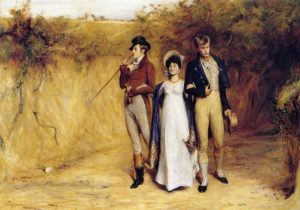
Murnane, known to many as Charles—the Wheatlys being an unrepentantly informal family— greeted all guests graciously taking little notice of rank, as is his habit, one learned, no doubt, from his uncle the earl. A graceful and handsome young man, his subdued yet fashionable clothing enhanced his dignity. The repast made up in abundance what it may have lacked in extravagance; the countess can hold her head up. The groom, of course, didn’t notice the lack of finer tidbits, busy as he was sharing champagne and every appearance of joy with all and sundry.

What can one say of the bride? For all the correctness of her parents’ manners (they obviously understood their place) she is a pushing little thing. She flirted shamelessly with Viscount Corkinwall and several of the rakish young men during the wedding breakfast while her new husband appeared not to notice. One was forced to recall rather vile rumors Lady Elsbeth Willknott had from Cambridge regarding the young woman, rumors not to her credit. It appears she had been close to both of the young dukes cousins, one after another, rather too close. I suppose one cannot blame her for nabbing a duchess’s coronet, the cousins being plain misters, but the stories of her behavior lead to Rampant Speculation that breach among the young men resulted directly from her machinations.
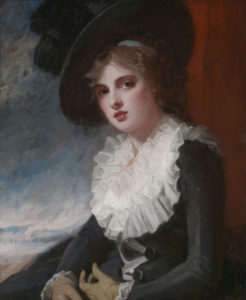
Julia

One would like to assume that her behavior might settle and the conflict resolve itself, but for the Unfortunate Circumstances. I warn those of sensitive natures my plain speaking may offend. To say it with no embroidery, the bride appears to anticipate a Happy Event. While it is said this is often the case with rushed weddings, this one appears to be coming sooner rather than later. Coupled with her outrageous flirting and bold behavior, one is forced to fear for the success of this marriage. Pity. The duke is such a charming young man. He, of course, has the support of well-titled relatives and will always be received everywhere.

Lady Eunice Bleakmore

_____________________________________________________

Readers who’ve read The Renegade Wife and The Reluctant Wife will know the fate of Charles’s marriage and the fate of his relationship with his cousins. Those waiting anxiously for Charles to find his own happily-ever-after will be delighted to know the book is finished and on target for its May release. In the meantime, read books 1 and 2 if you haven’t already. A Dangerous Nativity, which is always free, is prequel in which the three heroes appear as boys.  You can find them all here

weddingAbout The Unexpected Wife

Charles Wheatly, Duke of Murnane, accepts an unofficial fact-finding mission to the East India Company’s enclave in Canton, China on behalf of the queen. He anticipates intrigue, international tensions, and an outlet for his grief over the death of his young son. He isn’t entirely surprised when he also encounters the troublesome offspring of his mentor, the Duke of Sudbury, but the profound love he discovers for the determined young woman is unforeseen and untimely. Charles certainly doesn’t expect to also face his troubled marriage in such an exotic locale. The appearance of his estranged wife in the company of their enemy throws the entire enterprise into conflict, and tensions boil over when the woman he loves is put at risk by his wife’s scheming—and the beginnings of the First Opium War.

Zambak Hayden seethes with frustration. A woman her age has occupied the throne for over a year, yet the Duke of Sudbury’s line of succession still passes over her—his eldest—to land on a son with neither spine nor character. She follows her brother, the East India Company’s newest and least competent clerk, to protect him and to safeguard the family honor—if she also escapes the gossip and intrigues of London and the marriage mart, so much the better. She has no intention of being forced into some sort of dynastic marriage, and she may just refuse to marry at all. The greed and corruption she finds horrifies her, especially when her brother succumbs to the lure of opium. She determines to document the truth and save her brother from falling prey to drugs and sinister forces. When an old family friend arrives she assumes her father sent him. She isn’t about to bend to his dictates nor give up her quest. Her traitorous heart, however, can’t stop yearning for a man she can’t have.

As an epic historical drama unfolds around them, both Charles and Zambak must come to terms with a love that neither expected.

About Caroline Warfield

Family, faith, love of travel, and love of history drive Caroline’s life and writings. You can read about her here.


A Famous Artist Asks For Help

Dear Mr. Clemens,

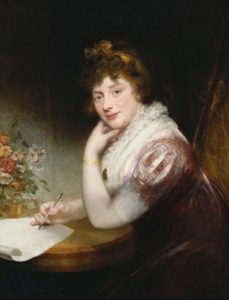
Elisabeth Vigee-Lebrun. A self-portrait. The late 18th-early 19th century French portrait painter was one of Marie-Antoinette’s favourite court painters

I am writing to ask if you will lend your considerable influence as one of society’s leading doyen in sponsoring a talented young artist I have taken a liking to.

Miss Laura Cappleman, you may have heard, made a successful debut in the Season of 1814, but the events after that time have been largely tragic.

You might think it quite selfish of me to make light of the poor girl’s misfortune, but it seems to have quite the unexpected outcome.

You see, her experience has made her art one of a kind. When she paints scenes of the Oriental marketplaces of Africa or of life inside the Ottoman harem, one is utterly transported.

One can feel the beating heat of the sun, smell the pungent aroma of the spices, shudder the menace of the large eunuchs and their scimitars, be awe-struck by the opulence inside these pleasure palaces.

Miss Cappleman knows these places first hand. If her name didn’t ring a bell when I first mentioned it, I’m sure you remember hearing about her abduction in August of 1814 at the hands of white slavers. It was covered in The Times.

The story of her rescue two years later is one of the most remarkable tales I’ve heard. I’m trying to persuade her to draw on her experience more to create great art for the world to see.

The Royal Academy summer exhibition is the perfect opportunity for this young lady to make a debut of another sort – a launch into the artworld which is her due.

A word in the ear of the Royal Academy directors and sponsors to consider this impressive young artist would be considered a personal favour.

Yours,
Elisabeth Vigée-Lebrun

Revenge of the Corsairs

Madame Vigée-Le Brun stood in front of the still life. She pulled a small pince-nez from her reticule to take a close look. After a minute or two, the great French artist left that painting without comment and examined the portrait of Victoria.

Pull yourself together, Laura! If she were to enter the Royal Academy’s exhibition, her works would be judged worthy or wanting in a heartbeat. If she were to exhibit at all, many people would be staring at her work. Yet this somehow, seemed different.

After a length of time, the French woman looked up from the portrait and spoke. “I understand from your sister-in-law that you have returned to England only recently.”

“Yes. I spent time abroad.”

“Did you do anything? Did you see anything?”

Laura’s mouth dried. “I, ah, I mean, I spent time in Sicily and…”

The artist removed the glasses. “And you experienced nothing?”

“I beg your pardon?”

The older woman let out a long, put-upon sigh. “All I see is practiced technique, adequate color choice, and a schoolgirl’s sensibilities.”

Laura couldn’t help the gasp that escaped her mouth.

“I’m sure you are a delight to your friends and family, who no doubt praise you endlessly, but I am not here to coddle or to give you false flattery. I do not see the soul of an artist in these paintings.”

Laura fought a trembling of shame, and fear, and disappointment. It was a small miracle she was able to reply, “Then I am sorry to have wasted your time, Madame.”

The woman shrugged. “I said I would look at your works and I will.”

The third painting, she studied for a few seconds; the fourth, the landscape, received nothing more than a cursory glance. “I spent three years in Rome, I was inducted into the Accademia di San Luca,” she continued conversationally, either unaware or unconcerned Laura’s hope had turned to dust.

“How very nice for you,” replied Laura, bitterness dripping from each word.

“What I am trying to say to you, ma fille, is your work seems utterly unmarked by your time abroad. That, I fear, makes you a dabbler, someone who pretends to be an artist. If you can live on La Méditerranée and not be influenced by such histoire, people, and surroundings, then I’m afraid you will be nothing more than a very little talent.”

Laura looked down. Her knuckles were white, but her face, she was sure, was puce. Her disappointment of a few moments ago was now a rage. How dare that woman say she was unmarked!

“How dare you?” she repeated out loud, unaware Madame Vigée-Le Brun had approached her final painting.

“You have no idea what happened to me there. No idea! I have been scarred to the depths of my soul. I was seized and imprisoned for nearly two years in an Ottoman harem. I was violated repeatedly by a man who had the power of life and death over me. The only good thing I have left is painting. Can you blame me for not wanting it tainted?”

When she looked up, Madame Vigée-Le Brun was not looking at her; she peered instead at the last painting, the Tunisian market scene. “La! That is it – c’est de cela que je parlais!”

Her face animated, the woman turned the easel around so the canvas faced them both. Laura could feel the desert heat of its colors from where she stood.

“You are afraid of this beast that is locked in your breast? Let it out, my dear! You cannot hide from it! I see hints of it in this painting here. In this work, I begin to see the world as you see it.”

Revenge of the Corsairs out now exclusive to Amazon

Dispatch From the Gold Fields

Cheyenne, Wyoming Territory

Dear Mr. Clemens,

Wyoming Gold Fields Western RomanceHere is the report you requested. Of late, I’ve been exploring the rumors of gold to be found in the Wyoming territory of the former colonies. While the rumors are true, the location of the gold fields is on lands belonging to the Sioux nation. Relations are hostile between these aborigines and the somewhat more civilized government of the United States of America. In addition, the area of the gold fields, known as the Black Hills, is exceedingly difficult to access. Thus, few white men and fewer white women have traveled through the place. I have determined to do so, myself. Not for greed of gold, but for greed of experience. I have never denied my eagerness to see what is around the next corner, tree, rock, or river bend. Be that as it may, I am currently in the boomtown of Cheyenne seeking a guide of good reputation to shepherd my little party [Yes, despite her megrims, my maid Analisa is still with me, but more of her peccadillos at another time.]

To continue, I have interviewed a number of guides only one of whom has proven suitable. The first was a shifty-eyed drunk whom I would not allow within my chambers. The second, a Mr. J. Bridger, is a quite famous mountain man. He was sober and very entertaining, but his English is so poor I could scarcely understand him. Heavens, the man could not even read. Nor was his hygiene acceptable.

The third man, Mr. W. Hickock is also quite famous. He is very colorful wearing pistols holstered on each hip and having long, locks of hair, which were kept scrupulously clean, unlike Mr. Bridger. I had almost agreed to accept Mr. Hickock’s services despite his exorbitant fees when the most unruly and oddly dressed female I had ever seen burst into the room and drew her pistol, holding me and Mr. Hickock at gunpoint.

“Y’ ain’t a goin’nowheres without me Bill,” the woman stated. “And I ain’t a lettin’ y’ dilly dally with some hoity toity female foreigner. ‘Til I sez otherwise, I’m the onliest woman whose skirts y’ kin lift.

Did I mention that this creature wore men’s pants and a fur covering that looked as if it had once been part of a bear? I bristled at being called hoity toity by anyone of such obviously low stamp, to say nothing of the idea that I might ‘lift my skirts’ for any strange man. Before I could issue the set down this woman deserved. Mr. Hickock was on his feet, nobly placing his body between me and the pistol’s line of fire.

“Now Jane,” he said in a tone used to sooth wild animals. “You know I wouldn’t try to two-time you or any woman to whom I commit myself.”

“I know nothin’ of the sort, and won’t ‘til y’ agree t’ marry me.”

“I’m already married, Jane, as you are well aware.”

“Don’t keep you from cattin’ around with saloon dancers and squaws.”

Mr. Hickock cast a glance at me and could see I was less that pleased over what I’d heard and seen. I shook my head at him. He sighed and picked up his hat, then took Jane by the arm and escorted her from the room.

I have discovered that very few words are needed in this part of the world to convey significant information. Mr. Hickock perceived correctly that I would not be needing his services in any capacity. Yet he was kind enough to send another guide for me to interview.

This character, one Skinner Jones, I might have rejected instantly. Jones personal hygiene looked and smelled no better than Mr. Bridger’s. However, the educated speech that came from Jones’s mouth roused my interest, so I invited my guest to share tea with me as we discussed the possibility of escort from Cheyenne to the Black Hills.

Jones, despite all appearances and scents, was surprisingly erudite. Our conversation ranged from the Souix and their situation, to life on the Wyoming trails, and from there to the exigencies of my own travels. We discussed Dickens, Milton, and Shakespeare. I was introduced to new authors such as Poe, Melville, and Clemens. (Hence my communication started with that last author as a result of reading some very entertaining tales written under the pen name of Mark Twain.)

Not only was Jones an educated, well-spoken, and entertaining conversationalist, the guide exhibited a startling degree of comfort with proper conduct during a tea service. When I probed for more of Jones’s background, the guide became evasive and skillfully re-directed my questions. In another person, say of Mr. Bridger’s ilk, I might have become wary enough to decline that person’s escort. However, the combination of Jones’s manners, obvious erudition, and skillful handling of the most probing questions sparked my curiosity.

By the time we had finished our tea and conversation began to lag, I had made up my mind. I offered Jones the job. The guide would accept only if I chose to avoid the Black Hills and would be willing to travel to other safer locations in the territory. Jones guaranteed me I would not be disappointed. A description of Lake Yellowstone, the Wind River, and an area called Smoke Valley intrigued me so much that I was eager to dispense with any plans to visit the black Hills. There was one other item which decided my cooperation with Jones’s plans. Throughout our conversation, I observed that Jones behaved more like a female—the handling of cups and saucers, a certain delicacy of conduct when eating the cakes and drinking the tea, and a number of very subtle mannerisms that, in this wild western environment, perhaps only another delicately raised woman might recognize. What in the world was such a woman doing masquerading as a teamster? How had she come by the skills to, as is said in the west, ‘skin mules’ and earn the regard of men such as Mr. Hickock?

I had to know the answers to these questions and more. When I do, I shall write them down and if I obtain Jones’s permission will seek to publish the Legend of Skinner Jones. In the interim, I will be able to continue sending to the Tattler small tidbits detailing my adventures in Wyoming in the company of Skinner Jones.

Western Romance WyomingAbout the Book

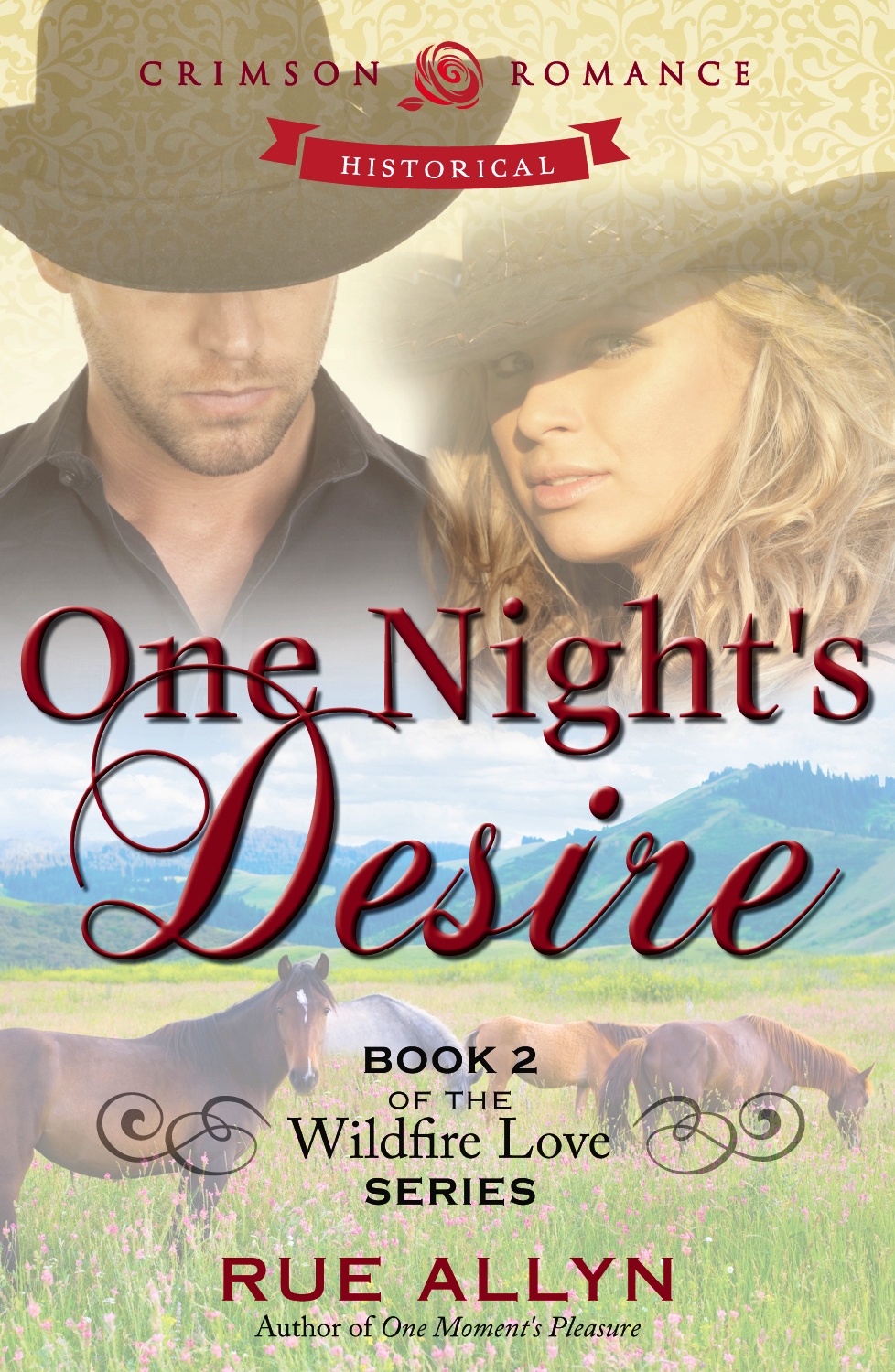
One Night’s Desire, Historical Western Romance (1870 Wyoming)

A WOMAN ON THE RUN ~ Rustlers, claim jumpers and fire, nothing will stop Kiera Alden from reuniting her family. But an accusation of murder threatens her dreams and sets Marshall Evrett Quinn on her trail. She may be able to escape prison bars and eventually prove her innocence, but she can’t escape Quinn’s love.

A LAWMAN IN HOT PURSUIT ~ Marshall Evrett Quinn is relentless in pursuit of law-breakers, and pretty Kiera Alden is no exception. Clever and courageous, she evades him until chance encounter turns the tables. Finally, he has this elusive desperado under arrest, but success is bittersweet when she captures his heart.

Buy Links for One Night’s Desire:

Amazon–http://www.amazon.com/Nights-Desire-Crimson-Romance-ebook/dp/B00DL3ALFC/
B & N–http://www.barnesandnoble.com/w/one-night-s-desire-rue-allyn/1115916242?ean=9781440567186
Crimson Romance–http://www.crimsonromance.com/historical-romance-novels/one-nights-desire/
Kobo–http://store.kobobooks.com/en-US/ebook/one-night-s-desire

Excerpt

You can read an excerpt of One Night’s Desire here http://rueallyn.com/2c2ONDexcerpt.html.

Rue Allyn About the Author

Rue Allyn is the award-winning author of Historical, Contemporary and erotic Romance. When not writing, Rue travels the world and surfs the internet in search of background material and inspiration for her next heart melting romance. She loves to hear from readers, and you may contact her at  contact@RueAllyn.com. She can’t wait to hear from you.

Social Links:

FB–http://www.facebook.com/RueAllynAuthor/
Twitter–http://twitter.com/RueAllyn
Amazon–http://www.amazon.com/Rue-Allyn/e/B00AUBF3NI

I had a terrific time today providing some of my research on my current work in progress, tentatively titled The Legend of Skinner Jones. This book tells the story of Boyd Alavarez and Elise Van Demer, two secondary characters from One Night’s Desire ~ Wildfire Love Book 2. The action of the Skinner Jones story takes place a few years after that of One Night’s Desire. Here’s a little more information about that book.

A Box of Tittle-Tattle

Tin Box1914. The date, printed on a tin box got our attention. One supposes it could be an error of some sort, the date being one-hundred years in the future, but given the odd goings on at Vauxhall last week and at the Marquess of Dansbury’s estate—blue lights and claims of travel to distant times—your Teatime Tattler staff believes the date is correct. Besides, it purports to hold tobacco from “Princess Mary’s Christmas Fund,” and who, pray tell, is Princess Mary?

What was inside, once we pried it open, however, was not tobacco. A folded sheet of paper, oddly yellowed, lay in it. When unfolded (carefully so as not to damage the brittle pages) the text turned out to be in French. Luckily, the Tattler staff was up to the task of translating.

Amiens, Christmas 1916

Dear Aunt Lumina,
The family sends greetings of the holy season along with our hope that those of you in Marseilles, far from the pounding of the guns, fare well and have plenty to eat.

We eke by here in Picardy, with fighting all around. In spite of it all the Christmas market went on in front of the Cathedral as it has in the past. If the booths held fewer goods, the cheer made up for it. The people of the city hold on to hope and (with a few exceptions) good morale.

Tin Box

Rosemarie Legrand

I regret to tell you that one exception is your niece by marriage Sabine Legrand. Even you must know she has ever been a bitter woman and the war has not softened her. I often thought the Good Lord chose to withhold the blessing of motherhood from her lest she inflict her misery on a child. Her jealousy of her poor sister in law Rosemarie—obvious for years—became a river of bile after the birth of little Marcel.

As you know Raoul Legrand died at the hands of the Germans last year, leaving Rosemarie in poverty and at the mercy of his sister. She was forced to move to her father’s cabin in the Floating Islands. Sabine would have us believe that that Rosemarie collaborated with German soldiers, selling her body for food and money. I could almost forgive a mother desperate to feed her son for doing something of that sort, but I find it difficult to believe Sabine. Bernard says Raoul made similar accusations in the taverns during his last leave. He told anyone who would listen that the German boy found dead among the Islands was Rosemarie’s lover. I don’t know what to believe.

Harry Wheatly, her Canadian soldier

Since the Christmas Market Sabine has taken up a different story. We all saw Rosemarie and Marcel walking about with a Canadian soldier who bought sweet cakes for the boy and his mother. Rosemarie certainly couldn’t afford them herself. Sabine tries to make this something dirty and scandalous. I refuse to listen to her.

The British, Canadian, and Australian troops stationed along the Somme have been kind in our dealings with them. One of them gave my Papa the enclosed box still half full of tobacco after commandeering use of his farm wagon to haul supplies. Papa as you know does not use tobacco. He asked me to send it on to Uncle Herbert.

Pray for us in Picardy, particularly for poor mothers such as Rosemarie Legrand struggling to survive long enough to see this war end. I hope she finds joy with her Canadian soldier, if only to spite Sabine. She deserves a crumb of happiness.

My love to the rest of the family,
Josephine

We at the Tattler hope so too.


About Never Too Late

Eight authors and eight different takes on four dramatic elements selected by our readers—an older heroine, a wise man, a Bible, and a compromising situation that isn’t. Set in a variety of locations around the world over eight centuries, welcome to the romance of the Bluestocking Belles’ 2017 Holiday and More Anthology.
It’s Never Too Late to find love!

Click here for a list of retailers and to find out about each story.

Click here to climb into the Bluestocking Belle’s Time Machine and hop through time with the Bluestocking Belles.

Caroline Warfield’s contribution, “Roses in Picardy” takes place in 1916

tin box

About the Author

 Caroline Warfield has been many things. Now retired to the urban wilds of Eastern Pennsylvania, she divides her time between writing and seeking adventures with her grandbuddy and the prince among men she married. Her new series sends the children of the heroes of her earlier books to seek their own happiness in the far-flung corners of the British Empire


Page 27 of 40

Powered by WordPress & Theme by Anders Norén