Clemens,
Regarding the recent marriage of the Earl of Chadbourn to that country mouse who appears to be some sort of relative of his late brother-in-law, I found the affair to be respectable enough but woefully modest for a man of his stature. I suppose some find a village church wedding charming, but your readers would no doubt prefer to hear about a fully realized society affair at Saint George, Hanover Square, or even Saint Paul’s. Still, I managed to unearth a few tidbits to report, per your request.

The Landrum family was out in force of course, even Lady Flora who so scandalously married in a rush. There was much talk about the hurry, because the family was in mourning for her sister’s husband. Neither she nor her new spouse, Lord Ethan Alcott—who makes no effort to disguise the obvious deformity he brought back from war—appeared the slightest concerned about talk. Her attendence was particularly shocking, when her obvious queasiness gave evidence that she anticipates an interesting event.
Of more interest to your readers, Lord Ethan’s brother, the very eligible Viscount Penrhyd, who is after all the heir to a Marquess, attended. He escaped entanglement last Season and showed no particular preference for any lady at the wedding, so the hopeful young women of London may take heart.
The ladies may also note that the Marquess of Glenaire stood up with Chadbourn. The man would be an breathtaking catch for any hopeful debutante—rich as Croesus, heir to the Duke of Sudbury who claims precedence following only the royal dukes, and well to look at—but alas an elusive one. Some find him as handsome as sin; I for one find him cold. Those icy blue eyes quite give one a shudder. I would warn any young lady under my patronage to avoid him.

Glenaire’s entire family attended the wedding. That the Duke and Duchess of Sudbury honored Chadbourn with their company was no surprise, given the son’s friendship. Their youngest daughter, who recently completed her second season (perhaps third, I quite forget) without a betrothal, spent the affair trying to attract the attention of Penrhyd with little success. The presence of their oldest (and let me say quite unmarried) daughter, Lady Georgiana, was the biggest surprise. They call her The Recluse of Cambridge, and she rarely appears in society. She appeared every inch the spinster she is.
Baron Ross’s rakehell son, the Honorable James Heyworth managed to behave like a gentleman, though he imbibed a bit much. One recalls that he, Glenaire, and Chadbourn, were fast friends before war with the despicable French sent most of them off. It caused me to recall their other friend, Andrew Mallet. He lacked the connections of the other three, but went about in society with them when the four came down from university. He too went off to war and came back rather sadly scarred.

I raise his name because the presence of the others and Lady Georgiana brought to mind some old gossip. It has been several years, but I seem to recall rumors regarding the duke’s daughter and the scholar’s son. Odd that he didn’t attend, and she did. Plus, there is the Cambridge connection for I am positive he grew up there. You might want to put some of your people on it to see if there is something delicious to uncover.
I endured the wedding for your sake, my dear Clemens, overrun as it was with small boys and odd servants. (Chadbourn does hire a peculiar collection of scarred, limping, and deaf retainers, former soldiers all. Admirable, but unpleasant for his guests.) In any case I trust you to keep my name off any items you decide to publish. I do appreciate your little gifts. Leaving a packet at Williamson’s Lending Library as you have before, makes for a pleasant surprise.
Your devoted friend,
Lady Albright
About the Book
There are indeed grounds for the rumors about Lady Georgiana and Andrew Mallet. Their story is in Dangerous Works.
A little Greek is one thing; the art of love is another.

Only one man ever tried to teach Lady Georgiana Hayden both. Now she has taken on a body of work; translating the poetry of the women of ancient Greece. If it takes a scandalous affair to teach her what she needs to complete her work, she will risk it.
Major Andrew Mallet returns to Cambridge a battle-scarred hero and would be scholar. His last encounter with Georgiana cost him eleven years of his life. Determined to avoid her, he seeks work to heal his soul and make his scholar father proud. The work she offers risks his career, his peace of mind, and (worst of all) his heart. Can he protect himself from a woman who almost destroyed him? Does he want to?
FREE with Kindle Unlimited or for purchase at https://www.amazon.com/Dangerous-Works-Caroline-Warfield-ebook/dp/B00N9KHDWQ/
As to the Earl of Chadbourn, the story of he and his “country mouse” can be found in A Dangerous Nativity, which is always ***FREE*** at various retailers.
Lady Flora, Lord Ethan, and Viscount Penryth appear in “Lord Ethan’s Honor,” in the Bluestocking Belles’ Collection, Fire & Frost.
The very elusive Marquess of Glenaire finally gets taken down a peg or two in Dangerous Weakness, also FREE with Kindle Unlimited.
About the Author
Caroline Warfield, Bluestocking Belle and lover of romance, writes stories set in the Regency and Victorian eras from her desk in the urban wilds of eastern Pennsylvania when she isn’t traveling the world with her Beloved looking for interesting places to send her characters.
 Extract from the diary of Lady Caroline Chantry, sister to Giles, Marquess of Huntercombe. November 1803
 My poor, dear sister, Letty, and I attended the wedding at Huntercombe House only this morning. How I shall ever hold up my head again, I cannot say. But Giles has informed us that if we do not wish for a public breach we must recognise his bride and really, what choice do we have? But such a wedding! The bride’s father and mother were there, but did the poor Earl of Dersingham give his daughter away? He did not! Instead the bride’s children did so, if you please! I wonder the marriage can be considered legal with such a flagrant disregard for all decency. And all Giles would say when I mentioned it, and very tactfully! was that since Dersingham had apparently not shown up for Emma’s first wedding they had thought it wiser not to rely on him this time!
 About the Book: His Convenient Marchioness
 About the Author

 The earl and his countess hosted a perfectly adequate wedding breakfast at their London town house, a much-admired edifice for all it is overrun by unruly children. Among those in attendance, the Duke and Duchess of Sudbury took precedence. The Duke’s sister (who chooses for reasons that no person of correct thinking understand to be plain Mrs. Mallet) sat along side with her husband, the schoolmaster’s son. The bride’s family, of gentry stock, were surrounded by no fewer than two dukes, four earls, three viscounts, and several barons. One felt sympathy for the people who were quite out of their element, though the manners of the parents were well enough.
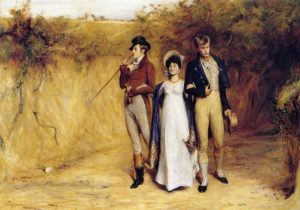 What can one say of the bride? For all the correctness of her parents’ manners (they obviously understood their place) she is a pushing little thing. She flirted shamelessly with Viscount Corkinwall and several of the rakish young men during the wedding breakfast while her new husband appeared not to notice. One was forced to recall rather vile rumors Lady Elsbeth Willknott had from Cambridge regarding the young woman, rumors not to her credit. It appears she had been close to both of the young dukes cousins, one after another, rather too close. I suppose one cannot blame her for nabbing a duchess’s coronet, the cousins being plain misters, but the stories of her behavior lead to Rampant Speculation that breach among the young men resulted directly from her machinations.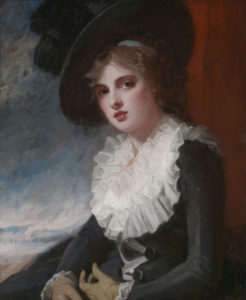
 About The Unexpected Wife
 After a standard Church of England ceremony, conducted I must say with Little Elegance, but blessedly no Whiff of Papist Nonsense, we retired to Eversham Hall for a breakfast provided by the Duke. The fare rated Tolerable at best, with the meal more than adequate but the cakes being of little distinction. The entertainment was flawed by Running Herds of small children. One might have expected better in a home of this station, but one would have been disappointed. This Sad Fact owes itself, perhaps, to the absence of the duchess. His Grace, being a Man, did his best no doubt, but he is rarely home long enough to ensure a well-run household.
 About the Book