March 1826
Lady Bleakmore, well-known leader of society, attended the Duke of Murnane’s Wedding to Miss Julia Barrett of Cambridge, on Friday and has graciously sent our beloved newssheet a report of the festivities.
First let me say that while one hesitates to speak ill of another, particularly in regard to so auspicious an event as a wedding, and one so well attended by the cream of the haut ton, one cannot but choose plain speaking.
In spite of the unseemly rush to the altar, the couple chose a formal church wedding at Saint George’s Hanover Square, rather than the private ceremony one might have expected under the Unfortunate Circumstances (more about that later). Given the bride’s déclassé origins one might have expected something less grand, but of course the wedding of a duke requires the attention of his peers, and Murnane, a young man of kindness and great promise, is much beloved by all.

Saint George’s Hanover Square, John Salmon [CC BY-SA 2.0] via Wikimedia Commons

by Sir John Soanes
The Earl of Chadbourn, the groom’s guardian and uncle, attended him at the altar. One might have expected Randolph Wheatly, his cousin, the younger brother of the countess, to take that role. The other cousin, the wild one, might have stepped in as well, but his regiment posted to India two months ago. Never one to report hearsay, I took a moment to speak with the sacristan about a rather nasty rumor. He confirmed that a loud quarrel tool place during the rehearsal, with the two young men closeted in an office, after which Mr. Wheatly stormed out not to return. Unfortunately my source did not overhear the reason for the conflict. I can only report that the cousin did not attend church, nor was he seen at the breakfast. One speculates about the impact the Unfortunate Circumstances may have had on this conflict.
 The earl and his countess hosted a perfectly adequate wedding breakfast at their London town house, a much-admired edifice for all it is overrun by unruly children. Among those in attendance, the Duke and Duchess of Sudbury took precedence. The Duke’s sister (who chooses for reasons that no person of correct thinking understand to be plain Mrs. Mallet) sat along side with her husband, the schoolmaster’s son. The bride’s family, of gentry stock, were surrounded by no fewer than two dukes, four earls, three viscounts, and several barons. One felt sympathy for the people who were quite out of their element, though the manners of the parents were well enough.
Murnane, known to many as Charles—the Wheatlys being an unrepentantly informal family— greeted all guests graciously taking little notice of rank, as is his habit, one learned, no doubt, from his uncle the earl. A graceful and handsome young man, his subdued yet fashionable clothing enhanced his dignity. The repast made up in abundance what it may have lacked in extravagance; the countess can hold her head up. The groom, of course, didn’t notice the lack of finer tidbits, busy as he was sharing champagne and every appearance of joy with all and sundry.
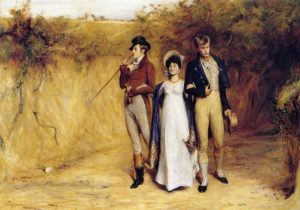 What can one say of the bride? For all the correctness of her parents’ manners (they obviously understood their place) she is a pushing little thing. She flirted shamelessly with Viscount Corkinwall and several of the rakish young men during the wedding breakfast while her new husband appeared not to notice. One was forced to recall rather vile rumors Lady Elsbeth Willknott had from Cambridge regarding the young woman, rumors not to her credit. It appears she had been close to both of the young dukes cousins, one after another, rather too close. I suppose one cannot blame her for nabbing a duchess’s coronet, the cousins being plain misters, but the stories of her behavior lead to Rampant Speculation that breach among the young men resulted directly from her machinations.
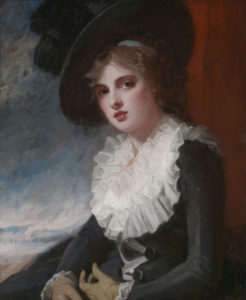
Julia
One would like to assume that her behavior might settle and the conflict resolve itself, but for the Unfortunate Circumstances. I warn those of sensitive natures my plain speaking may offend. To say it with no embroidery, the bride appears to anticipate a Happy Event. While it is said this is often the case with rushed weddings, this one appears to be coming sooner rather than later. Coupled with her outrageous flirting and bold behavior, one is forced to fear for the success of this marriage. Pity. The duke is such a charming young man. He, of course, has the support of well-titled relatives and will always be received everywhere.
Lady Eunice Bleakmore
_____________________________________________________
Readers who’ve read The Renegade Wife and The Reluctant Wife will know the fate of Charles’s marriage and the fate of his relationship with his cousins. Those waiting anxiously for Charles to find his own happily-ever-after will be delighted to know the book is finished and on target for its May release. In the meantime, read books 1 and 2 if you haven’t already. A Dangerous Nativity, which is always free, is prequel in which the three heroes appear as boys. You can find them all here
 About The Unexpected Wife
Charles Wheatly, Duke of Murnane, accepts an unofficial fact-finding mission to the East India Company’s enclave in Canton, China on behalf of the queen. He anticipates intrigue, international tensions, and an outlet for his grief over the death of his young son. He isn’t entirely surprised when he also encounters the troublesome offspring of his mentor, the Duke of Sudbury, but the profound love he discovers for the determined young woman is unforeseen and untimely. Charles certainly doesn’t expect to also face his troubled marriage in such an exotic locale. The appearance of his estranged wife in the company of their enemy throws the entire enterprise into conflict, and tensions boil over when the woman he loves is put at risk by his wife’s scheming—and the beginnings of the First Opium War.
Zambak Hayden seethes with frustration. A woman her age has occupied the throne for over a year, yet the Duke of Sudbury’s line of succession still passes over her—his eldest—to land on a son with neither spine nor character. She follows her brother, the East India Company’s newest and least competent clerk, to protect him and to safeguard the family honor—if she also escapes the gossip and intrigues of London and the marriage mart, so much the better. She has no intention of being forced into some sort of dynastic marriage, and she may just refuse to marry at all. The greed and corruption she finds horrifies her, especially when her brother succumbs to the lure of opium. She determines to document the truth and save her brother from falling prey to drugs and sinister forces. When an old family friend arrives she assumes her father sent him. She isn’t about to bend to his dictates nor give up her quest. Her traitorous heart, however, can’t stop yearning for a man she can’t have.
As an epic historical drama unfolds around them, both Charles and Zambak must come to terms with a love that neither expected.
About Caroline Warfield
Family, faith, love of travel, and love of history drive Caroline’s life and writings. You can read about her here.

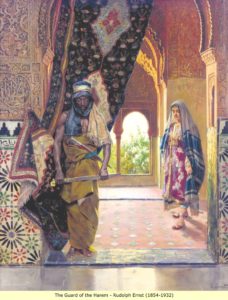 Miss Cappleman knows these places first hand. If her name didn’t ring a bell when I first mentioned it, I’m sure you remember hearing about her abduction in August of 1814 at the hands of white slavers. It was covered in The Times.
 Madame Vigée-Le Brun stood in front of the still life. She pulled a small pince-nez from her reticule to take a close look. After a minute or two, the great French artist left that painting without comment and examined the portrait of Victoria.
 “Yes. I spent time abroad.”
 Laura looked down. Her knuckles were white, but her face, she was sure, was puce. Her disappointment of a few moments ago was now a rage. How dare that woman say she was unmarked!
 Here is the report you requested. Of late, I’ve been exploring the rumors of gold to be found in the Wyoming territory of the former colonies. While the rumors are true, the location of the gold fields is on lands belonging to the Sioux nation. Relations are hostile between these aborigines and the somewhat more civilized government of the United States of America. In addition, the area of the gold fields, known as the Black Hills, is exceedingly difficult to access. Thus, few white men and fewer white women have traveled through the place. I have determined to do so, myself. Not for greed of gold, but for greed of experience. I have never denied my eagerness to see what is around the next corner, tree, rock, or river bend. Be that as it may, I am currently in the boomtown of Cheyenne seeking a guide of good reputation to shepherd my little party [Yes, despite her megrims, my maid Analisa is still with me, but more of her peccadillos at another time.]
 The third man, Mr. W. Hickock is also quite famous. He is very colorful wearing pistols holstered on each hip and having long, locks of hair, which were kept scrupulously clean, unlike Mr. Bridger. I had almost agreed to accept Mr. Hickock’s services despite his exorbitant fees when the most unruly and oddly dressed female I had ever seen burst into the room and drew her pistol, holding me and Mr. Hickock at gunpoint.
 This character, one Skinner Jones, I might have rejected instantly. Jones personal hygiene looked and smelled no better than Mr. Bridger’s. However, the educated speech that came from Jones’s mouth roused my interest, so I invited my guest to share tea with me as we discussed the possibility of escort from Cheyenne to the Black Hills.
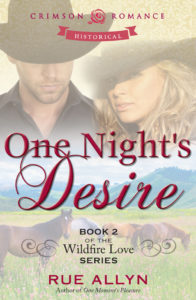 About the Book
 About the Author
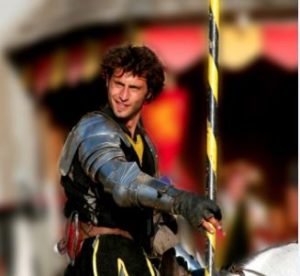 Her own eyes scanned the men ’til she found the one her heart continuously sought. Geoffrey… even thinking his name brought a smile to her lips and when he saw that she neared, he gave her that lopsided grin she had come to cherish. He was a cocky one and knew what he did to her with just one look in her direction, the rogue!