Because history is fun and love is worth working for

Category: Teatime Tattler Page 76 of 152

IS DUKE BEHIND ASSASSINATION ATTEMPT?

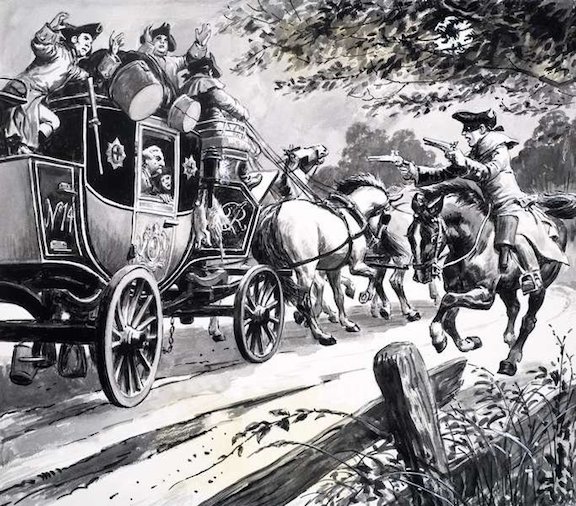
Sam, did you hear the Earl of Sutton was attacked earlier today? Footpads, they said. About twenty minutes later, a carter lost control of his horses just as his dray was passing Sutton’s children on a schoolroom outing. And you know assailants have had a go at both of Sutton’s sons in the past few days, too.

As an aside, Sutton beat his assailants to a pulp. He’s as tough as his sons, it seems. And the one still in the schoolroom whipped his schoolmates out of the way of the dray. He’ll be another formidable warrior when he grows up.

But that’s not the point, Sam.

I’ve found out who paid for all the attacks, and you’re never going to believe it. I was told in confidence, mind, and if we want the servants inside of Haverford House to keep slipping us bits of news we can’t use it. It’ll be a start to our own investigation, though.

That’s right. Haverford House, and yes, it was the Duke. The Merry Marquis is furious. He’s threatening to have his father locked up. Can he do that, Sam?

***

The Children of the Mountain King

Welcome to Jude Knight’s new series.

In 1812, high Society is rocked by the return of the Earl of Sutton, heir to the dying Duke of Winshire. James Winderfield, Earl of Sutton, Winshire’s third and only surviving son, has long been thought dead, but his reappearance is not nearly such a shock as those he brings with him, the children of his deceased Persian-born wife and fierce armed retainers.

This series begins with a prequel novella telling the love story of James senior and Mahzad (Paradise Regained), then leaps two decades to a series of six novels as the Winderfield offspring and their cousins search for acceptance and love.

To Wed a Proper Lady, the first novel, is on preorder and will be released on 15 April.

Follow the links for more details and for buy links.

Meanwhile, here’s an excerpt about the assaults from the point of view of the Duchess of Haverford. It appears in Paradise Lost, a novella about the duchess that I’m giving away free with my next newsletter in a couple of days. It tells of how Eleanor Creydon became Eleanor, Duchess of Haverford, a lynchpin character in my Regency and Victorian stories, and also backgrounds the series.

Haverford House, London, July 1812

The Duchess of Haverford took tea in her rooms this quiet Monday afternoon. She was alone for once; even the maid who brought the tray sent off back to the servants’ hall. Her life was such a bustle, and for the most part, that was how she liked it, but just for once, it was nice to have an afternoon to herself. No meetings. No entertainments to attend or offer. Not even any family members—her current companion had gone to visit her mother for her afternoon off, Aldridge was about his own business, her youngest ward was at lessons, and the two older girls had been invited on an outing with a friend.

As to Haverford, who knew where he was? But he would not disturb her here.

The thought had barely crossed her mind when a knock sounded; not the discreet tap of a servant, but a firm rap. Not the duke. He wouldn’t knock. “Enter,” she called.

Aldridge let himself into the room.  He greeted her with his usual aplomb, asked after her day, but she could tell immediately that he was agitated. “What is wrong, my son?”

“I have no easy way to say this, Mama.” He knelt before her and took her hands. “Sutton has been assaulted in the street, and his schoolroom party was also attacked. A runaway brewer’s dray that was not a runaway at all.” He squeezed her hands, pulling her back from her sudden dizziness. “Sutton gave his assailants a drubbing, and the children and their attendants are unhurt, thanks to swift action on the part of their escort.”

Eleanor let out the air she was holding. “Thank goodness! And thank you, my dear, for letting me know before gossip made it so much worse.”

Aldridge frowned slightly. “There is more. I heard of the assault on Sutton before it happened, and arrived with help just after. Mama, my secretary was asked to be the paymaster for the assailants. And guess who gave him the command.”

She knew before her son said it. Breathed the words with him. “His Grace? Surely not. After the assassin at the duel, why would he do something like this again?”

“His Grace.” Aldridge confirmed. He leapt to his feet and paced the room, not able to keep still for a moment, his body expressing the agitation his face refused to display. “He is getting worse, Mama. Whether it would have happened anyway, or whether the arrival of Sutton lit the flame, he lives on the point of explosion.”

“I know, my dear.” She knew better than Aldridge, in fact. Despite the long estrangement between her and her husband, they nonetheless lived in the same house, attended some of the same social gatherings, worked side-by-side for the same political causes. Aldridge kept largely to his own wing when he was under the same roof as his parents, which was increasingly rare. He managed all the vast business of the duchy, but Haverford had long since let go those reins to the extent that his only association with Aldridge tended to be through the bills and notes of hand that arrived regularly to be paid.

Aldridge thumped the mantlepiece. “This latest start… if word gets out that Haverford was behind the attack on Sutton and his family, it will be a disaster. Sutton would be well within his rights to demand Haverford’s trial for attempted murder. This family is no stranger to scandal, Mama, and there’s no doubt in my mind His Grace deserves to be hanged, silken noose or not, but…”

Eleanor’s distress was such she found herself chewing her lip. “Thank God no one was seriously hurt.”

“Thank Sutton and his sons for their warrior-craft, and my secretary for telling me in time to lead a rescue.” Aldridge heaved a deep sigh and took another fast turn around the carpet. “He intended murder, Mama, and when I confronted him with it, he laughed and said he did it for England. He has gone too far, Mama. If he is found out, he puts us all at risk. What if the Regent decides to regard a murder attempt on another peer as treason?”

Eleanor had not considered that possibility. The title could be attained, the lineage considered corrupt. Aldridge had worked for years to rebuild the wealth of the duchy after his father’s mismanagement. He could lose it all, including the title, and the Prince would be delighted to benefit.

Haverford had become more and more erratic as the year progressed. He insulted and alarmed other people at every event he attended, completely ignoring social conventions and saying whatever he thought, often using the foulest of language. Thankfully, he was showing less and less inclination to go into Polite Society. Even so, the duchess frequently needed to use all her considerable tact and diplomacy to soothe ruffled feathers and quiet the gossip that claimed the duke was going mad.

“He is going mad,” she acknowledged to her son, the one person in the world who could be trusted with the knowledge. “It is the French Disease, I am sure. It is rotting his brain.”

“We cannot bring in doctors to examine him, Mama. Who knows what would come of that; what he would say and who they would tell? He cannot be allowed to continue, however.”

Eleanor frowned. It was a conundrum. Who could prevent a duke from doing whatever he pleased?

Aldridge, apparently. “I have made arrangements. He has been persuaded to travel to Haverford Castle. When he arrives, trusted servants know to keep him there. He will be comfortable, Mama. I have arranged for him to be entertained, and have nurses on hand in case he needs them. The disease will kill him in the next year or two, probably, and he is likely to be bedridden long before the end.”

He was brave, her son. He was breaking the laws of God and man in showing such disobedience to his father and a peer of the realm. She was sure God would understand, but the Courts might not. She would not ask about the entertainment Aldridge had provided. Knowing Haverford as she did, she did not want to know details. “He must never be set free,” she concluded. Should anyone find out he was insane, the scandal would be enormous. Worse still for Aldridge.

“I understand that such spells may come and go, so we need to be prepared for him to return to sanity, at least for a time,” Aldridge cautioned. “But if that does not happen, my instructions are to keep him from understanding he is imprisoned for as long as possible. With luck, the confusion in his mind will prevent him from ever working it out. I needed you to know, Mama, for two reasons. First, we need a story for the ton. Second, if he does not recover and if anything happens to me, it will be for you to keep him confined until Jon returns to be heir in my place.”

“I hope dear Jonathan comes home soon, Aldridge. I miss my son. But do not speak of your demise, my dear. I could not bear it.”

Aldridge stopped beside her and bent to kiss her forehead. “You are the strongest woman I know, dearest. Fret not. I am careful, and I intend to live to grow old.”

Eleanor hoped so. She certainly hoped so.

The Organist’s Lucky Escape

The Lower Bottleby Weekly Register, October 27, 1814

The village bade farewell last week to Miss Ann Dunwood, heretofore the resident organist and choir director at the our dear church of Saint Cunigunda in the Fields. The lady actually left rather abruptly and folk hereabouts had little opportunity to bid her farewell or any wishes whatsoever. There have, however, been reactions.

Music
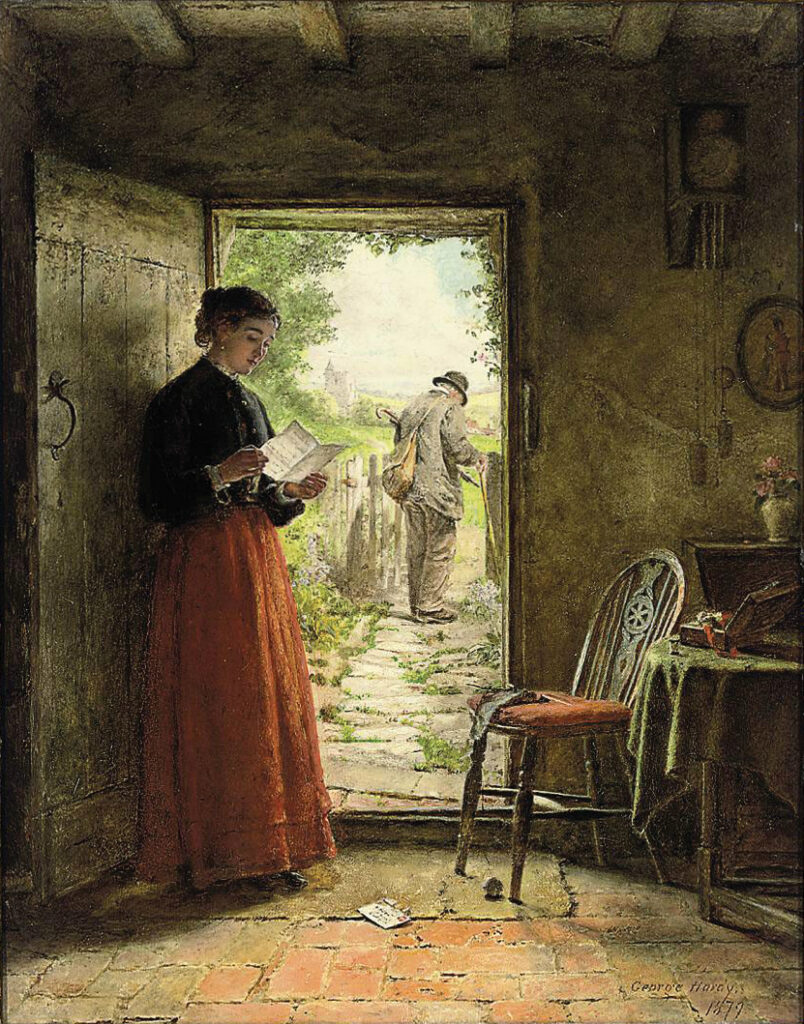
Barau, Emile; The Village Church; York Museums Trust; http://www.artuk.org/artworks/the-village-church-8037

Margaret Plumbottom informed the Register that Miss Dunwood, while a pleasant enough young person, often expressed tastes in music so questionable as to put many in dislike of her. She hinted the woman may have been forced out by “certain persons prone to vicious talk.” Mrs. Plumwood insists she herself is not inclined to be so harsh. “The chit simply needs to grow up a bit. She’ll understand the importance of the soothing and familiar when she is mature.”

Can questionable music be at the root of the matter? “Likes them German composers, the modern ones like Ludwig van Beethwhatnot. I heard her pounding out some such wild music on the vicarage piano—loudly—when our beloved Reverend Pettigrew and his good wife were away,” Lorena Blodget informed our reporter. This woman felt it her Christian duty to report the incident to the vicar. “The vicar saw to it she was counseled on the matter,” the woman told us.

Music

When asked, Mabel Crouch, first soprano in the Saint Cunigunda choir these many years, refused to speak on the matter. “What’s done is done,” she said. “We will go back to the way things ought to be with proper hymns next Sunday.” After thought she recommended the reporter speak to Ernest Hackett, the church custodian.

Mr. Hackett professed to have no information about why the woman left. “Don’t know much about th’ music, but that woman were hard on the organ I can tell you that. Th’ village is lucky to have one, small though it is. Had to repair it twice when she played on it too hard. Sweet girl though. I wish her well.”

Reverend Pettigrew gave our reporter short shrift, claiming he had to work on Sunday’s sermon, though it was only Wednesday. We could only squeeze a few comments about the departed musical director. “She played well enough for a woman,” he said. “Left us in a lurch though.”

He pulled the door shut before the reporter could ask another question, but it opened back up, and the vicar’s wife’s head popped out. “You should be asking where she went,” the woman whispered. “Off to the wilds of Ornkey, up there in the far north. Uncivilized, I say.” She dropped her voice even lower, but we believe she said, “Left with that man from Edinburgh they call the Marriage Maker. Make something out of that.” The door shut for good.

About the Book

Sir Alexander Bradshaw needs a wife, a sensible woman to manage his unruly sons and sullen daughter. No suitable candidates appear, however, and Alec resigns himself to spend another long, dark Orkney winter companionless. When an acquaintance suggests a music teacher might occupy his daughter, he embraces the idea.

Ann Dunwood travels to Orkney for the opportunity to play the Kirkwall organ. For the beauty of the instrument, Ann endures the conservative choir members who wish to perform the most banal of hymns; she’s done it before. She knows how to fade into the shadows and keep to her place.

When he happens upon Ann in the cathedral, Alec is enchanted by the woman at the keyboard, who fills the room with a Bach fugue. Yet, when the music ends, the object of his fascination turns into a demure mouse. Alec determines to reignite the passion he glimpsed in her and fill his home with music.

Available October 1. Pre-order now.

About the Author

Caroline Warfield has been many things.Now in at least her third act, she works in an office surrounded by windows where she lets her characters lead her to adventures in England and the far-flung corners of the British Empire. She nudges them to explore the riskiest territory of all, the human heart.

The author in Orkney

1919: Letters in a Time of Epidemic

The Teatime Tattler has come into possession of a cache of letters and notes from the Kinmel Repatriation Camp, Wales. They appear to be from another time.

Elks Corner, Saskatchewan, January 15, 1919

Dear Harry,

It is glad we were to receive your Christmas greetings, even though they reached us the first week in January. Now the war is over I can tell you of the relief with every letter that came; it meant you were alive and well. This time we can breathe a permanent sigh of relief, no?

As to your question, yes, the influenza found the province, but we got off easy here in Elks Corner. A few folks came down sick. Old Mrs. Butterworth, you may remember from church when you visited us summers—she was ninety—didn’t make it. Come November the epidemic died back mostly. Your grandmother and I escaped it entirely.

Christmas in Ypres, huh? Maybe next year we’ll see you here at the farm again. Your grandmother is already planning what to bake.

She tells me to stop writing nonsense and just send her love.

Grandpa Matthews.

Letters and Notes

Ypres, Belgium, January 16, 1919

Dear Madame Laporte,

It is my sad duty to report that your son Emile, corporal in my unit, passed away in the army hospital in Ypres. He fought bravely alongside my company through three years of the war, only to succumb, worn out by fighting, to the demonic Spanish flu. He was buried with honors in the cemetery near Elverdinghe, along with hundreds of his fallen comrades. I was with him in the end; he died peacefully.

Lieutenant Henry W. Wheatly, Canadian Expeditionary Force

To: The priests remaining at the cathedral, Amiens, France, January 16, 1919

Reverend fathers,

I write again in hope you have some word of Rosemarie Legrand, resident of Les Hortillonnages Amiens. We lost touch some months ago, and it is imperative that I find her. I am currently confined to the Kinmel Repatriation Camp near Bodelwyddan in Wales. They plan to send us home. I need to find Rosemarie and marry her quickly so I can arrange passage as a war bride.

I continue to hope that my old friend Abbé Dejardins has returned.

Lieutenant Henry Wheatly, Canadian Expeditionary Force

letter marked returned to sender
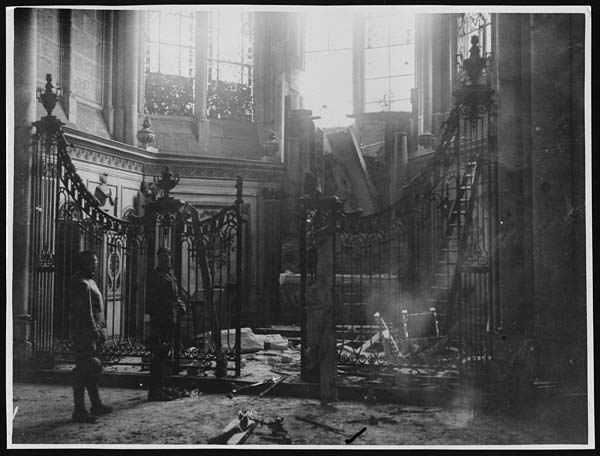
Amiens Cathedral

January 27, 1919, Regina, Saskatchewan,

Dearest Harry,

Just the one letter after Armistice telling us you are well? Not well done of you.

Your father has been bursting with pride since word of your promotion came and he is anxious—we both are frantic, really—to have you back. He heard your regiment has been delayed in some pokey camp in Wales waiting for transport home, and he is furious. He has taken the lieutenant-governor to task, I can tell you.

Please write often.

Love, Mom

Letters and Notes

February 5, 1919

My darling Rosemarie,

I am writing once again to your cottage among the islands of les hortillonnages. I pray that you and Marcel have returned there safely. Send word to me at the address on this envelope and I will come immediately. Your letters to me have gone astray and I suspect mine to you as well.

Please know that I love you and that has not changed.

Harry

letter marked undeliverable and returned
Rosemarie Legrand

February 10, 1919

Mother,

Sorry I have not written often. Even though the fighting has stopped, my life is not my own. Please tell Father to stay away from the lieutenant-governor and to stop sending me letters about what he wants me to do when I get home.

Harry

To Sabine Legrand, Rue du Moulin Neuf, Amiens, France, February 18, 1919

Madam

We have not had the best of relations in the past. I write to beg, however, for any word of your sister-in-law Rosemarie. I am frantic to find her.

Lieutenant (formerly Corporal) Henry Wheatly

A note on the returned envelope :
Monsieur Wheatly, Sabine fled to Marseilles when the Krauts advanced in the summer. She has not returned.
S. Thierot, neighbor
Letters and notes

February 24, 1919

To whom it may concern:

It has come to our attention that no action was taken on our recommendation of commendation for Pvt. Ezekiel Willard for his actions at Vimy Ridge. As we wrote, he charged into a gun nest, capturing the gun and several enemy single handedly, likely saving two of our squads during the first day of the offensive. Witnesses can be supplied, but they will soon be repatriated and dispersed. We urge action on this.

Lieutenant Henry W. Wheatly
Sergeant Angus McNaughton

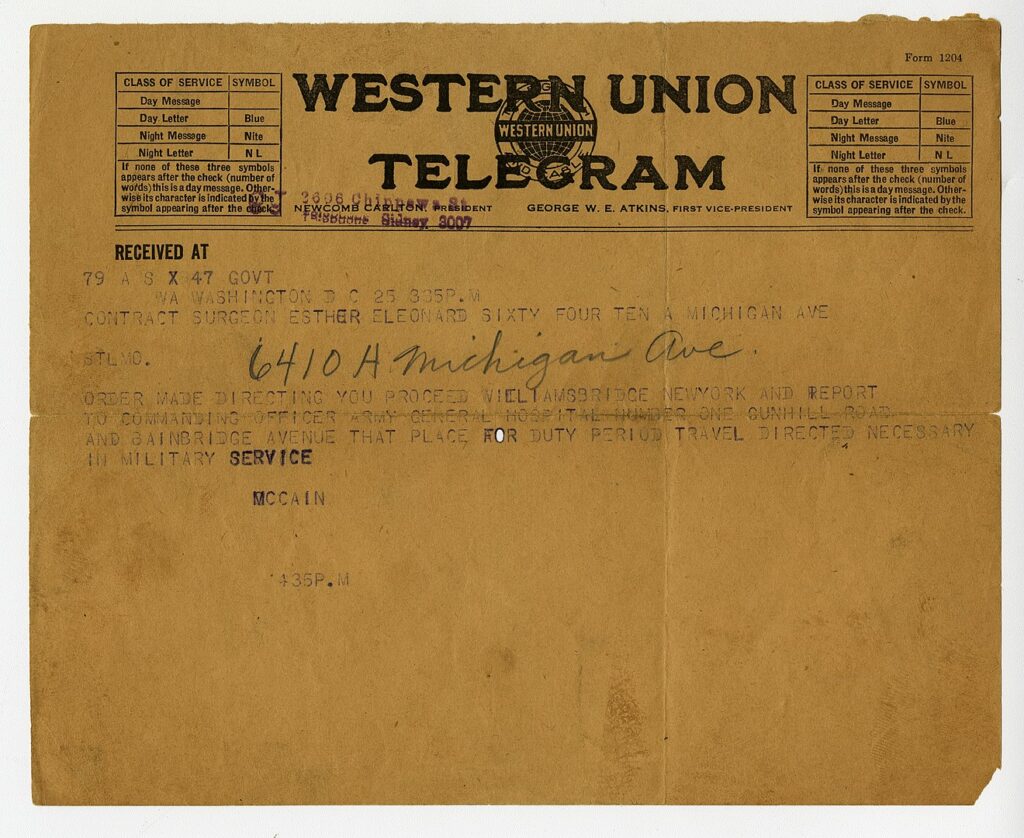
Telegram

February 28, 1919

From: Lieutenant Henry W. Wheatly, Kinmel Repatriation Camp, Wales

To: Mrs. Martha Wheatly, 538 West Marlboro, Regina, Saskatchewan

Mother: Tell father to cease writing to Gen Fitzgibbon. STOP Tell him I demand it. STOP Don’t listen to stories about Spanish Flu. STOP Have things to do before I come home. STOP Be there soon.

Harry.

March 5, 1919

Willard,

Tell the boys the Spanish crap got the lieutenant. He’s in hospital. He says watch your back from Walker. Get me if you need me.

Mac

Telegram

March 18, 1919

From: Lieutenant Henry W. Wheatly, Kinmel Repatriation Camp, Wales

To: Mrs. Martha Wheatly, 538 West Marlboro, Regina, Saskatchewan

I am well. STOP. Don’t listen to Father. STOP Down with influenza but recovered. STOP Do not worry.

Harry

March 21, 1919

Regina, Saskatchewan,

Dearest Harry,

Your father tells me you’ve gone off in search of a woman. She obviously means the world to you. Go get her Harry, and bring her so we can meet her.  Ignore your father’s interference, I beg you. He means well, truly.

Please take care of yourself, darling boy. You haven’t been well. Find your Rosemarie and come home.

Love,

Mother

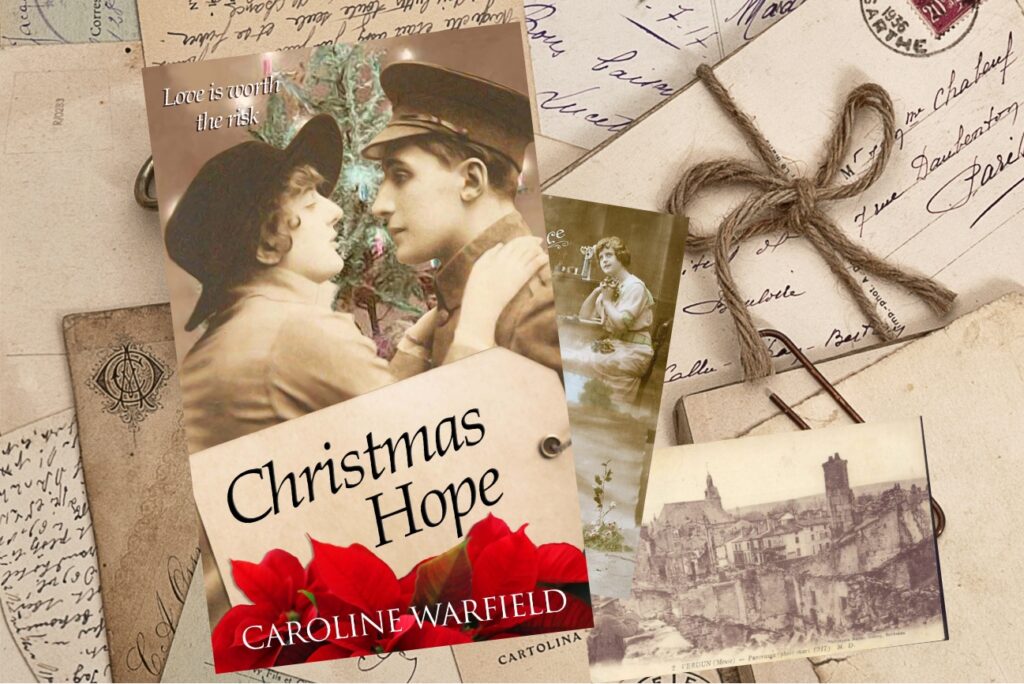
About the Book

After two years at the mercy of the Canadian Expeditionary force and the German war machine, Harry ran out of metaphors for death, synonyms for brown, and images of darkness. When he encounters color among the floating gardens of Amiens and life in the form a widow and her little son, hope ensnares him. Through three more long years of war and its aftermath, the hope she brings keeps Harry alive.

Rosemarie Legrand’s husband left her a tiny son, no money, and a savaged reputation when he died. She struggles to simply feed the boy and has little to offer a lonely soldier, but Harry’s devotion lifts her up. The war demands all her strength and resilience,  but the hope of peace and the promise of Harry’s love keep her going.

In the confusion at war’s end, will their love be enough?

More information and buy links: https://www.carolinewarfield.com/bookshelf/christmas-hope/

About the Author

Caroline Warfield grew up in a perapatetic army family and had a varied career (largely around libraries and technology)before retiring to the urban wilds of Eastern Pennsylvania, and divides her time between writing and seeking adventures with her grandbuddy and the prince among men she married.

Harry’s lovely story is a departure. She writes primarily family-centered Victorian and Regency novels and believes firmly that love is worth the risk.

Pranksters—Beware!

The reporter we sent to investigate the rash of pranks and pratfalls that have plagued London today was unable to identify any single culprit. On the contrary, his report, reprinted below, implies this is a well known custom! Really? One can only shake one’s head!

S. Clemens. Editor

There are several theories regarding this holiday, which encourages pranks and mischievous behavior. One popular legend is that April Fools’ Day began with France’s 1564 Edict of Roussillon, which decreed that New Year’s Day be moved to January 1st.

Those who continued to celebrate the old New Year around Easter were called “April fools.”

Another possible precedent is the Greco-Roman festival called Hilaria, which was March 25. The festival honored Cybele, the ancient Greek Mother of Gods, and its celebrations included parades, masquerades, and jokes.

And yet, a third idea suggests that April 1st became the fool’s holiday due to Geoffrey Chaucer’s The Canterbury Tales, wherein he includes a playful reference to “32 March,” or April 1st. However, most scholars consider it to have been a mere copying error.

Wherever it may have originated from, April 1st has become world renowned with practical jokes and amusement.

About the Author

This interesting report came to us from Tabitha Waite. Her sources:

https://www.dictionary.com/e/fool/

https://time.com/4276140/april-fools-day-history/

This is her new series!

A Season Full of Promise!

The Tattler hears from an anonymous lady…


In truth, I find most teas to be dreadfully dull. There are only so many biscuits one can consume while listening to the other ladies gasp and giggle over the same weary gossip as was discussed at tea the day before. But propriety–and appearances–dictate I attend, just the same.

No one knows the inner goings on of a household better than the maids or housekeeper or the occasional footman, and it is not unusual to overhear them talking about their mistresses and masters or the rest of the peerage when they think we are sufficiently occupied. 

Gossip about the Season

Yes, dear reader. I admit I attend teas more so I can stand in darkened corridors, behind heavy doors, or in out of the way corners, and simply listen to the staff! I realize it is scandalous. And you now realize I may know your secrets, as well. But it has been this guilty pleasure that allows me to bring you two tidbits of gossip you have not heard elsewhere.

First, I only just learned the Marquess of Castlereagh has returned to London after a year’s absence. Much to the chagrin of the young ladies of the ton, as he is not only one of the most handsome of the eligible peers, but one of the wealthiest, he left London unexplainably at the beginning of last Season, immediately following the fire at the Darkshire ball.

If you will remember, that fire claimed the lives of several in society, including the aged Viscount Manderly and the young Lady Katherine, daughter of the Marchioness of Windham, whom we have not seen since the fire. The event put a damper on the Season, to be certain, but it doesn’t explain the marquess’s unseasonal absence.

Near the end of the Season last year, I heard the marquess had taken up with an Irish woman while in Ireland–a commoner, no less. That could certainly explain his extended absence. 

Then, this week during my wanderings at one of the teas, I overheard the housekeeper tell the butler that the housekeeper of another house had told her there was an Irish peeress she’d never seen before being fitted in Madam Boutrey’s for the Gloushire ball.

Gossip about the Season

Are these two Irish women one and the same? Will Lord Castlereagh be looking in the lines for a wife this Season? Or does he have a surprise in store for all of us?

In other news, sadly, I must report the passing of Gerald, Earl Dodson, the fourth cousin of the dowager Duchess of Wiltshire. It seems the earl left a young daughter behind, and Lady Maris has become the ward of the duchess. The girl was quite lovely on the one occasion I’ve had to make her acquaintance, and the duchess beyond delighted to introduce her to society. 

I have yet to speak to anyone who personally knew the earl, but the duchess has referred to him at tea as her “country cousin”. Perhaps it is because Lady Maris has been kept in the country that the duchess’s nephew, former naval captain and the Marquess of Wellesley, is said to be so very protective of his young cousin. 

Of course the staff of many houses are already wagering amongst themselves on his intentions, now that the Duke of Wiltshire (the duchess’s nephew by marriage) is escorting Lady Maris to the ball at Pepperstill’s. And at another tea, just this week, I heard one maid whisper that is the reason Lady Twila has at put her foot down and demanded the Marquess at last make good on the marriage arrangement that’s been in place for years.

As for me, dear reader, I suspect both the Marquess of Castlereagh and Lady Maris will make this Season one of the more interesting in ages!

Yrs Truly,
Lady Doe

About the Book

THE BRIAR…
   One moment Raven is alone in the world and working as a maid in the gardens of a grand estate in Ireland; the next she finds herself handed the life of a lady by the dark and handsome Marquess of Castlereagh. Devan insists his intentions are honorable, and that he only wishes to help reunite her with her family. But Raven finds herself in a constant struggle to deny the smoldering attraction between them, and in her secret heart, wishes he wanted more.

THE ROSE…
   Devan, Marquess of Castlereagh, is tormented by his past and determined to live out his days in quiet solitude at his Ireland estate. That is until Raven enters his life. With the face of an angel, the body of Aphrodite, and the tongue of a drunken Irishman, he’s never met any woman so infuriating… so seductive… so… his match.

THE LEGEND…
   From historical Ireland and its mystical legends to the elegant ballrooms of Regency London, together Devan and Raven discover the truth of the past and a love so strong it cannot be denied. ORIGINAL VERSION: https://www.amazon.com/dp/B07X3747H6 PG VERSION (closed bedroom door): https://www.amazon.com/dp/B081QPPVBG

About the Author

Laura Mills-Alcott’s first love was music, and she began her writing career at the age of eleven, when she wrote her first song. After graduating high school, she moved to Nashville, and some of her music was published. 

Though she wrote her share of love songs, Laura’s favorite was the story songs–the modern day equivalent of the old ballads. However, she often found herself frustrated when attempting to fit a single title novel into three verses, a bridge, and a chorus. So one day she decided she’d try her hand at writing a book. “After writing the first paragraph,” she says, “I was hooked.”

In The Briar and the Rose, she combines her love of music with her love for romantic novels and history.

Laura and her work have been featured in Romantic Times Magazine, on the “Talk America Radio Network”, and she acted as a consultant for the daytime talk show “The Other Half” on a segment dealing with why women read romance novels. Her non-fiction interviews have been published in newspapers and online, and her short stories have been published in a variety of print and electronic formats.

Laura currently resides in NE Ohio with her husband, where she spends her time restoring historical homes, and owns a remodeling company – Regency Remodeling – with her husband. She loves spending time with her children and two beautiful grandchildren, as well as her three dogs, and too many cats.

FB page: www.facebook.com/lmalcott2

Page 76 of 152

Powered by WordPress & Theme by Anders Norén