Dear Mr. Clemens,
 It is a truth universally acknowledged that a country gentleman with a tidy property, upon the death of his spouse, ought to become the rightful property of some or other deserving widow or spinster of the neighborhood.
In defiance of this natural order, Mr. Winterose of Rosachron Manor is rumored to be on the verge of succumbing to the wiles of some scheming hussy. A mere nobody—who appeared, by all accounts, from thin air—to carry off such a matrimonial prize? It is unnatural, and it ought to be unlawful.
At Rosachron Manor, however, it is well known that even Time itself does not behave as it ought. Stories abound of clocks running backward, visitors arriving before they have departed from home, and strange persons slipping through the centuries as though on a jaunt to the seaside.
If Time will not follow the dictates of propriety, perhaps it is small wonder that the handsome master of the Manor should also be led astray.
But what is to be done about it, we ask?
The neighborhood of Rosebury Village and Rosachron Manor is home to a most distinguished social set, comprising no fewer than four‑and‑twenty families who dine together regularly. Rosebury also boasts an extraordinary number of females of superior accomplishments, any one of whom would make a far more suitable wife for Mr. Winterose than an unknown adventuress.
We therefore present, for your consideration, several ladies who ought not—must not—be overlooked:
- Item: A handsome widow, whose netting is said to rival the finest imported lace.
- Item: A spinster of excellent character, whose singing voice carries half a mile, and whose years are mature, but not so mature that the entail might not yet be overthrown.
- Item: A young lady, perhaps too young, but undeniably the baker of the best apple pies in the district.
- Item: A formidable matron, formerly a governess, well able to rein in any rebellious daughters.
- Item: A literary young woman of excessive accomplishment, having read one hundred novels, and thus perfectly suited to converse with a gentleman said to spend his whole life in his library.
Mr. Clemens, we are certain that a man of your excellent understanding and persuasive powers is precisely what is needed. May we not tempt you with apple pie and superior society to pay a visit to Rosebury, and to present our reasoning and logical deductions to the recalcitrant Mr. Winterose before it is too late?
We remain, most sincerely yours,
The Ladies of Rosebury Society
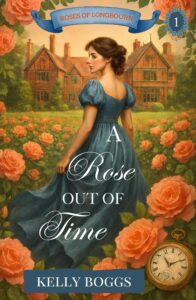
A Rose Out of Time
Modern author Hannah Ridley has spent years studying Pride and Prejudice, but nothing prepares her for the moment Rosachron Manor carries her back to 1814. Instead of dusty archives, she finds herself living among the Winterose family—a household whose joys, sorrows, and eccentricities feel uncannily familiar to the Bennets she has researched for so long.
At the heart of the family stands Elias Winterose, a widowed father whose quiet humor, weary tenderness, and fiercely guarded heart draw Hannah in from the moment they meet. As she slips deeper into the rhythms of Regency life, she discovers that the past is far more fragile—and far more precious—than she ever imagined.
A Rose Out of Time is a gentle, heart‑tugging romance about love across centuries and the unexpected places where we find home.
Purchase A Rose Out of Time on Amazon or read in Kindle Unlimited:
The Roses of Longbourn series:
A Rose Out of Time – Book 1
A Rose in Winter – Book 2
Mrs. Christie and the Misplaced Rose (a Short Story)
A Rake Redeemed, or The Gretna Rose (A Novella)
Coming Soon:
A Rose at Dawn – Book 3
A Rose After Rain – Book 4
About the Author
Kelly Boggs is a writer who happily wanders between centuries on the page. She draws inspiration from Austen, quiet English estates, and the small wonders of everyday life—including the antics of her two dachshunds, who consider themselves indispensable to her creative routine. She lives in Ohio with her family and far too many books.
Links:
Website: kellyboggsauthor.com
Amazon Author Page: https://www.amazon.com/author/kellyboggs
Goodreads: Kelly Boggs (Author of A Rose Out of Time) | Goodreads
Excerpt from A Rose Out of Time
Hannah, now wholly at ease in Elias’ presence, did not hesitate when she discovered a finely bound copy of Pride and Prejudice tucked behind a stack of more ancient tomes. She drew it out with a smile and held it aloft.
“Tell me, Elias—have you read this?”
He looked up, and his expression shifted into one of theatrical dismay. “Hah! Is there a soul in England who has not read that wretched book and laughed at the follies of the Bennets? I cannot say with certainty who that lady novelist is—though I have my suspicions—but should I ever encounter her again, I fear I may struggle to behave as a gentleman.”
Hannah laughed, wholly delighted. “Then I shall be sure to keep you well away from any literary salons.”
Elias regarded her hopeful expression and sighed, not without humour. “I know precisely what you are longing to ask. Were we the Bennets? How much of the tale is true?”
“Well—yes,” Hannah admitted, her voice soft but steady. “I have wondered far longer than you can possibly imagine.” She knew she ought to offer him an escape, to assure him there was no need to speak of it. But the words would not come. She wanted to know- and she wanted him to tell her.
His countenance remained unguarded, almost inviting. “You are acquainted, I daresay, with the peculiar talents of a caricature portraitist? He espies some unfortunate gentleman whose nose is but a trifle more prominent than his neighbors’ and proceeds to sketch a likeness so consumed by that singular feature, one forgets the man had eyes or a mouth at all.”
Hannah inclined her head, careful not to interrupt the flow of his thoughts.
“That lady novelist,” he continued, “is much the same — only her medium is ink. I read Sense and Sensibility, her debut, and laughed heartily at the charming absurdities she so deftly captured. But it is quite another matter when her pen alights upon one’s own relations. The amusement, I assure you, wears thin.
“Yes, we were the Bennets—though rendered in caricature. My daughter Jane is indeed a sweet and virtuous girl, but surely no mortal creature could possess the unblemished saintliness attributed to her namesake. Lizzy is the light of my life, and sharp of mind, yet even she might struggle to match the sparkling repartee bestowed upon her in fiction. As for my dear Mary—she is bookish and plain, and does tend to detect sermons where none were intended, but given the company she keeps, who could fault her? In truth, she is far more agreeable than her literary counterpart. Kitty, poor girl, is a follower by nature, but I hold out hope that she possesses a mind of her own and may yet be persuaded to use it—provided she falls under the influence of wiser heads.”
He paused, and Hannah, leaning forward with unconcealed interest, fervently hoped he had not yet finished.
“The two Lydias, however—my late wife and my youngest daughter—were, I regret to say, rendered with alarming accuracy. Foolish and indiscreet to a degree that defies polite description. And my cousin, heir to the fictional Longbourn—the so-called Mr. Collins—well, she captured him with such precision that I can only assume she had met him in person.”
Hannah listened, spellbound, wondering what judgment he might pass upon himself as Mr. Bennet.
“As for myself,” he said, with a sigh that carried both amusement and regret, “I must own that I am, on occasion, precisely as sarcastic, indolent, and ineffectual as depicted. But that is not the whole of me. I care for my daughters—every one of them—with a depth I seldom know how to express, save through teasing and irony, which is not understood by all. And my late wife—yes, I loved her, in my own fashion. I simply did not know how to live with her, day by day. She could not help the way she was made, and she bore her own burdens, not least the daily trial of my company—and the entail, of course, which hung over us all like a particularly ill-bred spectre.”
“Ah—the entail,” Hannah said at last, her voice low but steady. “So, it is real, then? And the events in the story—did she invent them entirely, or were they drawn from life?”
He inclined his head, a shadow of amusement passing over his features. “Names were altered, certainly. Characters and sentiments were, I daresay, embellished for dramatic effect. But the principal events were reported with surprising fidelity. Jane and Lizzy are indeed happily settled, each with a respectable husband. Poor Lydia remains bound to an incorrigible scoundrel—though I cannot imagine he will enjoy a long life, given his habits. There may yet be hope for her, if she can be persuaded to part ways with folly.”

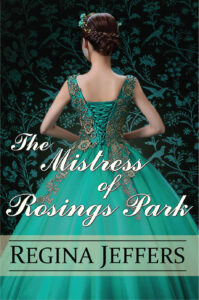 The Mistress of Rosings Park: A Pride and Prejudice Vagary
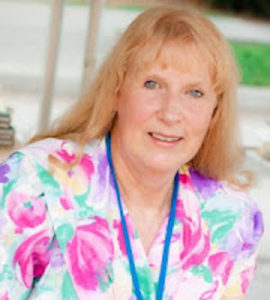 Regina Jeffers, an award-winning author of historical cozy mysteries, Austenesque sequels and retellings, as well as Regency era romances, has worn many hats over her lifetime: daughter, student, military brat, wife, mother, grandmother, teacher, tax preparer, journalist, choreographer, Broadway dancer, theatre director, history buff, grant writer, media literacy consultant, and author. Living outside of Charlotte, NC, Jeffers writes novels that take the ordinary and adds a bit of mayhem, while mastering tension in her own life with a bit of gardening and the exuberance of her “grand joys.”