The village of Montvale is atwitter with
news of its most notorious resident. The Duke of Montvale, dubbed the Monster
for his dark and frightening ways seems to be playing host to a house guest. A
young lady!
Though his dashing friend The Marquess of
Avondale is no stranger to Montvale, it has been quite unheard of for anyone
else to brave the wrath of the Monster and visit the Hall. Yet it seems one
such person exists.
One Miss Abigail Langton recently arrived
from The Americas has not only visited, but is staying at Montvale Hall.
And if our sources are to be believed, she
has turned the place on its ear. The duke too!
Though the servants of the house remain as
tight-lipped as they did all those years ago when tragedy struck the Montvale
family, Miss Langton has been making her presence known in the village and
apparently in the house.
We do wonder if poor Miss Langton knows
what she’s let herself in for.
Though perhaps we should be wondering if
the duke knows what he’s let himself in for.
We have no doubt that something monumental
will come from this unprecedented event.
As for what that could be? Well, we shall just have to wait and see.
The
Monster of Montvale Hall Blurb
A childhood tragedy had shaped the life of
Robert Forsythe, the Duke of Montvale Hall, forever.
He kept himself isolated from the world and
the people in it, revelling in his reputation as a monster.
Locked in a world of guilt and grief,
nobody had ever been able to break down the walls he kept around him. Nobody
had ever tried.
And if being a monster kept everyone away,
then a monster he would be.
Abigail Langton was as headstrong as she
was mischievous, so it was no surprise that she wasn’t exactly welcomed at
Montvale Hall with open arms.
It didn’t take her long to understand why
its owner was called a monster.
It took even less time to realise that
monster or not, Abigail’s heart called to him in a way she couldn’t deny or
understand.
Robert’s world is turned upside down and
inside out by the irrepressible Abigail. And try as he might to avoid it, he
finds himself drawn to her in ways he doesn’t want. In ways that scare the wits
out of him.
Will Robert give in to the temptation that is Abigail? And will Abigail find the heart of the man beneath the monster?
Dear Reader, it has come to the attention of the Teatime Tattler that a shocking new fancy has overtaken certain young ladies who might otherwise have been considered diamonds of the first water. Namely, they have forgotten that the current romantic view of the Scottish Highlands, so carefully fostered by Sir Walter Scott, is not a true representation of that barbaric region. Even our finest families have been corrupted! We have heard from a most reliable source that an actual savage Highlander not only attended the presentation ball of Miss Darcy in the very presence of the Earl and Countess of Matlock, but was actually seen in cordial conversation with them both! Rumor has it that this young gentleman, if one can use such a term, is a connection of the new Mrs. Darcy, whose family was quite deserved unknown prior to her unexpected marriage, so perhaps they felt obliged to invite him. But there is no excuse for the behavior of a flock of young ladies who ought to have known better than to desperately seek introductions to this so-called laird.
Signed, A Concerned Citizen
About the Book: A Matter of Honor
Pride & Prejudice goes to Scotland!
When Fitzwilliam Darcy, still smarting from Elizabeth
Bennet’s rejection, discovers she was forced to flee her home in disgrace owing
to his actions, his course is clear. He must marry her. It is a matter of
honor. All he has to do is find her and propose. Surely that will be simple
enough.
But Elizabeth does not want to be found, especially not by
Darcy. From the moment he entered her life, he has caused disaster after
disaster. Now he has followed her all the way to Scotland, foolishly certain
it’s within his power to fix all her problems. But far more is at stake than
Darcy knows.
Darcy’s quest takes him from backstage at Edinburgh’s
Theatre Royal to the wilds of the Scottish Highlands, where mysterious
Highlanders prove both friend and enemy. And now his search risks exposing
long-hidden secrets that threaten his happiness and her future.
On the run and in danger, Elizabeth is forced to make
impossible choices to protect those whom she loves – including Darcy. Her
growing attraction to him is at war with her need for caution, and the stakes are
impossibly high. Can she trust him to continue to fight for her protection when
he knows the whole truth? And if he does, will it be for love… or will it be
merely a matter of honor?
Excerpt from A Matter of Honor
“Here you are, sir.” Elizabeth
handed a cup of Christmas punch to Mr. Siddons. “Happy Christmas.”
“And to you as well.” The theatre
manager raised his glass to her. “I look forward to this dinner every year. It
is almost like being back in England.”
“But with a much smaller Yule log.”
Elizabeth nodded to the elegant fireplace which barely held a moderate-sized
log.
He chuckled. “Indeed so.”
Elizabeth ladled out a new glass of
punch, turned to the next guest, and almost dropped the glass. It would have
slid through her fingers had not a hand reached out and steadied it.
It was Mr. Darcy’s hand. What in
God’s name was he doing here?
“How clumsy of me!” she said
hastily. “You saved me from spilling punch everywhere. Let me see – are you not
Mr. Fitzpatrick’s friend?”
His dark gaze enveloped her. In a
low, intense voice, he said, “It is Christmas, Miss Elizabeth. I will say
nothing to anyone, but I beg of you not to pretend. Not today.” His fingers
brushed hers as he accepted a glass of punch.
A week ago he had practically
ignored her at the theatre, and now this! Should she admit it? He had already
guessed it, and her reaction to discovering his presence would have given her
away in any case. So much was at stake, but there could be no one at her aunt’s
Christmas dinner who would report on her. And it seemed to mean something to
him, given the way he was studying her.
Elizabeth forced her shoulders to
relax. “For Christmas. As long as you tell no one.”
A light leapt in his dark eyes. “I
thank you.” He raised his glass. “To your very good health and happiness.” He
touched the glass to his lips.
She ducked her head in
acknowledgment. With trembling hands, she filled another glass with punch and
held it out to the next guest.
Mr. Darcy took the hint and moved
away. Elizabeth deliberately did not watch where he went. Not that there would
be much doubt about it since he had only one friend there and everyone else in
the room was far beneath his notice. It would doubtless be a repeat of the
Meryton assembly where he had spoken only to members of his own party. Her lips
twitched. That would not serve him well in this crowd of theatricals.
When she finally dared to look
across the drawing room, she was astonished to find Mr. Darcy in close
conversation with her aunt and Mr. Siddons. Not only that, but he appeared
amused by something she had said.
What astonishing behavior! Surely
her words of reproof at Hunsford could not have worked such a miraculous
change! Perhaps it was not a change, though. Mr. Darcy might feel obliged to be
polite to his hostess, no matter how much he disdained her.
At least it was safer that way.
Nothing Mr. Darcy could reveal about Elizabeth would be a surprise to her aunt.
She was not over-worried that he would disclose her past, though. He had said
he would not. He might be proud, resentful, and ill-tempered, but she had never
known him to be dishonest. No, Jasper had said he was not ill-tempered. What a
puzzle Mr. Darcy was!
Soon there were no more guests to
serve. Two actresses remained by the punch bowl to converse with her. She usually
enjoyed their company, but today she could not forget the gentleman sitting
across the room.
Then he was no longer sitting
across the room, but beside her and offering his arm. “Miss Merton, would you
do me the honor of going in to dinner with me?” He stumbled slightly over her
new name.
“Of course.” She could not refuse
him without being utterly rude. Even though the last thing she wished for was
to spend time with him, she would have to tolerate it. Perhaps it would give
her the opportunity to discover what he wanted from her and to convince him to
stay away. She placed her hand on his arm. Somehow even that small contact felt
intimate.
What could Mr. Darcy mean by this
particular attention to her? After she refused his proposal so bitterly, she
would have expected him to avoid her company, as he had that day at the
theatre. Perhaps he knew so few people in Scotland that even her acquaintance
was tolerable, but he would have to be terribly lonely before he would choose
to spend his time with the woman who had summarily rejected his hand and heart!
She risked a glance at his face. He
did not appear particularly pleased with her company, but his features showed
no extraordinary resentment either. Perhaps there was no other woman present
whom he felt comfortable enough to sit with at dinner. In this gathering, he
would likely wish to avoid revealing too much about his background. A wealthy
gentleman would be too much of a target.
It was impossible that he could
still care for her, but on the slight chance he did, it behooved her to behave
kindly towards him. She had no regrets about having refused him, but she had
long rued how bitterly and hurtfully she had done so. Even though she did not
want his attentions now, she had no desire to hurt him more than she already
had.
Abigail Reynolds may be a nationally bestselling author and
a physician, but she can’t follow a straight line with a ruler. She studied
Russian and theater at Bryn Mawr College and marine biology at the Marine
Biological Laboratory in Woods Hole. After a stint in performing arts
administration, she decided to attend medical school, and took up writing to
retain her sanity during her years as a physician in private practice.
A life-long lover of Jane Austen’s novels, Abigail began writing variations on Pride & Prejudice in 2001, then expanded her repertoire to include a series of novels set on her beloved Cape Cod. Her most recent releases are Mr. Darcy’s Enchantment,Conceit & Concealment,Mr. Darcy’s Journey, and Alone with Mr. Darcy. Her books have been translated into six languages. She lives on Cape Cod with her husband, her son and a menagerie of animals. Her hobbies do not include sleeping or cleaning her house.
How lovely our homeland must be now that Summer is here. I regret being so far away, even though I know you have many worries in these troubled times.
We, ourselves, are under the boot of the British, as you know. I have told you that their Governor has freed most of the slaves owned by the Company, and that the British who have come to live here are very unlike us in their ways.
A prime example, dear sister, is the irregular household of Captain Redepenning of the British naval ship the Advantage. It has been distressing the upright citizens of our little community for the past three years. At least the native girl he installed in his house knew her place, and did not venture out among proper wives and their families; at least after she attempted to attend divine services that one time I told you about.
A few words to our dear pastor and his wife ensured that the congregation was not required to tolerate the presence of a woman of her kind. ‘Mrs Redepenning’, she dared call herself, but we all knew she was no more married than the lowest female who markets her body on the waterfront. She is his mistress, of course, or was until she was too ill. Consumption, they say. A likely story! Paying the price of a dissolute life, I say.
You
will understand the impudence of the man when I tell you that he hired a
nursemaid for his mistress’s brats. As if such children need that kind of care.
It came as no surprise to us all when he moved the nursemaid into his bed,
which I daresay was his intention all along. At least she had the virtue of
being white, even if she was Irish.
That wasn’t the end of it, though. Another female, also calling herself Mrs Redepenning, turned up just a few weeks ago. Her first act was to throw the Irish slut into the street. We all waited for the native harlot to follow, but it seems the woman who claims to be his wife has some compassion for a sick woman.
She has been out walking with the children. She even had the nerve to attend services at the Church of England chapel on Sunday! I’m relieved to say that the English followed our example , and made it clear that misbegotten coloured children were not welcome in the House of God.
That was not the end of it, though! She has had the effrontery to take the children about town with her fancy man, even attending the races and shopping in the emporiums! The latest outrage is that she has been holding dinner parties. You will be as horrified as I am, dearest, when I tell you that people have attended — not just other naval officers, but even one or two wives!
Apparently
— though I find it hard to believe — the woman really is the Captain’s wife,
and well connected to the English aristocracy. It may be so, but she has put
herself beyond the pale by not just tolerating the presence of his native woman
and her children, but actually nursing the mistress, and treating the children
as if they were her own.
Whatever is the world coming to? I can only say that I yearn for this war to end and the English to go back to where they belong, so we are no longer obliged to meet such people as Captain and Mrs Redepenning.
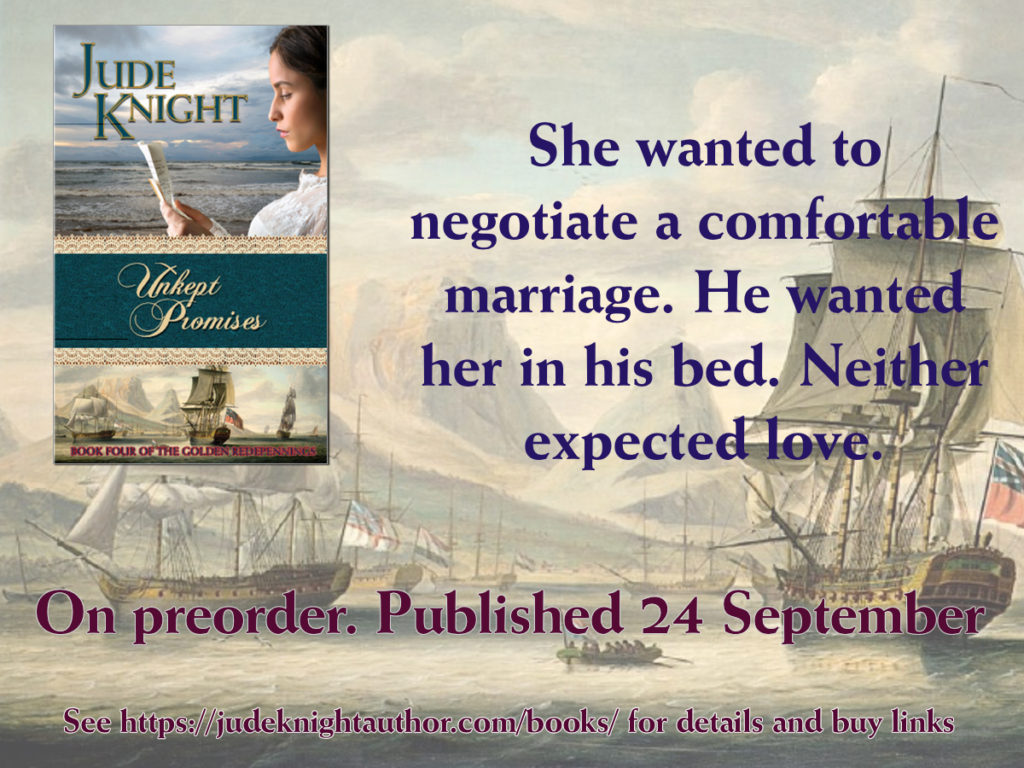
Unkept Promises
(Book 4 in The Golden Redepennings series)
She wants to negotiate a comfortable marriage; he wants her in his bed
… oaths and anchors equally will drag: naught else abides on fickle earth but unkept promises of joy. Herman Melville
HERMAN MELVILLE
Naval captain Jules Redepenning has spent his adult life
away from England, and at war. He rarely thinks of the bride he married for her
own protection, and if he does, he remembers the child he left after their
wedding seven years ago. He doesn’t expect to find her in his Cape Town home, a
woman grown and a lovely one, too.
Mia Redepenning sails to Cape Town to nurse her husband’s
dying mistress and adopt his children. She hopes to negotiate a comfortable married
life with the man while she’s there. Falling in love is not on her to-do list.
Before they can do more than glimpse a possible future
together, their duties force them apart. At home in England, Mia must fight for
the safety of Jules’s children. Imprisoned in France, Jules must battle for his
self-respect and his life.
Only by vanquishing their foes can they start to make their dreams come true.
Adiratna’s eyes widened
and sparkled. “Presents!” In moments, she was back across the room, tugging on
Perdana’s hand. “What has Papa brought me, Dan? You know, I know you do.”
“Lumps of coal, like the
Black Peter we saw on St Nicolas Day,” Perdana answered, promptly, “And a
switch to beat you with, for you have undoubtedly been a great trouble for Mami
and Ibu Mia.”
Adiratna sniffed, and
poked her nose in the air. “That shows you know nothing, Dan, for Hannah never
lets me be a trouble, do you, Hannah?” She smiled at her new nurse, who had
been an instant favourite with both girls for her store of stories and the
energy and imagination that allowed her to keep them constantly on the move
from one interesting activity to another.
“Brothers tease,” Hannah
told her. “I do not know why they do it, but there it is.”
Perdana grinned at her,
not in the least perturbed by this set down, but Adiratna wanted the last word.
“Papa never beats us, even when we deserve it. So there.”
“Do you deserve it?” Jules
spoke from the doorway, his tone one of scientific inquiry. Both girls forgot
their brother and their dignity to hurl themselves into his waiting arms. Mia
exchanged a glance with Hannah, who gave a satisfied nod. The man’s clear
delight in his children had won that stern arbiter’s cautious approval.
Mia, too, found it hard to
retain her indignation while watching him listening to their chatter, squatting
on the floor with his back against the door jamb, each arm around a daughter on
his knee. Adiratna was pouring out two months’ worth of news at full speed, and
even Marshanda spoke so fast her words were tumbling over themselves.
Adiratna suddenly
remembered that Jules had not yet disgorged his gifts. “Where are my…” she
broke off, sneaking a glance at Hannah, who had been impressing the little
girls with the unexpected information that they were ladies. Marshanda stuck
her nose in the air. “Ladies,” she informed her sister, “do not ask. Ladies
wait to be offered.”
Jules frown over her head
at Mia. “Who has been telling you that?” he asked.
Adiratna, however, was not
to be deflected. “I like presents,” she announced. “It makes me very happy when
people give me a present. Ibu Mia brought presents for me and Marsha. I expect
she brought presents for you, too, Dan. I do like presents.”
Faced with this flagrant
attempt to get around the ‘ladies do not ask’ rule, the adults struggled to
maintain their gravity. Even Jules, who was holding onto whatever grudge had
blown in with him, couldn’t resist a twinkle. “I happen to have some presents,”
he commented.
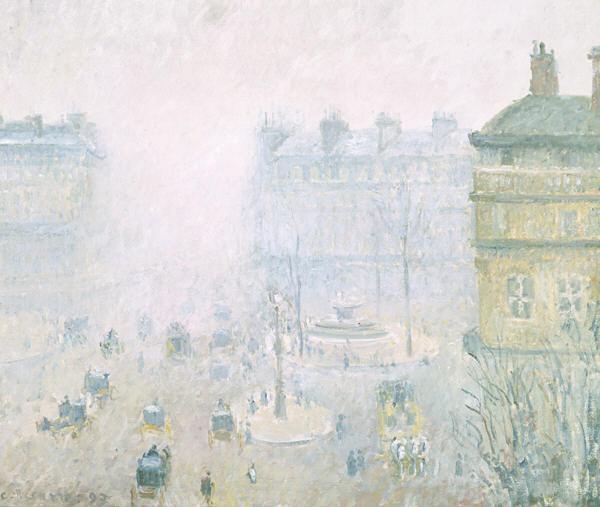
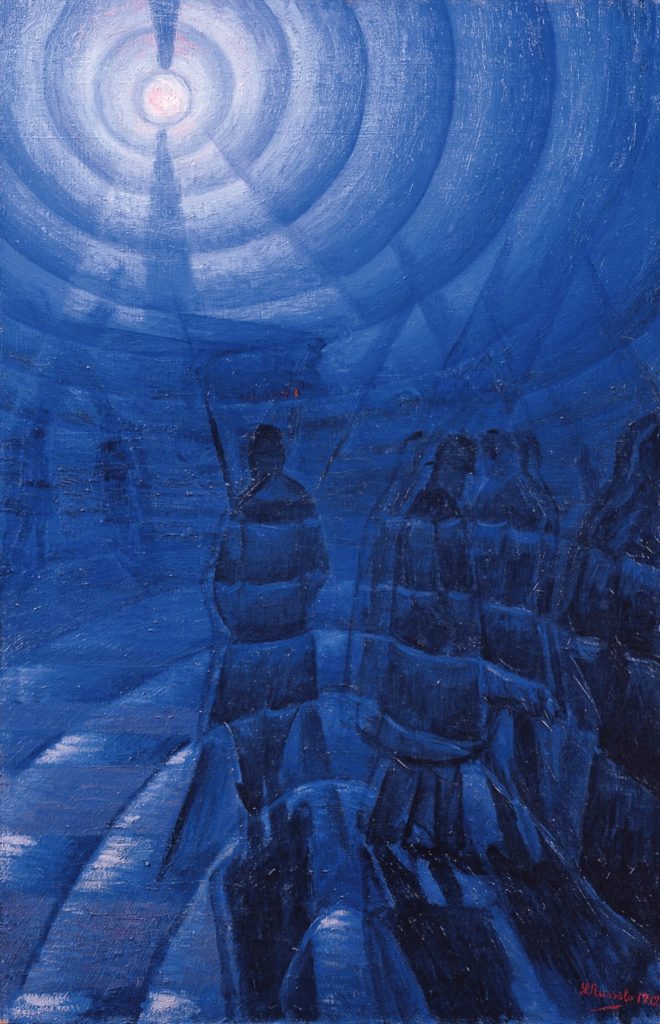
Your humble correspondent, journalist for The Teatime Tattler, begs leave to draw notice to Mr. Algernon Cuffy, sometime resident of St. James’s Square, as he describes an alarming encounter with a strange apparition on the night of London’s latest fog.
Pissarro, Place du Theatre, 1897
“I’m a thief. Write that
down, plain and simple. Poverty might have driven some other poor blighters to
a life on the hop but I have, you might say, a natural bent.”
Though a bit of a
Renaissance man in all the arts of financial misappropriation, Mr. Cuffy likes
housebreaking the most.
“Pickpocketing is for
children and women—pathetic types who can look sorrowful like Mother Mary or an
orphaned lamb. But I got this here,” he said, tracing a finger down a four inch
scar running to his left ear, part of which was missing. “Don’t look harmless
enough for work at close quarters, now, do I? Anyone with any brains would know
to steer clear of me.”
Your humble
correspondent backed away as he continued.
“An’ then there’s
highway robbery. You’ve got travel and horse fairs and boxing mills and lonely
moors—all well and good,” he said, detailing his interests. “But you’d be
surprised how few coves are worth getting hung for.”
Your humble
correspondent could not but agree.
“The night in question—”
your correspondent began, hopeful that Mr. Cuffy would return to ghosts and
spirits.
“There’s an art to
housebreaking,” Mr. Cuffy continued, warming to his subject. “Liking the name
of a street, following a likely looking coach home to its roost… Best to stay
clear of the poshest squares. That night, conditions were perfect,” he said,
tugging his cap on.
Your humble
correspondent dared a question and he obliged with an answer.
“Dark. Dark as coal. An’
fog like soup. I was on the damp roof tiles of Lord Fox’s establishment—”
Readers will imagine an
elegant white house in the Georgian style.
“—full to the gills with
lacquered snuff boxes and jeweled tie pins, and like most bachelor’s quarters,
lax about the housekeeping. I was preparing to ease myself into the empty
bedroom of the recently dismissed second footman. That’s when I saw her.”
“What?” your
correspondent exclaimed.
“Pretty young thing.
Loose hair, white dress. I dashed near dropped forty feet to the pavement when
she rose up out of mist. I could see clear as day that she wasn’t a ghost.”
“She must have been a
ghost,” I insisted. “People do not fly.”
Russolo, The Solidity of Fog. 1912
“She wasn’t flying,” Mr.
Cuffy said, his look quite insulting to the junior correspondent of London’s
seventh most popular daily newspaper. “Just sort of floated for a while. Took a
good look towards Westminster on the river and another over towards St.
Paul’s.”
“And then?” I asked,
scribbling hastily.
“Then there was a shout
from below and she disappeared into the fog again.”
“Where you drunk?” I
asked.
Mr. Cuffy gave no proper answer but resorted to his fists. Thus concluded our interview.
About the Book: Her Caprice
A MOST PRIVATE BATTLE
Since Beatrice Thornton was 13 years old she’s been living with a secret that could ruin her family forever. Her parents are the only ones who know, and now, seven years later, they are forced to put on a sham for Beatrice’s late first Season. The plan, make Beatrice as mousy and ill-clothed as possible so no suitor would consider her. Then they can all escape back to their country home in Dorset to keep the terrible secret safe. But the unthinkable happens… Beatrice meets a man who gives her hope of a normal life, and Beatrice dares to love with horrible consequences.
Captain Henry Gracechurch has resigned his commission after living through the horrors and waste of war. Recently returned from Spain, he is cajoled by his formidable godmother to make an appearance at one of her famous balls. When he sees a young woman abandoned on the dance floor, honour commands him to save the day. Nothing could have prepared him for meeting the person who is a balm to his soul and gives wings to his heart. But winning Beatrice Thornton will take every ounce of courage he has, and this is a war he will win, no matter the cost.
Beatrice was left alone to take in the whole scene. It was familiar to her, in a way. She had seen illustrations of balloons before, studied them closely from books and newspapers. The flying machine could do what she did, and yet there were reasons for it, purposes, a whole science, explanations of the mechanics.
“It’s magical,” a deep voice intoned at her side. She looked up to find Henry standing next to her as if he had always been there. Beatrice felt the solid ground she stood on almost melt away.
Quarry stone, the involuntary thought flitted through her mind, and she blinked, feeling herself grow heavy and pressed more firmly into the grass. That was strange. It was not as though she had been about to float away at the mere sight of him in the middle of a bustling London crowd. What a silly thing to think. She shook her head and met his eyes.
There was the usual delight she felt each time she saw him that sent her insides spinning, but it was tempered by the knowledge that he had not called. It was the merest chance that brought him here.
“It’s not magic,” she retorted, swallowing deeply. Six days since she’d last seen him. He had no right to look like he hadn’t been wasting away. Drat. “It’s hydrogen. The gas is produced when sulphuric acid is poured over scrap iron. How did you happen across me in this crowd?” she asked, thankful for the cool morning air, which would be a plausible reason for her pink cheeks.
“Magic,” he asserted, offering her an arm, which she took. He did not lead her anywhere but stood, gazing up at the activity on the rise. “Have you been busy these past days?”
Busy? She felt the shame of returning home each afternoon, her eyes hungry for some sign that he had come. “This and that,” she answered, hoping with all her heart that her tone conveyed a calendar too full for waiting and longing.
He looked down at her. “You’ve not been at home,” he stated.
It wasn’t a question. The damp ground at the bottom of the hill began to seep through her slippers, but she would not move for anything. “No. My mother had a sudden enthusiasm to see everything in Town. I am not sure the carriage horses can take much more. You?”
“I passed your door, hoping that—”
“You called?” The surprise of it made her yelp.
“I said I would.”
Beatrice looked up at him. “You left no sign,” she stated while feeling great relief. Forgetting to leave a card—it was endearing, though it had cost her the enjoyment of racing through the maze at Hampton Court, of savouring the ice at Gunter’s.
His head cocked to the side and his brows came down. “But I—” And then his lips shut into a firm line.
Beatrice waited for him to finish and then, finally, when it was clear he would say no more, the wheels in her mind began to turn. She looked up the hill again to where the balloonist had given Penny a small parcel, some silk fabric full of hydrogen. Her sister let it go and, as it drifted up and up, it moved in easy state, tossed lightly by sudden currents of wind. The crowd let out a great cheer, and in that clamour, Beatrice whispered, “You did leave a card, didn’t you?”
“Yes.”
Penny waved to her as she dashed down the hill and away toward the carriage.
Beatrice lowered her brows. She might have missed the card in her meticulous search of the entry hall, when she had turned each paper over and over, upending the tray and running her fingers along the back of the table, and then closely questioned the townhouse staff. It would not be so amazing if she lost— “Just the one?”
“One each time I visited.”
“Each? What do you mean? How many times was it?” she asked, her words tripping over themselves.
His look was keen. “Seven,” he answered and then his mouth lifted. “I’m almost out of cards.”
She answered quickly. “But it’s been six days.”
“Exactly six? Has it?” he asked, his eyes narrowing like a cat on the trail of a limping mouse. “How clever you are to know the precise number. I came twice on Wednesday.”
Beatrice put a hand to her pelisse, fastening and unfastening the button. Seven cards. Seven messages scrawled on the back. Seven times he had come. Seven times. She couldn’t let the number go. A girl might have her head turned by a thing like that.
Henry didn’t say another word, and merely waited for her to work it out—though the way his eyes studied her face wasn’t helping her concentration at all. It set her blood to warming and her mind to wondering if the world really would come crashing to an end if she leaned up on her tiptoes and kissed him on those firm lips.
About the Author
Keira Dominguez graduated from BYU with a B.A. in Humanities and lives in Portland, Oregon with her husband and five children. When she is not busy avoiding volunteerism at her kids’ schools like it is the literal plague, she writes sweet romance novels.
Dear Readers, The letter below was dated 1294 and sent to us anonymously. We are investigating the authenticity of the letter as I write this week’s column. However, publishing this epistle quickly was an opportunity not to be missed, since the letter contains information that will shake the foundations of one of England’s oldest and most noble family’s.
Dear Friend, I’ve written to you before of the young girl who some years past came to the abbey injured, alone, and unable to speak. We treated her as well as possible, helping her to learn skills that would prove useful should the time ever come when she might need to leave the abbey.
Two days past, she recovered her speech. I was called immediately. The girl, she is a young lady now, confided in me the secret of her identity. ‘Tis a secret which could get her killed, because it would destroy the current Earl of Hawksedge and make a scandal of the title and his family.
I chose to keep this information secret from the Earl
despite his visit to witness the miracle of the young lady’s regained speech.
The Earl would not tolerate any threat to his title, and I therefore feared for
her life. Yet this young woman has done no wrong. Indeed much wrong has been done
to her. I helped her to flee from the abbey, to find a home safe from discovery,
and the means to earn a living.
But now I hear that the Earl has been found dead in a locked room, and the young woman, we’ll call her Larkin, was discovered wandering the keep shortly before the earl’s death was discovered.
Fortunately the man who found Larkin, Sir Talon Du Quereste, was once a herald for King Edward I, and is therefore completely trustworthy. He will discover the truth of the Earl’s death and whether or not poor Larkin was involved. There is more to the story, my dearest friend. But I dare not put the tale on ink and paper when Larkin’s life stands in the balance. ‘Twould be too easy for my words to be mis-interpreted. Then justice would never be done. I will write again when I can.
With love and affection,
Teresa Marie Clement, Abbess
Our Lady of Sorrows Abbey, Northumbria
Rue Allyn, is a Bluestocking Belle and award winning author of historical romances. You may find Rue on line via her website. Her newest release, The Herald’s Heart, is available for pre-order via this universal buy link or through Amazon. You may read an excerpt from The Herald’s Heart here.