Because history is fun and love is worth working for

Tag: second chance love

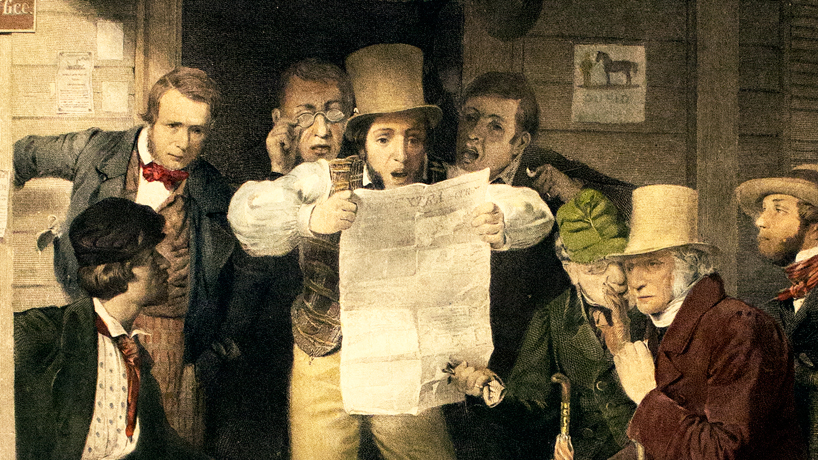
A Brave Warrior from Spain is Cruelly Maligned

After the interview, the visitors left. Sam Clemens, editor of the Teatime Tattler, sank back into his chair with a sigh of relief, and dug for a handkerchief to wipe the sweat from his brow.

“Well, that was intense,” said one of his reporter. “What are you going to do, Sam?”

“Publish the interview, obviously,” Sam said. “What else?”

“But the public wants blood, Sam,” said the journalist. “These rumors that are flying around the town are newspaper gold. People want to know all the prurient details. And it is not as if we would be lying. There must be some substance to them. No smoke without fire, and all that.”

Sam didn’t act on his spurt of irritation. Marcus was wrong, but he was also young. Time enough to get angry with him if he proved to be unteachable.

He held up a finger. “Point one,” he said. “A determined gossip only needs to embroider a few facts to make the billowing smoke look like a whole bonfire. If you are going to be a serious writer, my lad, don’t resort to cliches.”

A second finger joined the first. “Point two. I’ve looked into the sources of the scandal, the people who started circulating the stories. The gossip all goes back to people who have something to gain. The Brethertons. They thought they had the colonel locked up as a groom for their girl. The marriage would have saved them, and then his wife came back from the dead, and now they face bankruptcy. They believe they’ll get a cash settlement from Redepenning if they make enough fuss. They’re idiots. He and his family will crush them.”

“But they’re not the only ones,” Marcus protested.

He would have said more, but Sam didn’t wait. “True. Lady Carrington, who has been trying to hurt the Redepennings since the younger sons refused to play her wicked games and gave her the cut direct. That was before your time, Marcus, a decade ago. She lies as easily as she breathes, that woman, and I wouldn’t take her word for it if she said the sky was blue. In fact, lad, that’s a good principal for a reporter. Don’t take anyone’s word for anything. Check your facts. As for that cur Major Weston, I have it on good authority that he is jealous of the colonel, and is motivated by spite.”

“What about the Frenchie, Sam?” Marcus asked, sounding interested rather than combatative.

“Him, I don’t know. Perhaps he is just being used by Lady Carrington, but from what people overheard at the ball, he appears to think he is revenging his brother. That doesn’t mean, though, that there’s truth to the rumours she worked with the man spying for the French. Indeed, logically, if her actions led to the brother’s death, it seems unlikely that she was working with the man or was his lover.”

He could do with a drink. He poured them both a brandy, and sat down again. “As for the lady’s children, the eldest is obviously Colonel Redepenning’s. The other two, he says, are war orphans that she adopted. Since she came here with a whole pack of war widows and their children, it is not unlikely.”

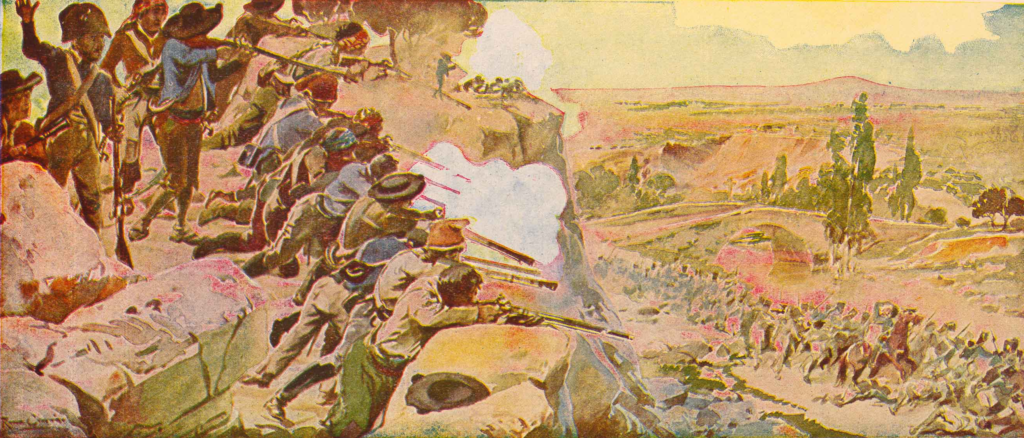
Where had he got to? Ah yes. “Third point, the story Redepenning tells is even more compelling. Two people, both warriors, both the best of their kind, praised by Wellington. They meet in the midst of war, and fall in love. Then tragedy happens. Her band of Spanish freedom fighters is ambushed and slaughtered, and he believes her to be dead. The country is in confusion, with the tides of war ebbing and flowing, land changing hands from the French to the allies and back again hour by hour.”

Marcus was nodding, hanging on every word. Good. He had the right instincts. He was hearing the drama, the pathos. Sam continued. “The lady escapes the ambush because she is giving birth. When the baby is old enough to leave, she sets out to seek her husband, and is captured by the French. Eventually she manages to escape, but she is injured, ill. By the time she is well enough to resume the search, our armies have chased the French into France. The British Army has other priorities than helping one couple to reunite. And so our heroine works and waits, saving money for an epic journey, across oceans, seeking the man she loves. She must know what has become of him.”

He downed the rest of his brandy and stood. “Write it, Marcus. You were here. You heard the interview. Write the story and bring it to me. You have two hours. End with the reunion. Husband and wife, joyfully together after all the blood, all the violence, all the tears. Make the readers feel it. Have them cheering the Redepennings on. Wipe the floor with those dirty rags who forget that people love a happy ending.”

There was another point he wanted to make. Oh yes. “Before you start, fourth point. The Redepennings are one of the most powerful families in this land. They are allied with the Haverfords, who are even more powerful. In fact, Brigadier General Redepenning, the colonel’s father, is friends with the Deerhavens and the Dellboroughs, too. No newspaper that wants to survive can afford to annoy three dukes, Marcus, and don’t you forget it.”

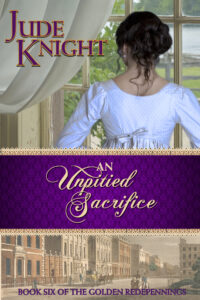
An Unpitied Sacrifice

When bad men combine, the good must associate; else they will fall, one by one, an unpitied sacrifice in a contemptible struggle.” Edmund Burke

Brought together by war, Valeria Izquierdos and Harry Redepenning had only a few short months as a couple before the war parted them again.

That war is long over when she brings a group of war brides and children to England. Her friends seek their soldier husbands. Valeria wants to find Harry or, if Harry’s long silence means he is dead, his father. Her eldest child deserves to know his English family.

Harry has never forgotten, or ceased to mourn, the warrior wife he married in the midst of war, and lost to a French ambush years ago. His courtship of a suitable wife is a practical matter, not involving the heart that has been numb since Valeria’s death.

The Redepenning family greet Valeria with suspicion, but when Harry joyously confirms her identity, they welcome her and her children with open arms—not just Kiko, whose Redepenning eyes mark him as Harry’s son, but also the daughter she adopted and the younger son who origins she has disclosed only to Harry.

But as Valeria, Harry, and the children begin living as a family, another, private, war looms before them. The lady who had been smugly awaiting Harry’s proposal is less than pleased with the couple’s reunion. She and her parents set out to destroy Valeria’s reputation, and find willing accomplices.

An old foe of the Redepennings has combined forces with a man who blames Valeria for his brother’s death, and who wants Valeria’s youngest child. A rival of Harry’s from the army would be glad to hurt Harry however he can. These enemies will stop at nothing to destroy not only Harry and Valeria, but also their family.

https://www.amazon.com/gp/product/B0GNNV18BP

https://books2read.com/u/479JAA

For more about Jude and her books, see here:

Jude Knight

Jude Knight’s books

Jude Knight’s website

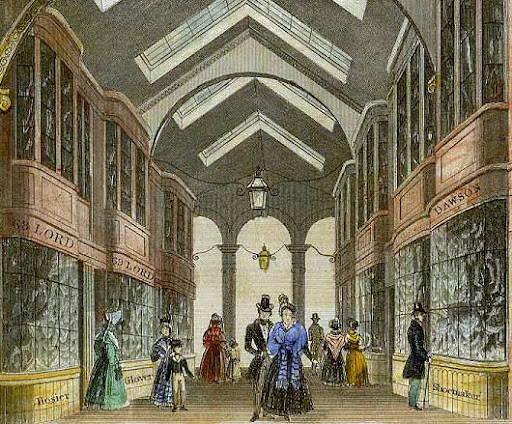
Dramatic Announcement in Burlington Arcade has London in a Tizzy

The whole of fashionable London is talking tonight about what happened at Burlington Arcade yesterday afternoon. Whispers that a particularly juicy piece of gossip would be revealed that afternoon had been circulating since the evening before, though no-one admitted to knowing what was to transpire.

Certainly, no one expected the drama to involve eight of the ten sons of the M. of T., who is well known for controlling every breath that his sons take, and every bite they eat. To see even one of the brothers out in public was surprise enough. But what happened next was almost beyond belief.

The arcade was full when the first act of the drama started, in the person of one of the brother, Lord C., whose wife was understood to be long dead. Some said suicide. Some said (but not where he could hear) murdered by her Papa-in-law. But there she was, on Lord C.’s arm, holding the hand of a little boy who looked so much like Lord C. that he had to be the man’s son.

Then three more of Lord C.’s brothers, all with ladies on their arms, arrived and Lord C. called “Well met, brothers and sisters.” And when the newcomers stopped to join Lord C.’s group, word quickly spread that what we saw was three newly-wed couples, and to brides that Lord T. had certainly never approved.

Then came Act two, with three more brothers, each escorting a lady. Two of them were known to be betrothed, and not to the ladies on their arms. The crowd held its collective breath as the ladies to whom they were betrothed stepped out of the glovers, only to be introduced by Lord B. and Lord E. to the ladies in question–their new wives.

Both brothers repudiated the betrothal as being forced, and Lord E. made a gracious apology to Miss F-S.

The third mother spied the Earl of K., the eldest brother, and demanded to know if he, too, was married, but replied that he was being forced into marriage by threats against his youngest brother, who was now on his way overseas. Since the threat was removed, he repudiated the betrothal.

The final act involved a speech from Lord K., who stood on a box to explain the situation to anyone who had not been close enough to hear.

The sons of the M. of T. have broken free of the parent’s tyrranous yoke, though it seems that seven of the ten have instead willing donned the yoke of matrimony in its stead.

What will Lord T. do? He is unlikely to acquiesce quietly to such a rebellion, but they are adult men, and this is a country under the rule of law. What can he do? This is, indeed, the question, gentle reader, and we shall watch with interest to find out!
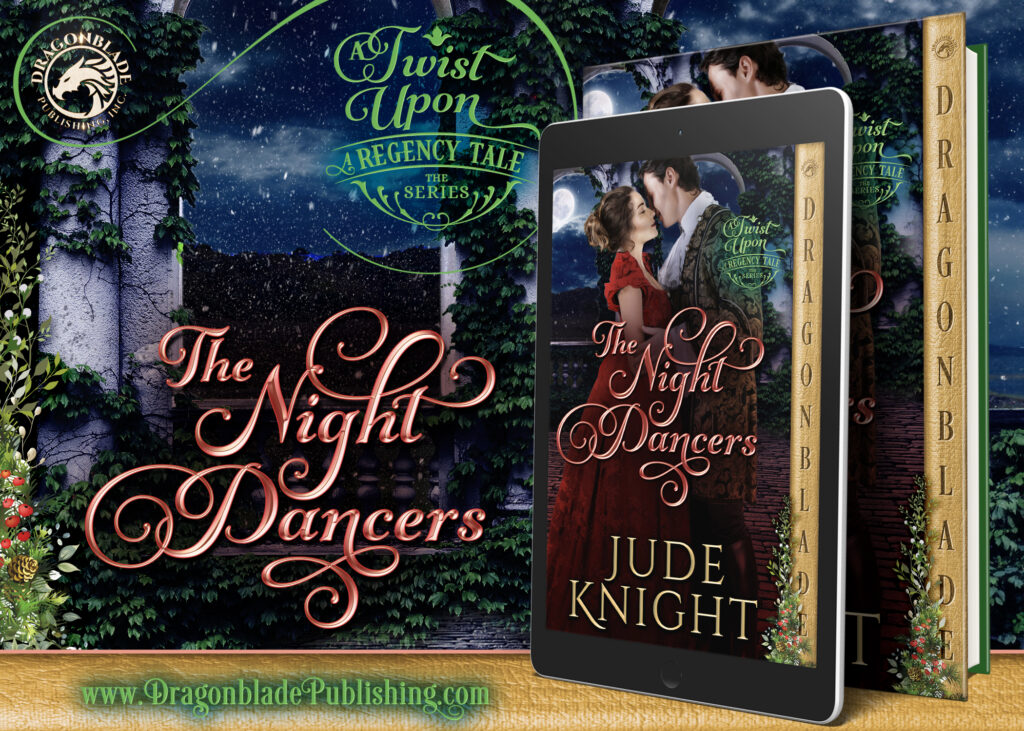
The Night Dancers

Certain that the Marquess of Teign is behind her cousin’s disappearance, investigator Melody Blackmore enters his mansion disguised as a man. Tasked with discovering how Teign’s sons are leaving their tower prison or having food and other items brought in, she soon realizes that the sons are also the marquess’s victims. As her interest in the eldest of the brothers grows, she joins them all in a campaign to bring Teign down.

Allan Sheppard, the Earl of Kemble, is the eldest of Teign’s ten sons. He is weighed down by his frequent failures to protect his brothers from Teign’s beatings and abuse, but determined to keep them as safe as he can until his youngest brother is no longer under Teign’s guardianship.

All they must to do is fool the most recent investigator sent to find out their secrets. But Mel Black is not like the others, and Allan finds that an alliance with her gives the brothers the chance to not only survive, but to thrive.

However, Teign will stop at nothing to punish his sons for escaping him. Only Allan’s and Melody’s growing commitment to one another keeps them steadfast as they uncover evidence of evil beyond imagining.

Buy on Amazon or read in KU.

An excerpt from The Night Dancers

The third mother had been looking around, and had caught sight of Kemble. “Lord Kemble,” she trumpeted, and surged toward him, drawing her daughter in her wake. “Lord Kemble, I suppose you are going to tell me that you, too, have married.”

She looked Mel up and down with eyes that spat contempt. Had she the power, Mel felt, she would have burnt Mel to ashes where she stood.

“Mrs. Blackmore has not yet done me the honor of accepting a proposal from me, Lady Spurfold. That, however, is not the reason I am refusing to wed your daughter. I was being forced into marriage by threats to my youngest brother. He is now on his way overseas, and will no longer be under our father’s malignant guardianship by the time he returns to England.”

He inclined in a shallow bow. “Be grateful. Coercion is grounds for annulment, which would have been far more embarrassing for your daughter than having me repudiate the agreement you made with Teign.”

“Come along, Felicia,” said Lady Farringford-Smyth. “We shall see about this. Lord Baldwin, we and our husbands shall be calling on Lord Teign.”

The six of them, mothers and daughters, hurried off along the arcade, brushing off questions and comments from the bystanders.

“A flock of silly geese,” said Kemble, with no sympathy at all. “They thought Teign would be their golden egg, but they should not have treated us as if we were of no account. Time for Act Three of our little drama.”

The rest of the brothers and their wives approached. A beadle hurried up with a wooden box that Kemble had organized earlier. He stepped out from the bookshop doorway, and climbed up on the box.

The brothers gathered around him, their wives on their arms. The audience stilled, waiting to find out what was about to happen.

“Ladies and gentlemen,” Kemble said loudly. “The Sheppard brothers are no longer subject to Teign’s tyranny, and he will no longer be deciding our social calendar, nor threatening our younger brothers to gain our compliance. Should you care to send invitations to any of us—my brothers, myself, our ladies—my sisters-in-law Lady Baldwin and Lady Donald have agreed to receive our mail. Thank you all for your attention.”

He stepped down, and offered his arm to Mel. “Finis,” he said.

It was not, in fact, quite the end. Continuing Kemble’s play analogy, Mel supposed she could compare the walk to a series of encores, as people claimed an acquaintance with one of the brothers, or one of their wives, and presumed on it to ask questions or offer an invitation to call.

They kept walking however, claiming another pressing engagement, which was true enough, for they all wanted to be somewhere else by the time Teign learned what had happened here this afternoon.

The people that Clara had hired—bodyguards from a firm called Moriarty Protection—closed around them as they left the arcade, and saw them to their carriages. The agency had assigned a team to each couple. One team followed Mel and Kemble when Winifred’s carriage dropped them at the mouth of the alley that contained the gate to the tunnel.

“We shall be safe from here,” Mel told them. “But I should like to reassign you, with Lord Kemble’s permission, to guard my daughter, sister, and nephew.”

“We could put another team on them, Mrs. Blackmore,” said the senior of the two bodyguards.

“I need a team on my daughter and brother-in-law,” said Kemble. “If Teign finds them, he will use them against me. But I agree that Mrs. Blackmore’s family are also at risk. Talk to your employer and arranged for both addresses to be covered. As for Mrs. Blackmore and me, we are heading for our beds. We won’t need guards until at least noon tomorrow, and can meet them here. I’ll cover any extra costs.”

The bodyguard peered at him with narrowed eyes and then nodded. “If I can have those addresses then, my lord, ma’am.”

Mel felt in her reticule for a notebook and pencil. “I shall write a note for my sister, and put the address on it,” she said.

“A good idea,” Kemble approved. “If you would be so good as to spare me a sheet of your paper, I shall do likewise.”

It took only a couple of minutes. Soon, the bodyguards had gone and Mel and Kemble were locked inside the gate and on their way down the tunnel and up the stairs.
 

Shocking events in Sussex

Turner, Joseph Mallord William; Chichester Canal; Tate; http://www.artuk.org/artworks/chichester-canal-202367

When we look for scandal in Sussex, dear reader, few of us feel the need to go beyond the mighty edifice that a certain princely gentleman is erecting on the shores. Visitors to that – can we call it a building? Palace, rather! – a blend of Mughal, Chinese and Gothic such as the world has never seen. Visitors, I say, vary in their descriptions, some praising the oriental-influenced decor and the extravagent excess of the exterior, while some call it laughable. The essayist William Hazlitt is unimpressed:

“The Pavilion at Brighton is like a collection of stone pumpkins and pepper boxes. It seems as if the genius of architecture had at once the dropsy and the megrims. Anything more fantastical, with a greater dearth of invention, was never seen.”

However, our topic today is not the Brighton Pavilion. Indeed, the scandals (for they are plural, dear reader) take place some distance from the popular seaside resort, in and around a certain village that shall remain nameless to protect the guilty and innocent alike. Beneath the surface of this serene and lovely landscape, tensions swirl, treachery lurks, passions burn, and all kind of criminals seek to take advantage of the innocent.

Let this newspaper give you just a taste of what we are talking about! And keep in mind that, as well as smugglers and ghosts, the countryside also harbours at least two highwaymen, some spies, and possibly even a Fennian or two!

Is the young baronet from Yorkshire really contemplate a match with the tallest woman in the district? The poor lady has enough to contend with – a neighbour wants her land and her hand in marriage, and there are smugglers about.

Will the young widow in the Rose cottage be frightened away by the ghost? And is it really a ghost? Or someone playing a trick? And what is such a young widow doing living alone, except for the most peculiar housekeeper we have ever seen?

Another widow – the war has scattered the poor creatures across the countryside – also faces scandal, after a very handsome officer is seen calling upon her. Are wedding bells in the air, or does the man have more nefarious plans?

A wealthy spinster with scandal in her past might be expected to attract the wrong sort of attention, but is the young man who is clearly pursuing her after her kisses? Or something more?

The earl’s brother cannot truly be interested in the curate’s daughter can he? They clearly share secrets. And where does the man go when he rides out in the middle of the night? Does he have a mistress? Or even more unacceptable habits?

It is said that the fine lady who visits the schoolteacher is sister to an earl. What, then, does she want with such a person as a country schoolteacher? One, furthermore, who has already been claimed by the butcher’s daughter.

When Lord C. married Lady C., the whole world predicted disaster. Everyone knows her family was on the brink of ruin until he rescued them. And now the lady is meeting strange men at out-of-the-way country inns!

Has a mysterious wounded soldier won the heart of Lady F.? And is he something other than he seems? Lady F.’s grandfather does not seem to be concerned. Does he know more than the rest of us?

Who is the lady who has been living in obscurity on the earl’s land? Is the French lady staying with the earl and his wife really her mother? Which of her two suitors will she choose?

A year ago, we predicted that the Earl of L. would propose to Lady J. C. But he moved away, and she is now being courted by someone else. Except that Lord L. is back, and appears determined to win her as his bride. Is he too late?

To find out all the juicy details, dear reader, buy Love’s Perilous Road, on preorder now, and published on 31 October.

Is the duchess having an affair?

“There’s a story here, Sam,” William Scattermole insisted. “Come on! Everyone will want to read it. The Duchess of Haverford is secretly meeting with the Duke of Winshire? The man she wanted to marry when she was a debutante?” 

He waved the article he wanted Sam to print. “I saw them with my own eyes, going into the same private meeting room at your aunt’s bookshop. They were alone there for a full hour. What were they doing? I can’t tell you that. But I can guess, and so can our readers.”

“Not happening,” Sam told him. “We’re not printing that article, Will, and every newspaper printer in London will say the same.”

“But it’s news!” Will insisted.

Sam sighed. The boy was keen, he’d give him that. And a good writer, or he would be when he learned the use of a fullstop. One of the sentences in the article under discussion was one hundred and fifty three words long! But Will had not yet learned the realities of survival for Society commentators.

“Look, Will. Let me explain this to you point by point. First, what do you think the Duke of Haverford will do if I publish this story about his mother?”

“What can he do,” Will said, belligerently. “It’s the truth. Besides, we’d call her the Duchess of H. Like we usually do, to disguise her identity. People will know we mean her, but they won’t be able to do anything about it because we didn’t use her name.”

Perhaps the boy was an idiot. “That works for Mrs H., or even Lady H. But Will, how many Duchesses of H. and Dukes of W. are there? Disguising the name isn’t going to do us any good at all, and I don’t think you want two dukes out for your blood. I certainly don’t.”

“But it’s the truth,” Will insisted.

“Perhaps.” Sam held up his hand to stop Will’s objection. “I don’t doubt what you saw, Will, but my second point is that your article makes the direct inference that their graces are having an affair. You saw them enter a room, Will. You didn’t see what happened inside it. She’s a lady in her fifties with two adult sons. He must be sixty if he is a day. If they were having an affair, wouldn’t they be looking for more comfort than a room with upright chairs and a table?”

From the look on his face, Will was as uncomfortable with thinking about a dignified matron like the duchess in intimacy on said table or against the wall. He faltered, and then rallied. “We could soften that a little, perhaps.”

“Is there a story without it?” Sam asked. “They are both known for their charitable works, and the duchess has used my aunt’s rooms for philanthropic meetings before. Duke of W. and Duchess of H. meet to talk about scholarships for deserving students. Not much of a story there.”

It took a bit more persuasion, but eventually Will accepted Sam’s dictate. He cheered up when Sam gave him the job of looking into the rumour that the Earl of Ruthford had publicly accused his wife of infidelity, and the pair of them only married a matter of weeks.

“That’s safe enough,” he told Will. “There are any number of Lords and Ladies R.”

Once Will was gone, he counted off the other three points in favour of squashing the story.

“Three, one of our secret investors happens to be the Duke of Haverford, and while I’ve never hesitated to write about him, I’m not going to risk writing about his wife or mother. Not after what he said to me last year, when I published the rumours about Lady C, as she was then.”

He shuddered at the memory.

“Four, I know, better than most, how much good Her Grace does, using her status and her reputation as a most upright and moral lady. I’m a hardened newspaper man, but I’m not going to interfere with her work by painting her as a hypocrite.”

But the last reason trumped all the rest, and was the one he was least likely to disclose to anyone else. If there was one person in the world he feared, it was the formidable lady who ran the Book Emporium and Tea Shoppe. Miss Clemens prided herself on keeping the secrets of her guests (as she preferred to be known). He winced at the mere thought of her reaction to Will’s article.

He opened the folded paper that Will had left behind and read it again. Yes. William showed promise. But this article must never see the light of day.


Paradise Triptych

By Jude Knight

Long ago, when they were young, James and Eleanor were deeply in love. But their families tore them apart and they went on to marry other people. Paradise Triptych tells their story in three parts.

Paradise Regained

James Winderfield yearns to end a long journey in the arms of his loving family. But his father’s agents offer the exiled prodigal forgiveness and a place in Society — if he abandons his foreign-born wife and children to return to England.

With her husband away, Mahzad faces revolt, invasion and betrayal in the mountain kingdom they built together. A queen without her king, she will not allow their dream and their family to be destroyed.

But the greatest threats to their marriage and their lives together is the widening distance between them. To win Paradise, they must face the truths in their hearts.

Paradise Lost

In 1812, the suitor Eleanor’s father rejected in favour of the Duke of Haverford has returned to England. He has been away for thirty-two years, and has returned a widower, and the father of ten children.

As the year passes, various events prompt Eleanor to turn to her box of keepsakes, which recall the momentous events of her life.

Paradise Lost is a series of vignettes grounded in 1812, in which Eleanor relives those memories.

Paradise At Last

Now Haverford is deceased nothing stands between the Duchess of Haverford and the Duke of Winshire. Except that James has not forgiven Eleanor for putting the dynasty of the Haverfords ahead of his niece’s happiness.

Can two star-crossed lovers find their happiness at last? Or will their own pride or the villain who wants to destroy the Haverfords stand in their way?

Paradise Triptych contains two novella and a set of memoirs: Paradise Regained (already published), Paradise Lost (distributed to my newsletter subscribers) and Paradise At Last (new for this collection).

Order your copy now: https://books2read.com/Triptych

Powered by WordPress & Theme by Anders Norén